
En
Pharmaceutical logistics is often discussed as though only two options exist, strict 2 to 8 degree cold chain or unprotected ambient. A large volume of product sits between the two.
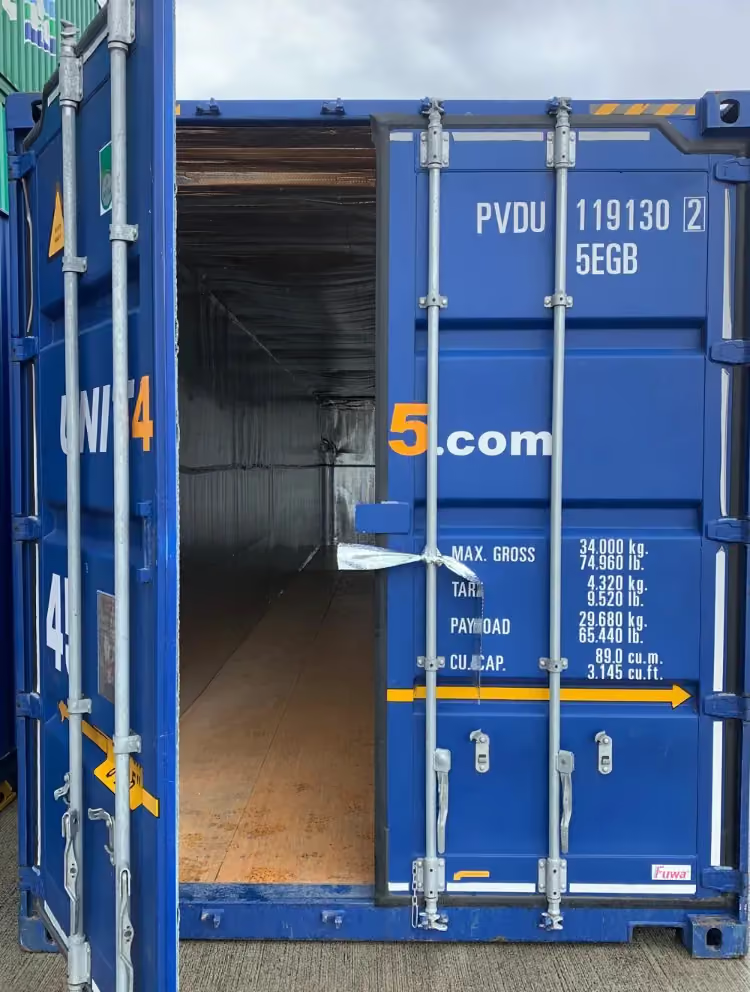
Controlled Room Temperature is commonly defined as 20 to 25 degrees Celsius, with excursions permitted between 15 and 30 degrees, and mean kinetic temperature required not to exceed 25 degrees.
Under USP guidance, transient spikes up to 40 degrees may be permitted provided they do not exceed 24 hours and mean kinetic temperature stays within limit, which makes rate of change and peak duration the critical variables.
EU Good Distribution Practice requires that the storage conditions specified by the manufacturer are maintained throughout transportation, placing the burden of evidence on the shipper.
Booking a full reefer for CRT product is common, expensive, and frequently more control than the product specification actually calls for.
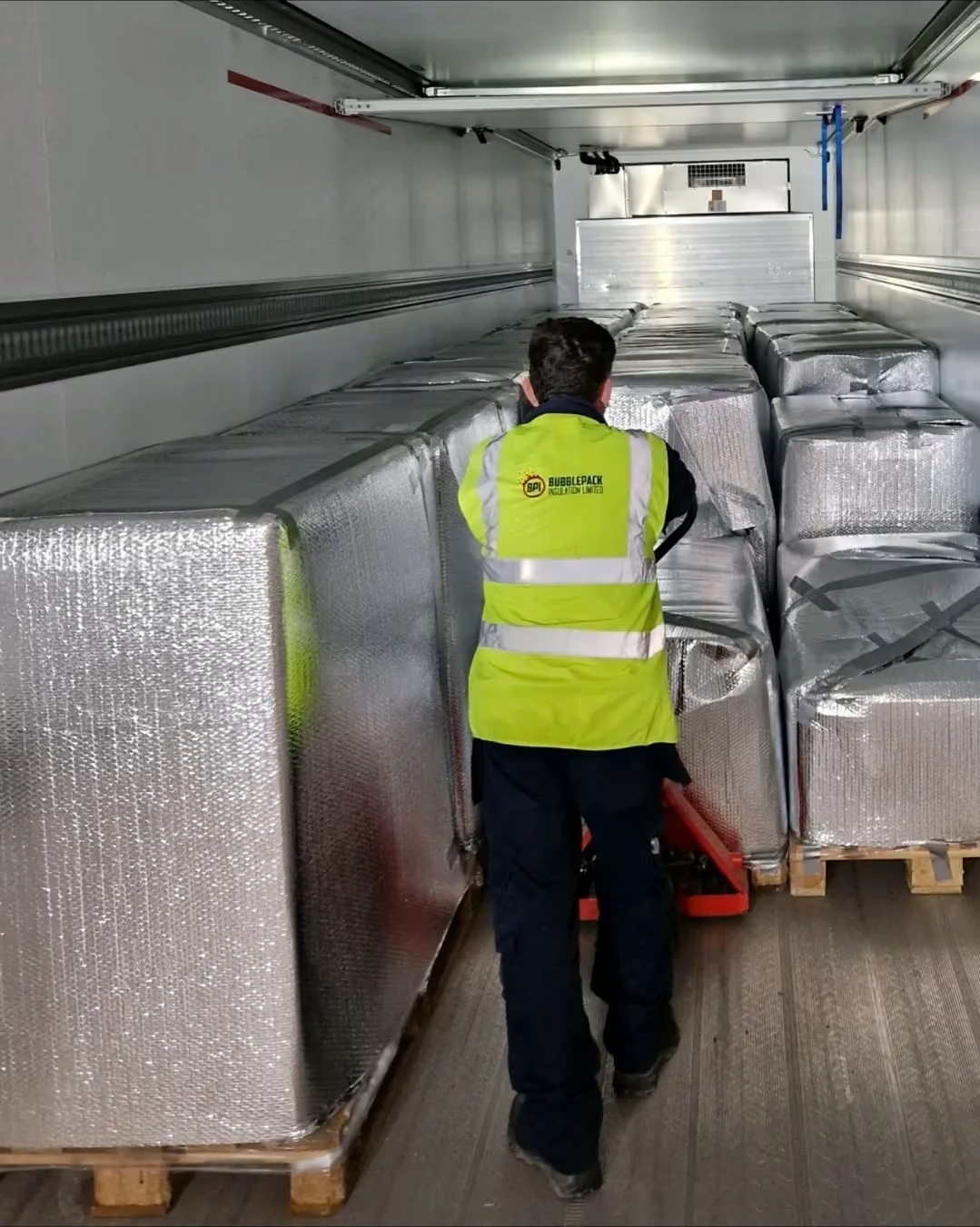
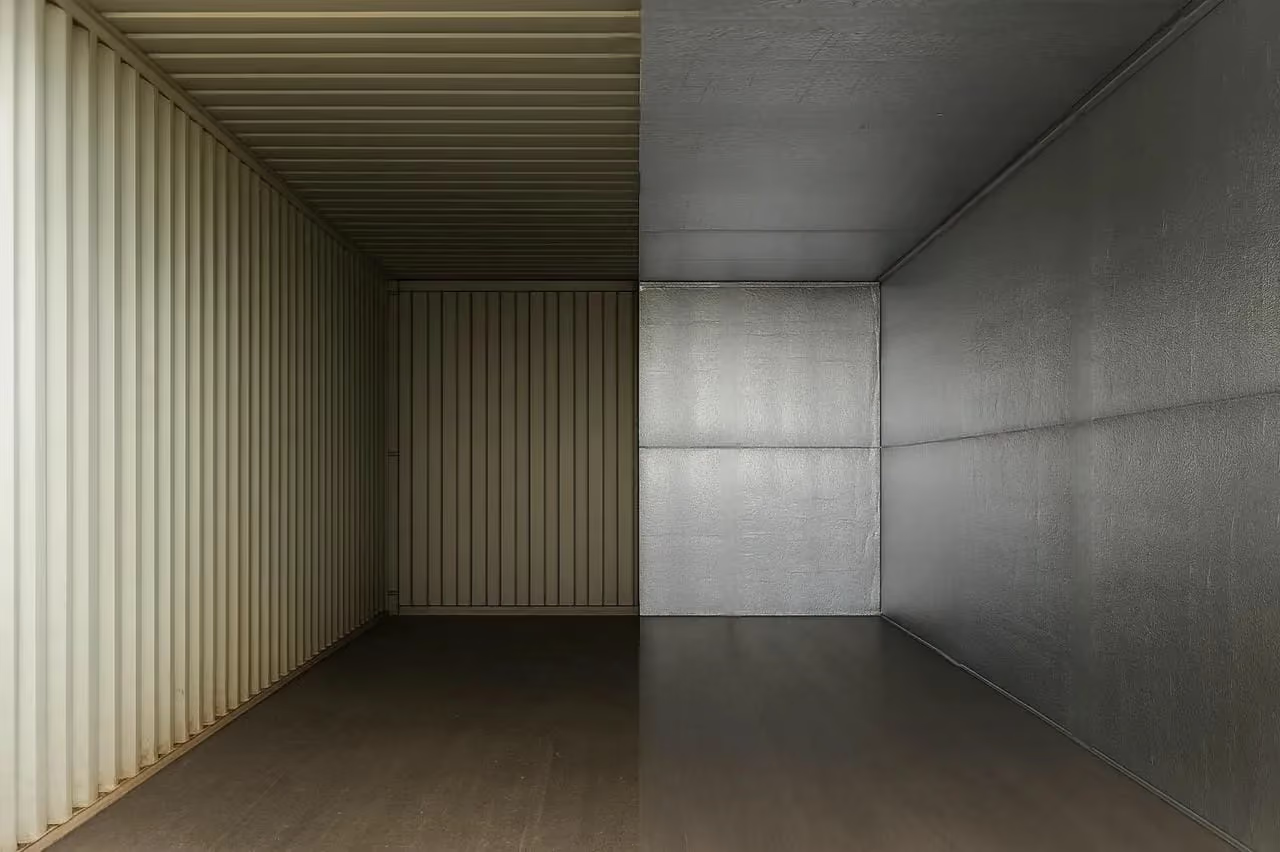
For product with a defined tolerance band rather than a single-degree requirement, a passive liner addresses the actual risk profile without introducing refrigeration dependency.
The 5-layer laminate is EUROLAB tested, with radiant heat reflectivity measured at 95 to 97%, giving quality teams a specification to evaluate rather than a marketing claim.
Validated performance data comes from third-party temperature loggers on live commercial shipments, not laboratory simulation, which is the evidence type a GDP audit trail actually values.
No refrigerant and no mechanical parts means no compressor failure mode and no exposure to the EU F-Gas Regulation phase-down affecting transport refrigeration between 2027 and 2029.
Documented material properties include temperature resistance with no delamination at 90 degrees for 24 hours and no delamination after 24 hours in water.
Thermal liners suit pharmaceutical and healthcare cargo with a documented tolerance range rather than an exact continuous requirement. In practice that includes tablets and capsules, creams and ointments, ampoules, over-the-counter lines, nutraceuticals and supplements, and non-hazardous pharmaceutical intermediates. Products with a strict 2 to 8 degree cold chain requirement, such as vaccines and many biologics, need active refrigeration and Bubblepack will say so directly.
Consideration
Uninsulated dry container
Dry container with thermal liner
Refrigerated container
Temperature control type
None, tracks ambient
Passive, dampens excursions and slows rate of change
Active, holds a defined setpoint
Suitability for strict 2 to 8 degree cold chain
Not suitable
Not suitable, use a reefer
Suitable, the correct choice
Suitability for CRT and tolerance-band product
High risk of excursion
Well suited
Suitable but often more control than required
Supporting documentation
None
EUROLAB tested specification plus live-shipment logger data
Equipment calibration and setpoint records
Exposure to F-Gas refrigerant phase-down
Not applicable
None, no refrigerant used
Applies, affects transport refrigeration 2027 to 2029
Relative cost
Lowest, carries excursion risk
A fraction of refrigerated container cost
Highest
Thermal container liners provide an additional layer of thermal and moisture protection for pharmaceutical products during transportation. They are suitable for products that can tolerate temperature variation but need protection from external heat, cold and condensation.
Sector experience
over three decades insulating containers for exporters in this sector and three others.
Real validation
Third-party temperature logger data from live commercial shipments across four route types.
Industry recognition
Shortlisted twice at the 2026 Irish Exporters Association Export Industry Awards.
Cost case
Typically 40 to 60% lower cost than refrigerated containers, depending on route and product.
.avif)
Controlled Room Temperature is commonly defined as 20 to 25 degrees Celsius, with excursions permitted between 15 and 30 degrees, provided the mean kinetic temperature does not exceed 25 degrees. Under USP guidance, transient spikes up to 40 degrees may be permitted if they last no longer than 24 hours. This tolerance band is precisely the profile a passive thermal liner is designed to protect.
Yes, for pharmaceutical cargo with a defined temperature tolerance band rather than a strict single-degree requirement. That includes tablets, capsules, creams, ampoules, over-the-counter lines and non-hazardous intermediates. Products requiring strict 2 to 8 degree cold chain control, such as vaccines and many biologics, need active refrigeration instead.
EU GDP requires that the storage conditions specified by the manufacturer are maintained throughout transportation. A thermal liner is one means of helping achieve that for tolerance-band product, and Bubblepack supports it with an EUROLAB tested material specification and temperature logger data from live commercial shipments. Whether a given shipment meets GDP remains a determination for your own quality function against your product's specification.
The Integrated Liner is a 5-layer laminate of double-sided metallised polyester film laminated to high-density polyethylene woven fabric, measured at 95 to 97% radiant heat reflectivity and EUROLAB tested. The Roll Liner uses a 3-layer construction with reflective metalised foil outer and inner layers around an insulating bubble core. Thermal performance is essentially equivalent between the two formats.
No. A thermal liner is entirely passive, with no power supply, no refrigerant and no mechanical parts. This means it falls outside the EU F-Gas Regulation phase-down that restricts high global warming potential refrigerants in new transport refrigeration systems between 2027 and 2029.
Bubblepack can provide the liner material specification including measured mechanical and thermal properties, EUROLAB test confirmation, and temperature logger data captured on live commercial shipments across multiple route types. Contact Bubblepack to request the technical data pack for your specific product and route.