
En
Chemical and industrial ingredient exporters are dealing with a cargo protection problem and a regulatory cost problem in the same shipment.
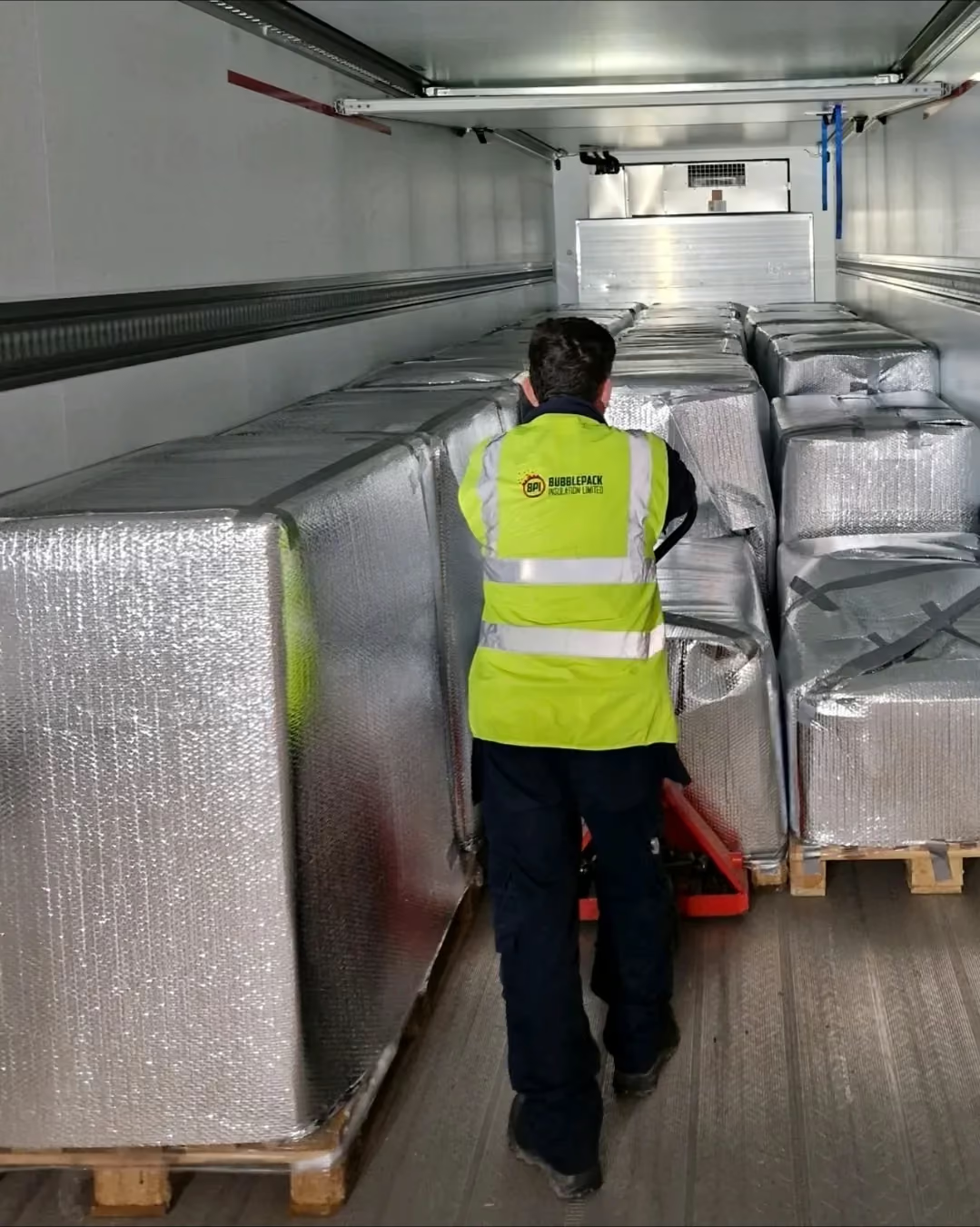
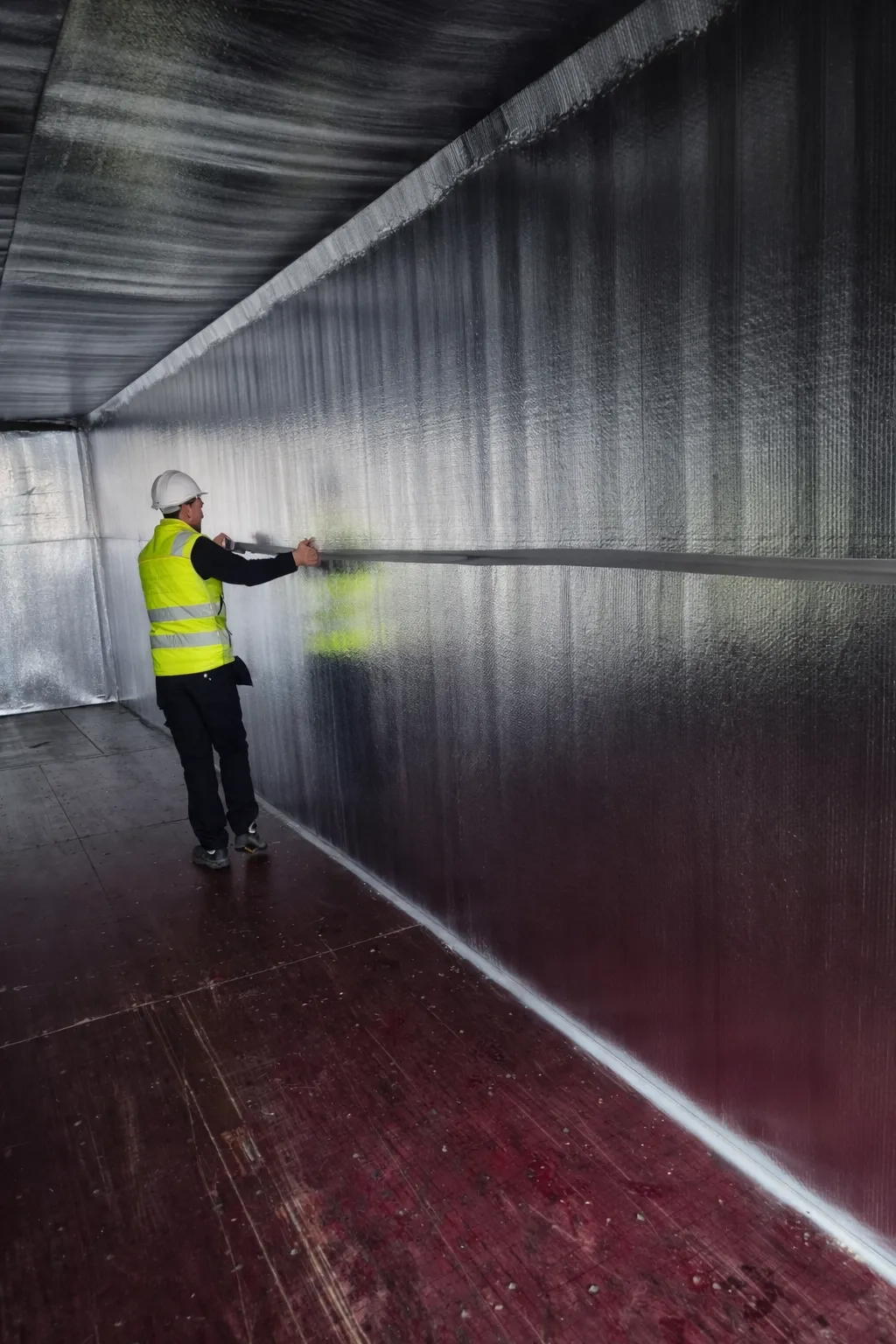
Many bulk powders and industrial ingredients are moisture sensitive, and caking, clumping or contamination from condensation renders product off-specification.
Temperature extremes can degrade certain industrial materials and chemicals directly, causing thermal stress in transit.
The revised EU F-Gas Regulation has restricted servicing with high global warming potential refrigerants since 2025, and is phasing toward banning F-gases in new transport refrigeration systems between 2027 for vans and ships and 2029 for trucks, trailers and reefer containers.
The EU Emissions Trading System has applied to 100% of verified shipping emissions since 1 January 2026, up from 70% in 2025, so emissions now appear as a direct line item on freight cost.
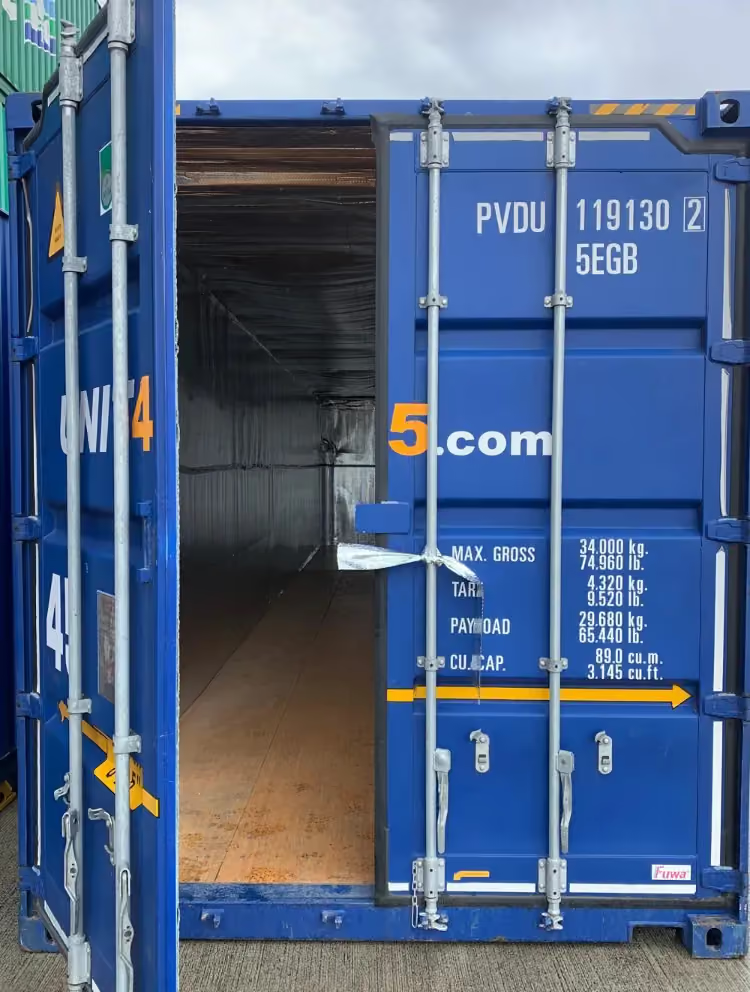
A thermal liner addresses the cargo risk and sidesteps the refrigerant regulatory question entirely, because there is no refrigerant involved.
Measured water vapour transmission of 0.8 to 1.5 grams per square metre per 24 hours on the 5-layer laminate provides a genuine moisture barrier, not just thermal insulation.
Documented mechanical properties suit industrial handling: tensile strength of 450 to 600 newtons per 25 millimetres in both directions, and puncture resistance of 135 to 168 newtons.
No refrigerant means the F-Gas phase-down does not apply to the liner at all.
A carbon footprint roughly 90% lower than a refrigerated container is directly relevant now that EU ETS covers 100% of verified shipping emissions.
Corrosion performance is rated as none, with no delamination after 24 hours in water or at 90 degrees for 24 hours.
This page covers thermal and moisture protection for the cargo itself. Bubblepack also runs a separate industrial liner service designed to protect the container rather than the contents, used for waste exports, contaminated materials and hazardous by-products where the concern is leakage, abrasion, residue and cleaning charges. The two are different services with different purposes and should not be confused.
Consideration
Uninsulated dry container
Dry container with thermal liner
Refrigerated container
Moisture ingress and caking risk
High for hygroscopic powders
Reduced, measured vapour barrier of 0.8 to 1.5 g/m2/24hr
Low, but refrigeration is not a moisture barrier by itself
Thermal stress on sensitive materials
Direct exposure to ambient
Dampened, peak exposure reduced
Controlled to setpoint
EU F-Gas Regulation exposure
Not applicable
None, no refrigerant used
Applies, phase-down runs 2027 to 2029
Carbon footprint and EU ETS cost
Lowest emissions but no cargo protection
Roughly 90% lower than a refrigerated container
Highest, now fully within EU ETS scope
Power dependency
None
None
Continuous power required
Relative cost
Lowest, carries product risk
A fraction of refrigerated container cost
Highest
Thermal liners provide a practical and cost-effective solution for protecting temperature-sensitive products during transportation. They help maintain a more stable internal temperature by reducing exposure to external temperature fluctuations, making them particularly suitable for shipments where active refrigeration is not required. For exporters and logistics teams looking to improve temperature control while keeping packaging and transport costs manageable, thermal liners can offer an effective alternative for the right applications.
Sector experience
Over three decades insulating containers for exporters in this sector and three others.
Real validation
Third-party temperature logger data from live commercial shipments across four route types.
Industry recognition
Shortlisted twice at the 2026 Irish Exporters Association Export Industry Awards.
Cost case
Typically 40 to 60% lower cost than refrigerated containers, depending on route and product.
.avif)
A thermal liner works in two ways. It provides a measured moisture barrier, with water vapour transmission of 0.8 to 1.5 grams per square metre per 24 hours on the 5-layer laminate, and it slows how quickly the container interior tracks external temperature. That second effect matters because condensation forms when interior air reaches dew point against a cold steel surface, so dampening temperature change reduces condensation at source.
The revised EU F-Gas Regulation has restricted servicing with high global warming potential refrigerants since 2025 and is phasing toward banning F-gases in new transport refrigeration systems, between 2027 for vans and ships and 2029 for trucks, trailers and reefer containers. A thermal liner uses no refrigerant at all, so none of this phase-down applies to it.
The EU Emissions Trading System has applied to 100% of verified shipping emissions on voyages into and out of EU ports since 1 January 2026, up from 70% in 2025 and 40% in 2024. Because the cost scales with actual emissions, a shipping method with a roughly 90% lower carbon footprint than a refrigerated container now carries a measurably lower ETS cost as well.
The 5-layer laminate has documented mechanical properties including tensile strength of 450 to 600 newtons per 25 millimetres in both machine and cross directions, initial tear resistance of 40 to 50 newtons, and puncture resistance of 135 to 168 newtons. Corrosion is rated as none, with no delamination after 24 hours in water or after 24 hours at 90 degrees Celsius.
Thermal liners protect the cargo from temperature and moisture. For hazardous or contaminated materials where the concern is protecting the container itself from leakage, abrasion and residue, Bubblepack offers a separate heavy-duty industrial liner service covering walls, floor and doors, with optional floor barrier or absorbent layer. Contact Bubblepack to discuss which is appropriate for your material.
The prefabricated Integrated Liner is manufactured to suit standard 20ft, 40ft, 40ft HC and 45ft container dimensions. The Roll Liner is cut and fitted on site, so it can be adapted to the specific areas of a container that need protection, including partial coverage and non-standard configurations.