
En
Bubblepack has spent over 35 years insulating dry shipping containers for exporters whose cargo cannot tolerate the temperature swings of an uninsulated steel box. Different sectors face different failure modes: moisture and caking in dairy powder, tolerance-band excursions in pharmaceuticals, heat and freeze damage in beverages, and moisture ingress in bulk industrial ingredients. Choose your sector below to see how a thermal liner protects that specific cargo.
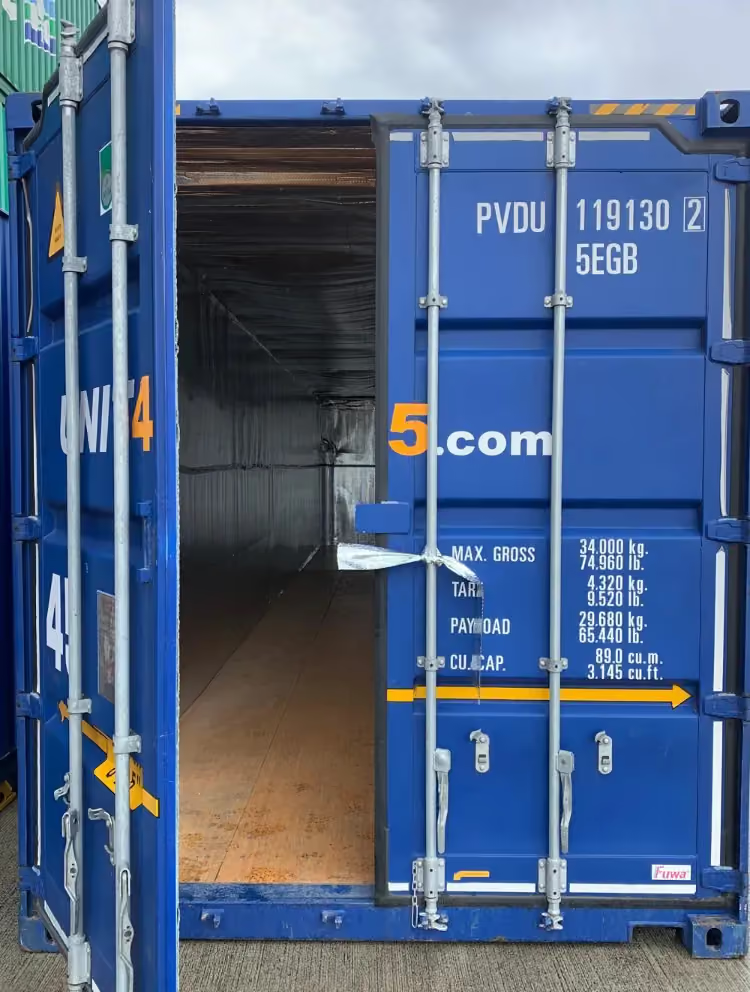
Every sector has its own failure mode in transit. Choose yours to see how the liner is specified for that cargo.

Milk powder is hygroscopic, meaning it actively draws moisture out of the surrounding air. That single property drives most dairy export claims. See how a thermal liner prevents condensation and caking in powder exports.
Explore dairy exports →
Pharmaceutical logistics is often discussed as though only two options exist, strict 2 to 8 degree cold chain or unprotected ambient. A large volume of product sits between the two. See how passive protection works for Controlled Room Temperature product.
Explore pharmaceutical cargo →
Unlike most cargo, packaged beverages are vulnerable to heat and cold, and the damage is often invisible until the customer opens the bottle. See how liners protect against both heat and freeze damage.
Explore beverage exports →
Chemical and industrial ingredient exporters are dealing with a cargo protection problem and a regulatory cost problem in the same shipment. See how liners deliver a moisture barrier without refrigerant exposure.
Explore chemical exports →An Integrated Liner is a prefabricated thermal container liner manufactured to suit standard container dimensions. Built as a 5-layer laminate of double-sided metallised polyester film bonded to high-density polyethylene woven fabric, it is positioned inside the container and secured using its own integrated attachment system rather than being cut and fitted on site. This gives a standardised solution designed for complete or near-complete coverage of common container sizes, including 20ft, 40ft, 40ft HC and 45ft.
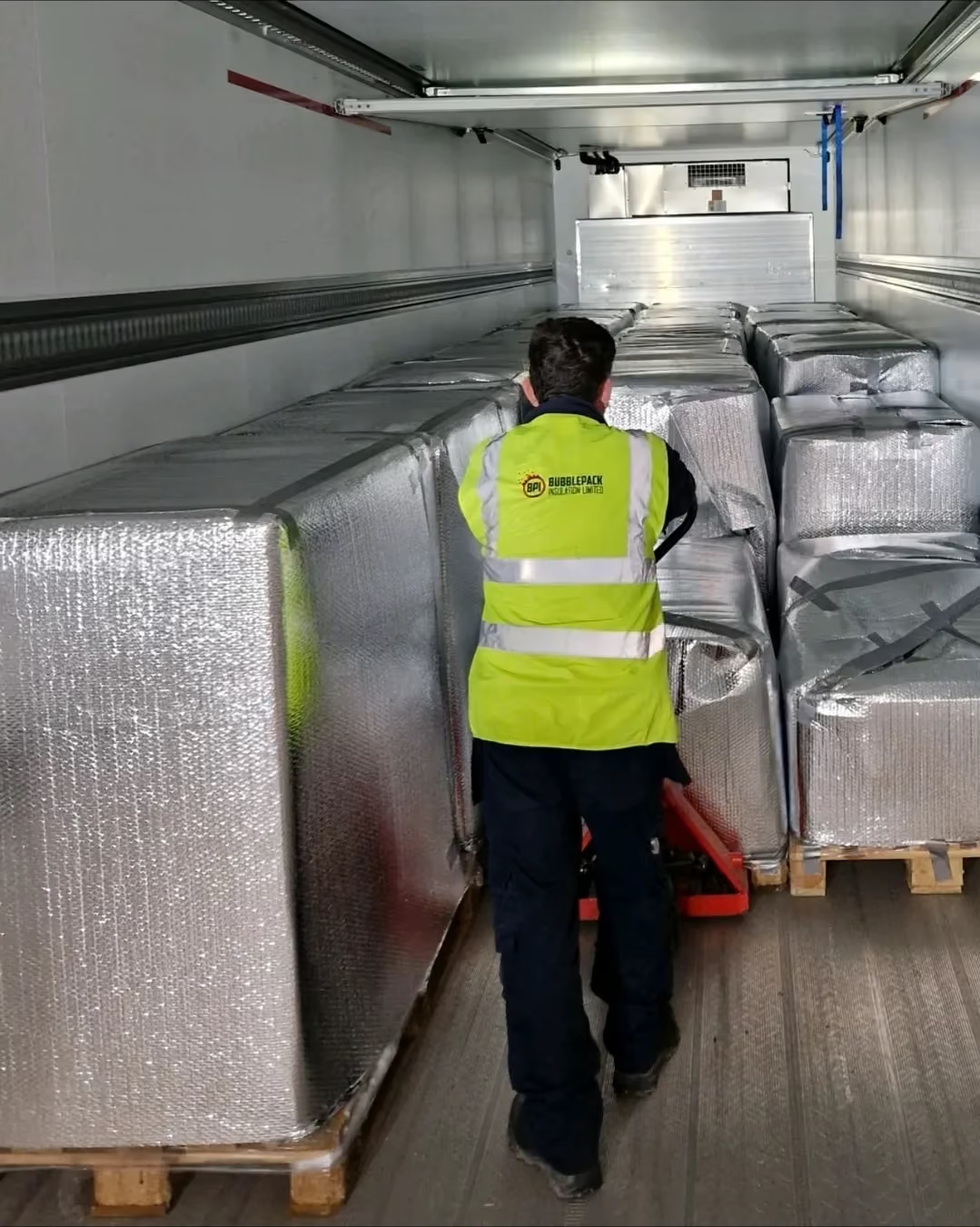


Thermal container liners are used across any sector shipping temperature-sensitive cargo in dry containers. Bubblepack works primarily with four: dairy and milk powder exporters, pharmaceutical and life sciences manufacturers, wine, spirits and beverage producers, and chemical and industrial ingredient exporters. The common factor is cargo with a definable temperature tolerance rather than a requirement for exact, powered refrigeration.
If your product must hold an exact temperature continuously for the entire voyage, with no tolerance for drift, a reefer is the correct choice. If your product has a documented tolerance band and the real risk is temperature spikes, condensation or freezing rather than precise control, a thermal liner protects it at a fraction of the cost. Bubblepack will give an honest assessment for your specific cargo and route, including recommending a reefer where that is genuinely what you need.
Exporters typically reduce shipping costs by 40 to 60% when using thermal liners instead of refrigerated containers, depending on the route and the product requirements.
Yes. Bubblepack is headquartered in Dublin and installs across Ireland with its own trained teams, and supplies exporters across Europe. The prefabricated Integrated Liner is designed specifically for international and multi-location supply, since compact units can be distributed to depots and logistics locations without requiring Bubblepack installation personnel on site at every destination.
Yes. Liner performance has been validated using third-party temperature loggers on live commercial shipments rather than laboratory simulation, across four real route types: European short haul from Wexford to the Czech Republic, a freezing-conditions route from Ireland to Romania, long haul from Ireland to the Middle East and Africa, and transatlantic from Dublin to New York.