
En
Milk powder is hygroscopic, meaning it actively draws moisture out of the surrounding air. That single property drives most dairy export claims.
.jpg)
When powder absorbs moisture it clumps and cakes, solubility drops, lactose begins to crystallise, and bacterial growth becomes possible.
Container rain is the specific mechanism: warm, humid air inside a steel container hits a cold roof and wall surface overnight, condenses, and drips onto the cargo below.
The U.S. Dairy Export Council recommends dry dairy products be held below 25 degrees Celsius with relative humidity below 65%, conditions an uninsulated container on a long route routinely breaches.
Wetting of multiwall paper bags reduces the support they give the inner polyethylene lining, which can lead to bags bursting and outright product loss.
.jpg)
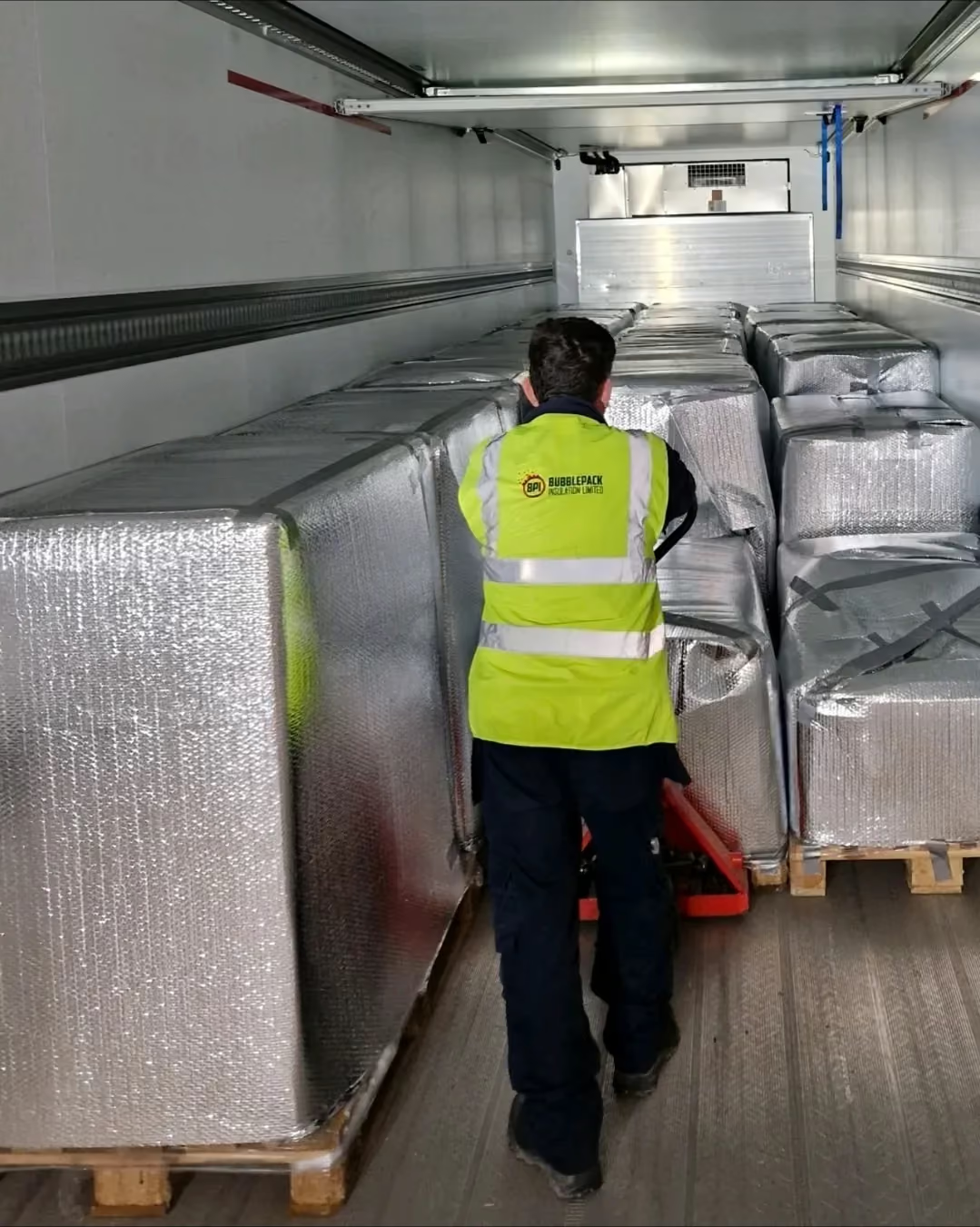
A thermal liner does not refrigerate. It slows the rate at which the container interior tracks the outside temperature, which is what actually drives condensation.
Reflective metalised surfaces reject radiant heat before it reaches the cargo space, reducing the daytime temperature peak.
Slower temperature change through the night means the interior air is far less likely to reach its dew point against a cold steel surface, which is the root cause of container rain.
A continuous barrier between the steel wall and the pallet stack keeps condensation that does form on the steel away from the paper sacks.
The liner adds moisture-barrier performance in its own right, with water vapour transmission measured at 0.8 to 1.5 grams per square metre per 24 hours on the 5-layer laminate.
Bubblepack has published a real case study covering a dairy powder shipment on the Wexford to Czech Republic route, where an uninsulated container showed sharp temperature swings that repeatedly breached a 20 degree upper limit, while the insulated container stayed within parameters across the same journey. A second real validation on the Ireland to Romania route tested the opposite risk, freezing conditions, using paired insulated and non-insulated shipments.
The Hidden Cost of Temperature Excursions in Global Dairy Logistics - And Why Insulation Is Becoming the New Industry Standard
A practical look at how insulation helps dairy exporters cut reefer costs while protecting temperature-sensitive products.
Consideration
Uninsulated dry container
Dry container with thermal liner
Refrigerated container
Condensation and container rain risk
High, the primary cause of dairy powder moisture claims
Substantially reduced, temperature change is dampened
Low, but at full refrigeration cost
Peak temperature exposure
Direct, tracks external conditions
Reduced, radiant heat reflected before reaching cargo
Controlled to setpoint
Power or refrigerant required
None
None
Continuous power supply and refrigerant
Relative cost
Lowest, but carries the damage risk
A fraction of refrigerated container cost
Highest, plus fuel and maintenance
Best suited to
Cargo genuinely insensitive to temperature and moisture
Dairy powder, nutritional powders and food ingredients with a tolerance band
Chilled or frozen dairy requiring exact continuous control
Thermal container liners help protect dairy and milk powder shipments from temperature fluctuations, condensation and moisture during transit. They provide passive thermal protection for ambient cargo where precise temperature control is not required, helping reduce spoilage, caking and packaging damage.
Sector experience
Over three decades insulating containers for exporters in this sector and three others.
Real validation
Third-party temperature logger data from live commercial shipments across four route types.
Industry recognition
Shortlisted twice at the 2026 Irish Exporters Association Export Industry Awards.
Cost case
Typically 40 to 60% lower cost than refrigerated containers, depending on route and product.
.avif)
The U.S. Dairy Export Council recommends dry dairy products be kept below 25 degrees Celsius with relative humidity below 65%. An uninsulated steel container on a long or warm route regularly exceeds that. A thermal liner reduces the peak temperature the cargo is exposed to and slows the rate of change, helping keep the shipment inside a safe band without refrigeration.
Container rain happens when warm, humid air inside a container reaches its dew point against a cold roof or wall and condenses onto the cargo. A thermal liner reduces this by slowing how quickly the container interior tracks external temperature changes, so the interior air is less likely to hit dew point, and by placing a continuous barrier between the steel surfaces and the cargo.
Milk powder is hygroscopic and readily absorbs moisture from the surrounding air. Once it does, the powder clumps and cakes, its solubility decreases, the lactose starts to crystallise, and bacterial growth becomes possible. Controlling moisture exposure in transit is therefore as important as controlling temperature.
Roll Liner installation is available where Bubblepack's trained installation teams and material stock are based, primarily Ireland, making it a strong fit for exporters shipping from an Irish port of origin.
Not usually. Chilled and frozen dairy requires refrigeration, but dry dairy powders and nutritional powders generally have a temperature tolerance band rather than needing exact continuous control. For that cargo a thermal liner protects against the real risks, temperature spikes and condensation, at a fraction of the cost of a refrigerated container.
A liner slows the rate of heat loss, which helps protect cargo during cold snaps or transit delays. It does not generate heat, but it stabilises internal conditions and reduces rapid temperature drops. Bubblepack has validated this specifically on the Ireland to Romania route, where freezing conditions rather than heat were the concern.
Exporters typically reduce shipping costs by 40 to 60% when using thermal liners instead of refrigerated containers, depending on route and product requirements.