
Start with the moisture source
Condensation is driven by moisture and temperature conditions. Before choosing a remedy, assess loading humidity, cargo and packaging moisture, container condition and the expected journey. No single measure reliably prevents every form of container condensation.
Desiccants
Desiccants absorb moisture within their operating capacity. Their suitability depends on the type and quantity used, the moisture load, duration and placement. They do not cool cargo or fix a leaking container.
Ventilation
Ventilation may help in some situations but can introduce additional moisture when outside air is more humid. The correct approach depends on cargo requirements, air conditions and the equipment being used. Avoid assuming that more ventilation is always better.
Thermal liners
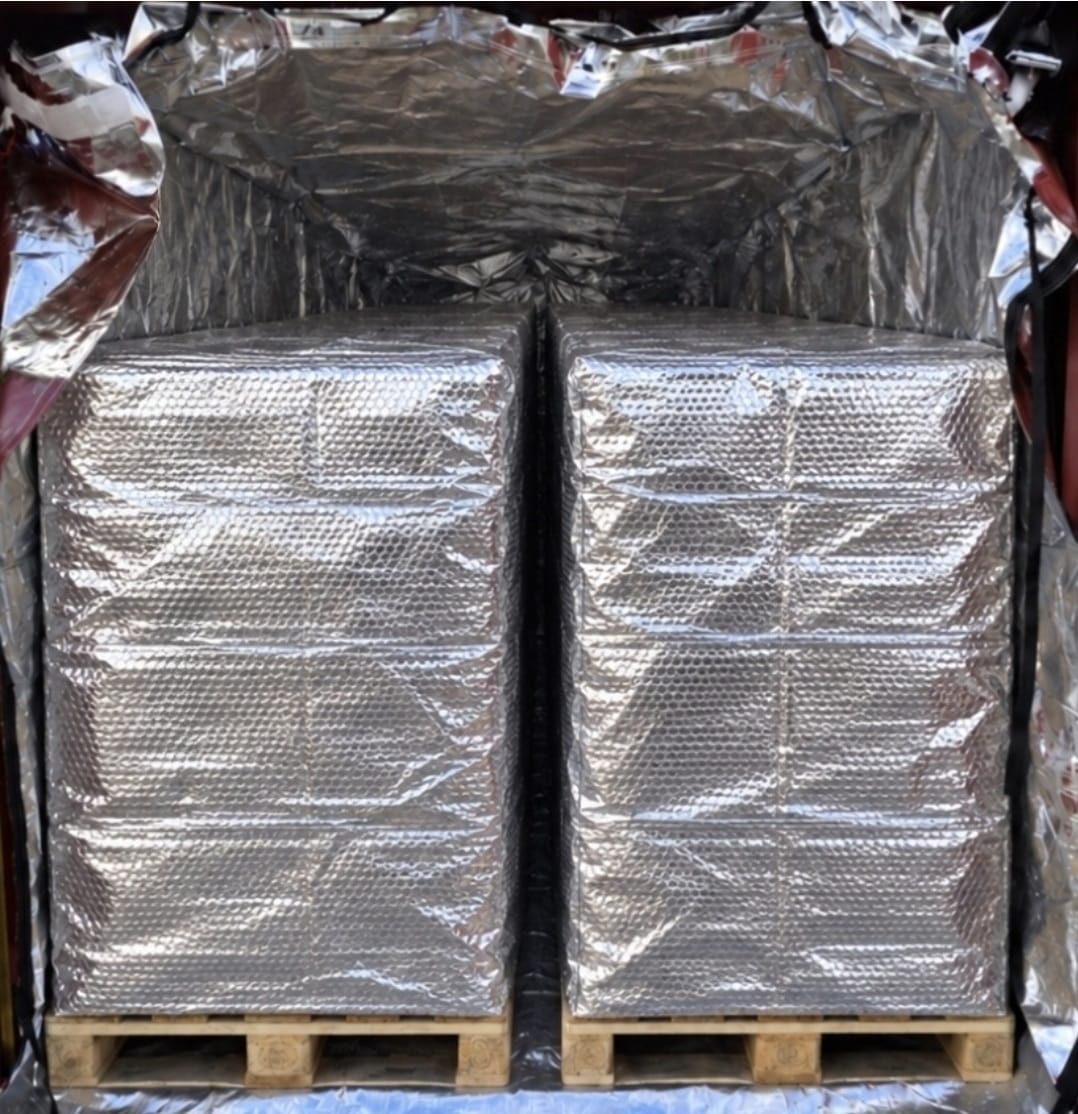
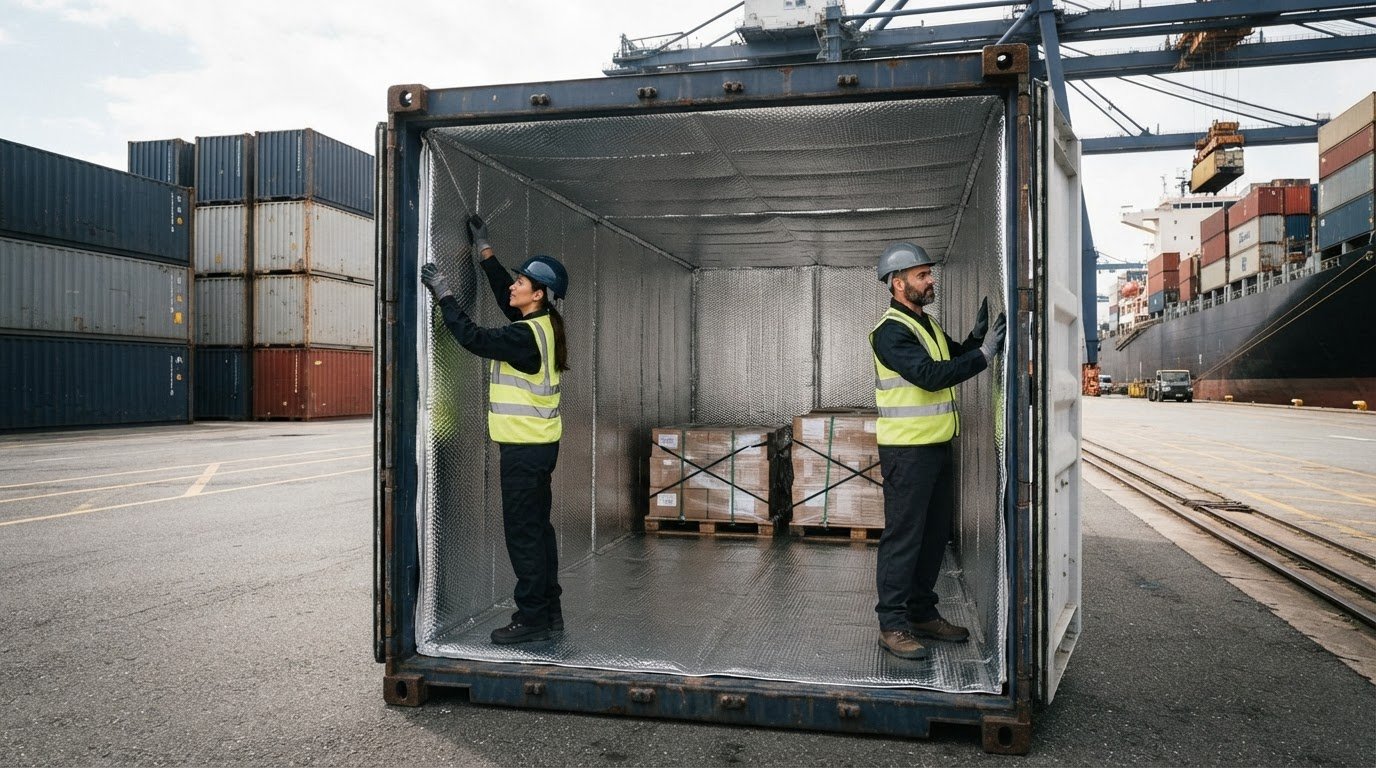
Thermal liners slow heat transfer and may reduce the rate of temperature changes around cargo. This can help manage some conditions associated with condensation, but does not remove water vapour or maintain a set temperature.
Combining measures
Good container inspection, dry loading materials, suitable packaging, appropriate moisture management and a shipment-specific equipment choice work together. For temperature-sensitive goods, assess whether passive insulation is sufficient or active refrigeration is required.
BubblePack's Roll Liner is primarily supplied and installed by its own technicians in Ireland. The Integrated Liner is a prefabricated option for international supply, with fitting by shippers or local partners by arrangement.
For a shipment-specific discussion, provide the cargo, documented temperature limits, container type, route, loading arrangements and required date. Contact BubblePack for a quotation.