
For exporters and freight forwarders, the choice between a thermal liner in a standard dry freight container and a refrigerated container (reefer) is both a cargo-protection decision and a commercial one. A lined dry container can offer substantial savings on suitable routes, but the two solutions are not interchangeable. The starting point is always the product's documented temperature requirements.
What is the difference between a thermal liner and a reefer?
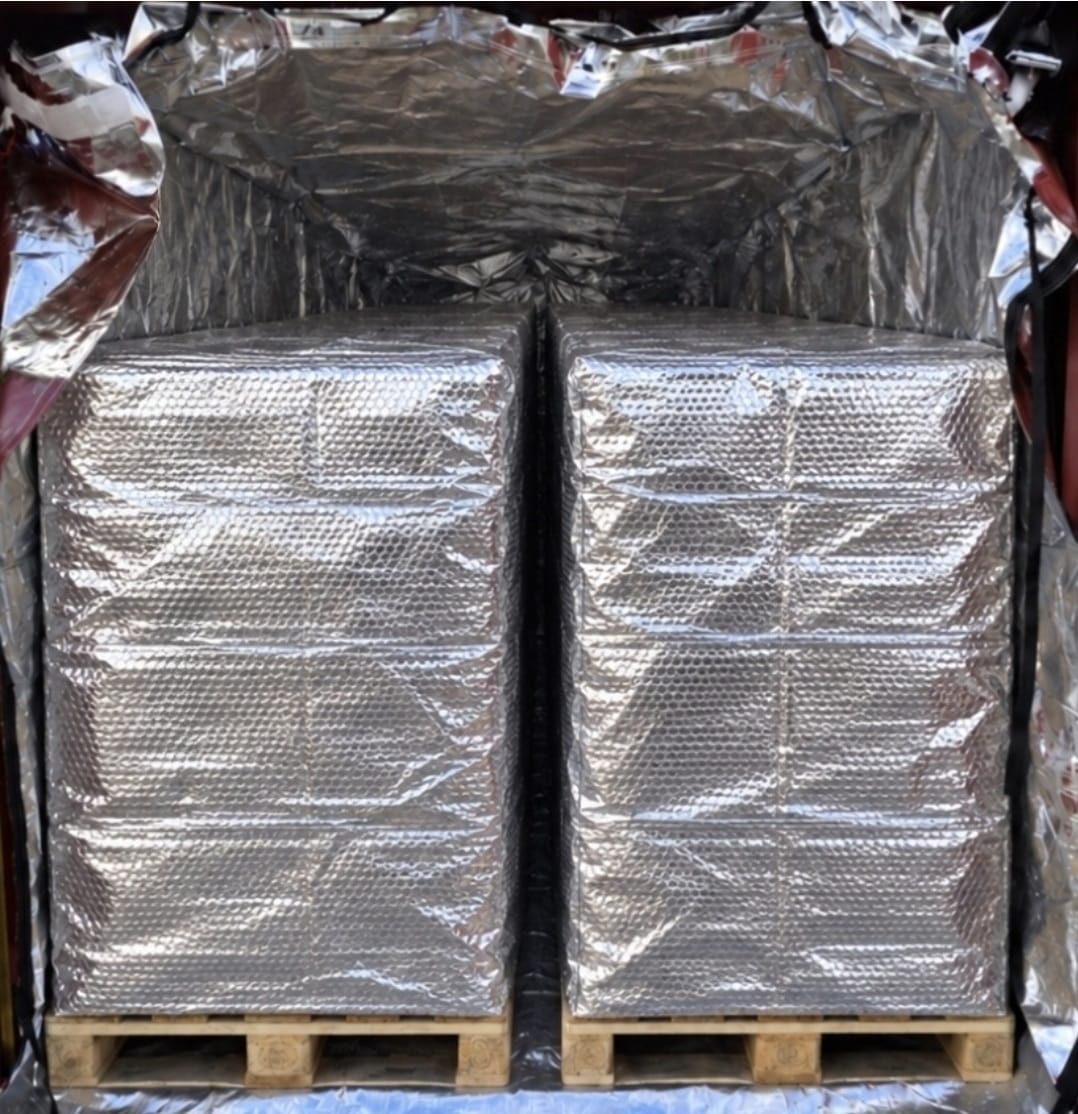
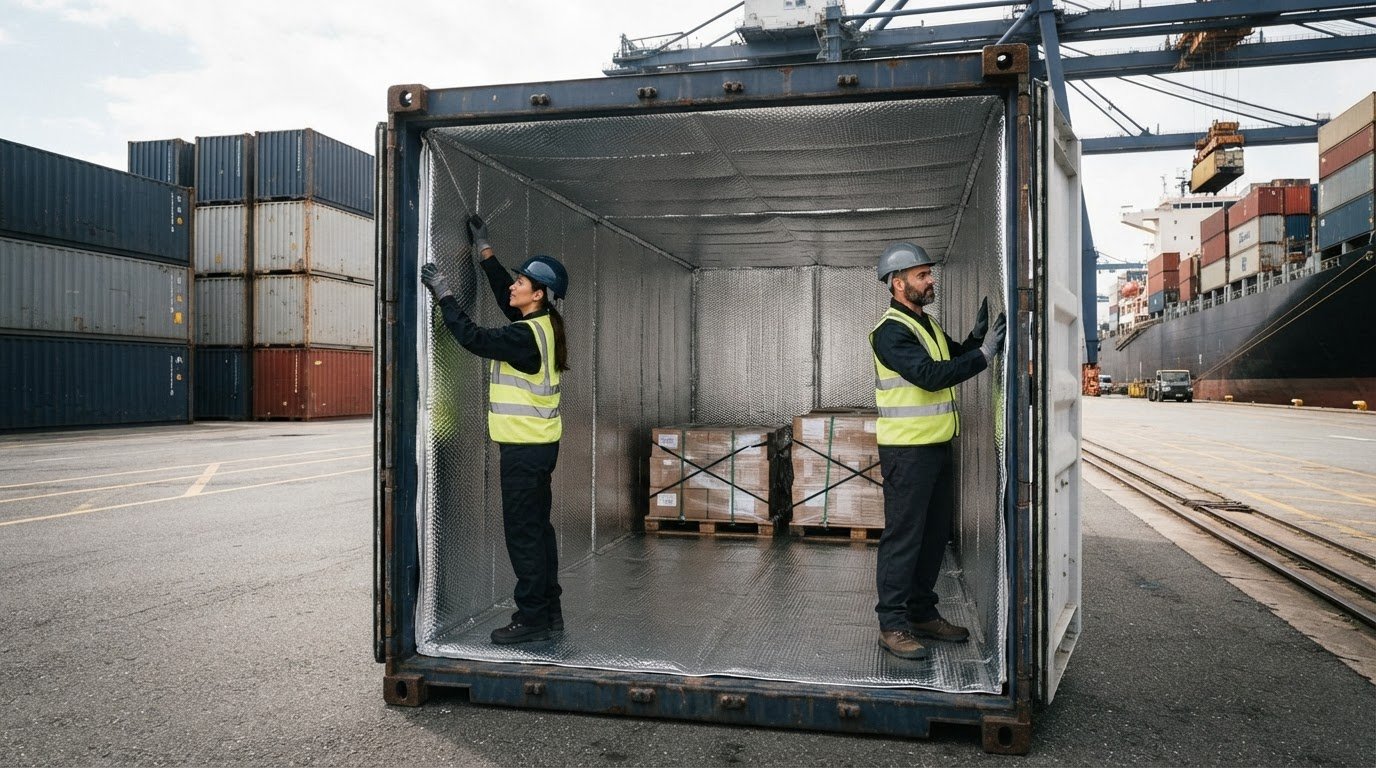
A thermal liner is a passive insulation system fitted inside a dry freight container. It helps reduce heat transfer and moderate temperature changes around cargo, without actively cooling or heating the load. It does not maintain a set temperature.
A reefer uses powered refrigeration to provide active temperature control. It can operate with an appropriate electrical supply, including generator sets where fitted. For cargo that must remain within a tightly controlled range, a suitably qualified reefer may be necessary.
Start with cargo suitability, not the freight rate
Before comparing costs, confirm the cargo's approved temperature limits, loading temperature, packaging, moisture sensitivity, route, season and expected journey duration. A product that requires a maintained temperature setpoint should not be moved to a lined dry container simply because the freight rate is lower.
For pharmaceutical cargo, the shipper's approved product requirements and transport qualification are particularly important. For food ingredients, dairy powders, beverages and suitable industrial products, the relevant product specification - not the industry label - determines whether passive insulation can be considered.
What should a fair cost comparison include?
Compare the same shipment, route, container size and service scope. A headline dry-container rate alone is not the total cost of a lined shipment, and a reefer rate may or may not include all ancillary charges.
Container freight
Lined dry container: Quoted dry-container rate for the lane.
Refrigerated container: Quoted reefer rate for the same lane.
Thermal protection
Lined dry container: Liner supply and any installation charge.
Refrigerated container: Active refrigeration included in the equipment, subject to the booking terms.
Delivery and fitting
Lined dry container: Material delivery, depot access and fitting arrangements where applicable.
Refrigerated container: Container collection and any equipment-specific handling requirements.
Power and generators
Lined dry container: No electrical power required by the liner.
Refrigerated container: Power arrangements and any applicable generator or connection charges.
Equipment availability
Lined dry container: Availability of suitable dry containers and liners.
Refrigerated container: Availability of suitable reefer equipment.
Temperature control
Lined dry container: Passive insulation; no setpoint control.
Refrigerated container: Active temperature control when suitably powered.
Shipment assessment
Lined dry container: Confirm passive protection is suitable for the cargo and journey.
Refrigerated container: Confirm equipment and settings meet the cargo requirements.
Ask the forwarder or carrier to identify which costs are included in each quotation. This avoids comparing a fully arranged reefer movement with a dry-container rate that excludes liner delivery or fitting.
Not sure whether a thermal liner is suitable for your shipping route?
Every shipping route presents different temperature conditions. Seasonal changes, transit duration, transhipment and port delays can all influence cargo exposure.
BubblePack can help assess your proposed shipping route against your cargo's temperature requirements, using available route information and temperature data to support the discussion. An assessment can inform equipment selection but cannot predict exact cargo temperatures or guarantee liner suitability.
Contact BubblePack to discuss a route assessment.
How much could an exporter save?
On suitable routes, BubblePack's thermal liners can offer 40–60% lower shipping costs than refrigerated containers. The actual saving depends on the lane, equipment availability, liner configuration, installation arrangements and what each freight quote includes. It is not a guaranteed saving on every shipment.
For a transparent comparison, calculate:
- Lined dry-container total: dry-container freight + liner supply + installation (if required) + relevant delivery and handling charges.
- Reefer total: reefer freight + applicable power, generator, handling and other charges not already included.
- Difference: reefer total minus lined dry-container total.
- Percentage saving: difference divided by reefer total, multiplied by 100.
Use current written quotations for the actual route rather than generic published freight rates. This calculation compares costs; it does not establish that both solutions provide equivalent cargo protection.
How do installation and loading arrangements affect cost?
In Ireland, BubblePack primarily supplies and professionally installs its Roll Liner. Fitting is commonly arranged at an empty-container depot before the container is collected for loading, or at another agreed location. Typical Roll Liner installation time is 20–45 minutes, depending on the job.
For international shipments, the prefabricated Integrated Liner can be supplied for fitting by the shipper or through local partners where available. Installation typically takes 7–20 minutes, depending on container size. Local fitting availability, site access and delivery arrangements should be confirmed before booking.
Planning fitting before loading can simplify coordination, but exporters should still allow for the depot's booking process, container access and any required handling arrangements.
What happens during delays, transhipment and temperature changes?
Passive insulation continues to provide its insulating function without electricity, including during terminal dwell and onward transport. However, it does not hold cargo at a fixed temperature indefinitely. Exposure depends on starting conditions, packaging, external temperatures and time in transit.
Reefers provide active temperature control when appropriately powered, including by generator sets where fitted. A delay does not automatically mean a reefer loses power or stops cooling. The actual operating arrangements depend on the carrier and transport stages.
Condensation risk also requires separate consideration. A liner may help reduce exposure to conditions contributing to condensation, but it cannot remove existing moisture, repair a leaking container or guarantee a condensation-free shipment.
What about emissions?
A thermal liner requires no power for its passive insulating function, whereas a reefer uses energy for active refrigeration. That can create an emissions advantage for suitable lined dry-container shipments. But a credible carbon-footprint comparison must account for the vessel, route, equipment, energy use and calculation boundaries. A general percentage should not be presented as a measured reduction for a particular shipment without supporting data.
When is a reefer the better choice?
A reefer is generally appropriate where the cargo requires active temperature control, a maintained setpoint or a qualified refrigerated supply chain. Examples may include certain pharmaceutical products, chilled or frozen goods, and other products whose approved specifications cannot be met by passive insulation. The decision should be based on the product and shipment requirements, not a blanket rule for an entire industry.
How can an exporter evaluate a lined dry-container trial?
- Confirm the cargo's documented temperature and handling limits.
- Select a representative route and season, including realistic delays and inland movements.
- Obtain comparable written dry-container and reefer quotations.
- Agree the liner configuration and installation arrangements.
- Where appropriate, use temperature loggers to document actual conditions.
- Review the results against the product requirements before considering a wider programme.
Temperature records from one shipment can support a lane assessment, but cannot guarantee the outcome of future shipments. For products requiring formal qualification, the shipper remains responsible for that process.
Frequently asked questions
Is a thermal liner a replacement for a refrigerated container?
Only where the cargo and route are suitable for passive insulation. A thermal liner cannot actively heat, cool or maintain a setpoint.
Are thermal liners always cheaper than reefers?
No. Potential savings depend on the lane, equipment, liner and installation arrangements. BubblePack's confirmed 40–60% potential saving applies to suitable shipments, not every route.
Does a lined container need electricity?
The liner itself does not require electricity. It provides passive insulation throughout the journey.
Can liners be installed before the container is collected?
Yes. In Ireland, BubblePack commonly arranges Roll Liner fitting at empty-container depots before collection. International Integrated Liner fitting can be discussed by location.
Can a liner guarantee a temperature range during transit?
No. Performance depends on the cargo, starting temperature, packaging, external conditions and journey duration. Use product-specific requirements and suitable monitoring when assessing a shipment.
Request a shipment-specific comparison
Send BubblePack the cargo type, documented temperature requirements, container size, route, season, quantity and loading location. We can discuss which liner system and fitting arrangement may be appropriate, and provide a quotation for the liner service.