
Thermal Container Liner Installation
Fill the form to receive a call
Want to know how Bubblepack can protect your valuable cargo?
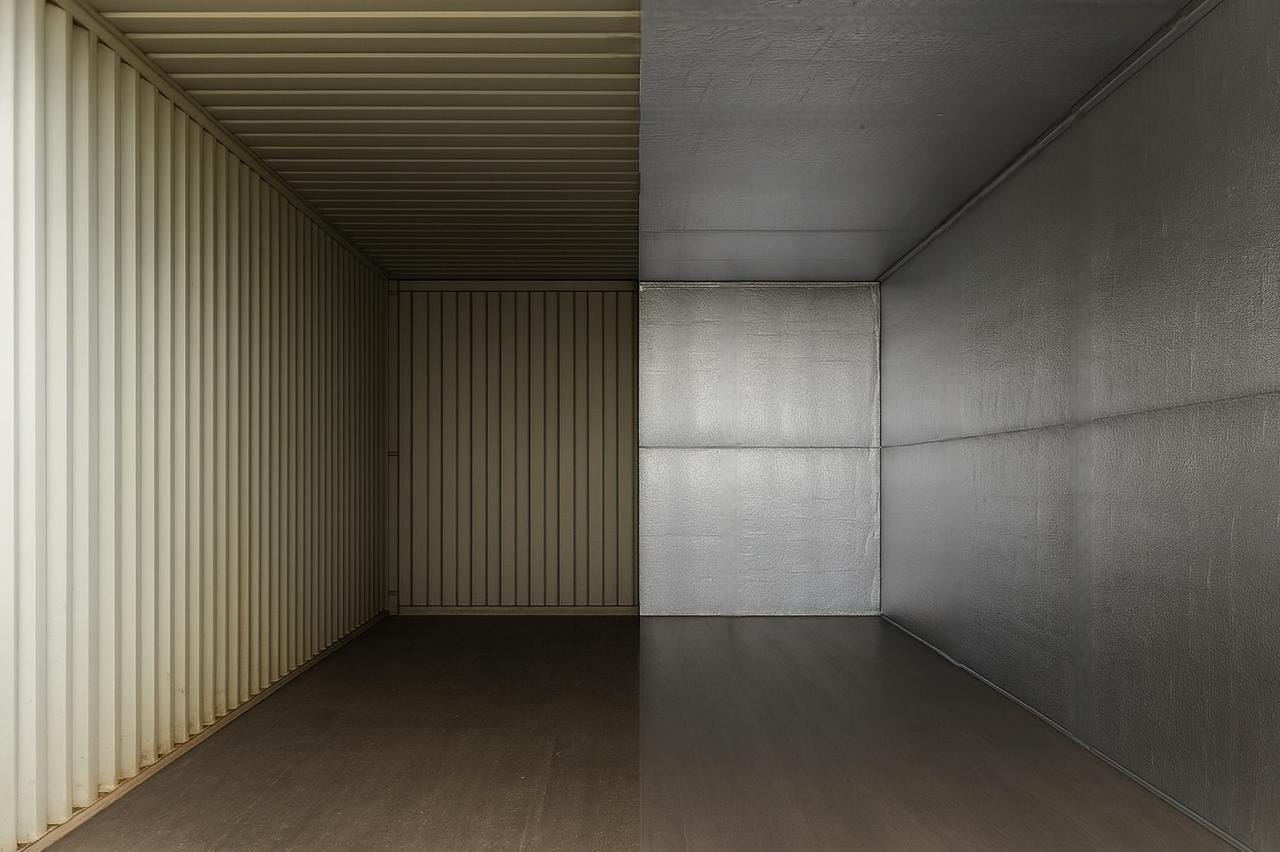
What the Installation Actually Involves
The liner is fitted into an empty container before your cargo goes in. There is nothing for your team to supervise and no change to how you load.
1
2
3
4
.png)
Because the integrated liner is fitted securely to the container’s internal structure, it stays in position throughout loading and transit, providing consistent coverage without the movement or shifting associated with loose, bag-style liners.
How Long Installation Takes
Two formats, two different fitting times. Both are quick enough to sit inside a normal container turnaround.
Container size
Liner format
Around 7 to 12 minutes
20ft standard
Integrated Liner, prefabricated
Around 7 to 12 minutes
40ft and 40ft HC
Integrated Liner, prefabricated
Around 12 to 20 minutes
45ft
Integrated Liner, prefabricated
Around 15 to 20 minutes
Any size, full or partial coverage
Roll Liner, cut and fitted on site
20 to 45 minutes depending on container size and coverage
Who Carries Out the Fitting
Three ways to have it done, and all three are properly resourced.
Bubblepack technicians, across Ireland
Our own employed technicians, based in Dublin and Kildare, fit liners at container depots before collection or at your own premises. Both liner formats are available.
Our installation partner network, internationally
Across the United Kingdom, Europe and Asia, fitting are delivered through our network of installation partners, so the container arrives ready to load with no change to your logistics workflow.
Your own team, if you prefer
The Integrated Liner is prefabricated to fit standard 20ft, 40ft, 40ft HC and 45ft dimensions and needs no specialist training or equipment, so many customers hold stock and fit it themselves as part of container prep.
.jpg)
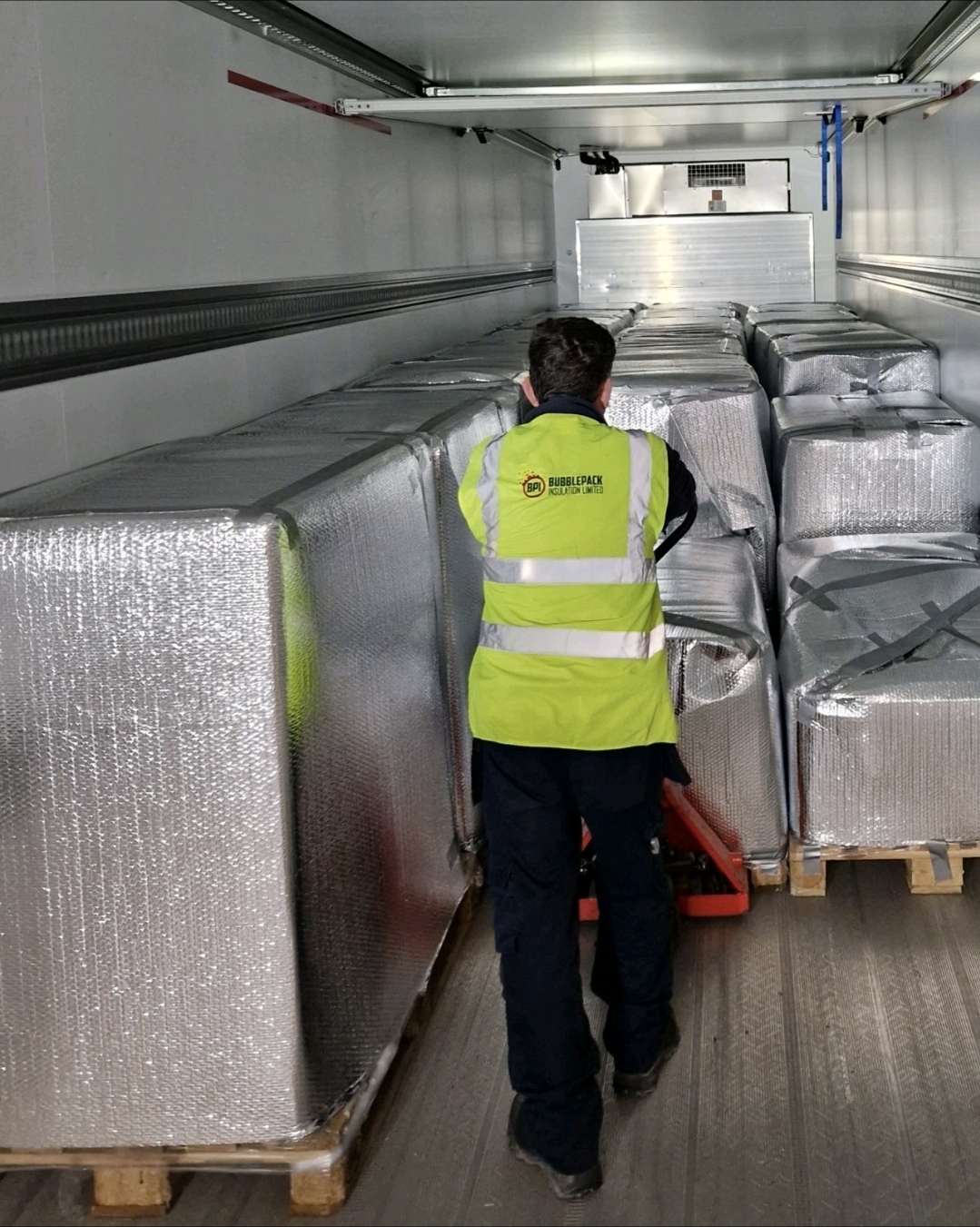
What the Service Includes
Container suitability check before fitting begins.
Full-coverage lining to the agreed specification, including walls, ceiling and doors, with a six-sided floor option where the cargo requires it.
Fitting before loading, at a depot or at your premises, so containers arrive or leave ready to load.
Compatibility with palletised and carton cargo and standard forklift loading.
Both liner formats, so the specification is matched to the cargo rather than to whatever is in stock.
Route and cargo assessment, in person in Ireland and remotely elsewhere using your route and cargo data.
What Installation Costs, and What Drives the Price
The honest answer is that a single figure would mislead you, because the same container costs different amounts to line depending on six things. Rather than publish a number that would not apply to your shipment, here is what actually moves the price.
What we can be specific about is the comparison, because it comes from real client outcomes rather than a model. Exporters typically reduce shipping costs by 40 to 60 percent using a lined dry container instead of a refrigerated container, on the same route with the same cargo. For an indicative figure on your own lane, use the Bubblepack calculator, or send us your route and annual container volume and we will quote it properly.
Lined Dry Container, Uninsulated Container, or Reefer
Consideration
Uninsulated dry container
Dry container with liner installed
Refrigerated container
Up-front cost per container
Lowest, but carries the full damage risk
A fraction of refrigerated container cost
Highest, plus fuel and power at every leg
Typical cost versus a reefer
Not comparable
Exporters typically cut costs by 40 to 60 percent
Baseline
Time added to container turnaround
None
7 to 45 minutes, before loading
None, but booking and repositioning are slower
Power or refrigerant needed
None
None
Continuous power supply and refrigerant
Protection during dwell and customs holds
None
Continuous, needs no power
Only while powered and plugged in
Best suited to
Cargo genuinely insensitive to temperature and moisture
Cargo with a documented tolerance band
Cargo needing exact, continuous, powered control
How We Know the Installation Worked
A liner is only as good as the result it produces in transit, so we measure it. Performance is validated using third-party temperature loggers on live commercial shipments rather than laboratory simulation, across four route types: a European short haul from Wexford to the Czech Republic, a freezing-conditions run from Ireland to Romania, a long haul from Ireland to the Middle East and Africa with a 40 degree upper parameter, and a transatlantic crossing from Dublin to New York.
For internal quality assurance and product performance validation, Bubblepack may place a small, non-intrusive temperature data logger inside or outside selected containers. These devices do not interfere with cargo, do not transmit any personal data, and do not affect container operation.
For a first shipment we recommend you put your own logger in the container as well. Seeing the result on your own cargo is worth more than any figure we publish.
The Liner Itself

Integrated Liner
A five-layer laminate of double-sided metallised polyester film bonded to high-density polyethylene woven fabric. EUROLAB tested, measured at 95 to 97 percent radiant heat reflectivity, with water vapour transmission of 0.8 to 1.5 grams per square metre per 24 hours, tensile strength of 450 to 600 newtons per 25mm and puncture resistance of 135 to 168 newtons. No delamination after 24 hours in water or 24 hours at 90 degrees Celsius.

Roll Liner
A three-layer construction with reflective metalised foil on both faces around an insulating bubble core, cut and fitted on site. Different build, essentially equivalent thermal performance.
Why Bubblepack?

35+ years of specialisation

Our own technicians in Ireland
Measured, not asserted

Recognised in the industry
Straight answers
Frequently asked questions
How long does thermal container liner installation take?
It depends on the liner format and the container size. The prefabricated Integrated Liner is typically fitted in around 7 to 20 minutes, from roughly 7 to 12 minutes for a 20ft up to around 20 minutes for a 40ft HC or 45ft. The Roll Liner, which is cut and fitted to the specific internal surfaces on site, typically takes 20 to 45 minutes. Both are fitted before loading, so the container is ready to load when the work is finished.
How much does it cost to insulate a shipping container with a thermal liner?
Cost depends on container size, liner format, how much of the container is covered, your annual volume and whether you want the liner fitted or supplied for your own team to fit. Rather than quote a figure that would not apply to your shipment, Bubblepack prices per route and cargo. What we can say from real client outcomes is the comparison: exporters typically reduce shipping costs by 40 to 60 percent using a lined dry container instead of a refrigerated container. Use the Bubblepack calculator for an indicative comparison on your own route, or send us your route and container volume for a quote.
Where is the thermal liner installed, at a depot or at my own premises?
Either. In Ireland, Bubblepack's own technicians fit liners at container depots or at your own premises before the container is collected. Outside Ireland, installation is delivered through our network of installation partners, so the container arrives ready to load with no change to your logistics workflow. If you would rather fit liners yourself, the Integrated Liner is built for that.
Do I need to be present during the installation?
No. The liner is fitted into an empty container before loading, so there is nothing for your team to supervise. Where fitting happens at a depot, the container simply arrives lined and ready to load.
Can a thermal liner be installed in any container size?
The prefabricated Integrated Liner is manufactured to fit standard 20ft, 40ft, 40ft HC and 45ft container dimensions. The Roll Liner is cut and fitted on site, so it can be adapted to non-standard configurations and to partial coverage where only certain walls, the ceiling, the doors or the floor need lining.
Does the liner interfere with forklift loading or palletised cargo?
No. The liner is designed for standard loading, including palletised and carton cargo and forklift access. Because it is secured to the container's internal surfaces rather than draped loosely, there is nothing for a forklift to snag during loading.
Is a thermal container liner reusable?
The material is built for durability rather than single use, with documented tensile strength of 450 to 600 newtons per 25mm, puncture resistance of 135 to 168 newtons, and no delamination after 24 hours in water or 24 hours at 90 degrees Celsius. Whether a specific liner can be reused depends on the route, the cargo and how the container is unloaded at destination, so Bubblepack will give you a direct answer for your own lane rather than a general claim.
What is the thermal liner made of?
It depends on the format. The Integrated Liner is a five-layer laminate of double-sided metallised polyester film bonded to high-density polyethylene woven fabric, EUROLAB tested and measured at 95 to 97 percent radiant heat reflectivity, with water vapour transmission of 0.8 to 1.5 grams per square metre per 24 hours. The Roll Liner uses a three-layer construction with reflective metalised foil on both faces around an insulating bubble core. Thermal performance is essentially equivalent between the two.
How do I know the installation actually worked?
Ask for the data. Bubblepack validates liner performance using third-party temperature loggers on live commercial shipments rather than laboratory simulation, across four route types including a freezing lane into Eastern Europe and a transatlantic crossing. For a first shipment we recommend putting a logger in your own container so you see the result on your own cargo rather than relying on published figures.


