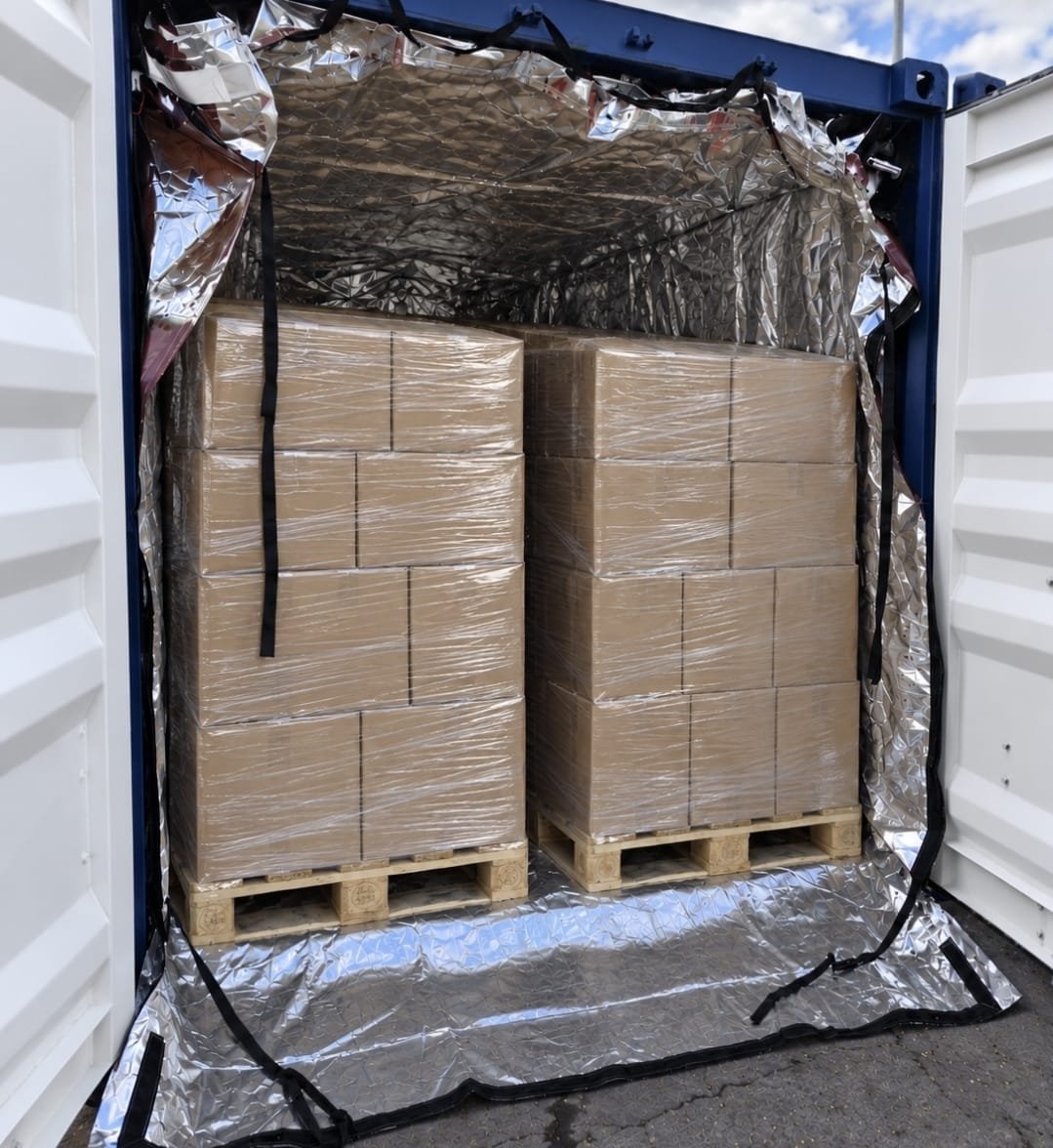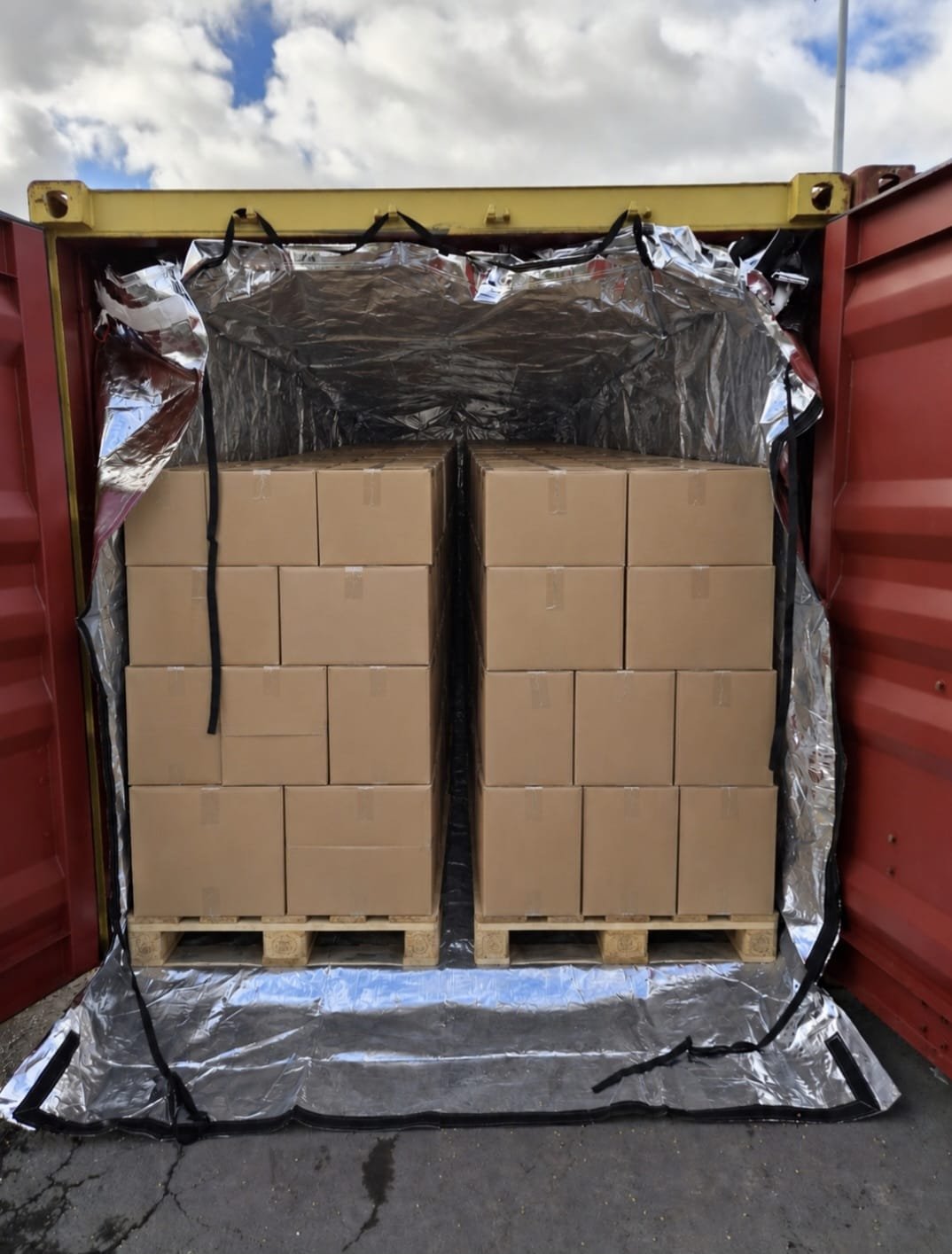
A thermal liner slows temperature change; it does not actively heat, cool or maintain a set temperature. That is the practical meaning of passive thermal cargo protection: insulation helps reduce heat exchange between temperature-sensitive goods and their surroundings without using power.
For exporters, this distinction matters because food, pharmaceuticals and electronics can have different temperature requirements, while conditions may change during ocean transit, port handling and delivery. A passive liner acts as a buffer, not a substitute for active temperature control when a shipment requires it. Pharmaceutical shipments need documented, product-specific temperature requirements and appropriate shipper qualification.
This article explains how insulation materials and covers help protect export cargo, what affects their performance, and how suitability depends on the goods, loading conditions, route, season and transit duration. It also explains where container thermal liners fit into a cargo protection plan, helping you assess whether they suit your shipment.
Key Takeaways
• Understand how passive insulation slows heat exchange, and how that differs from powered temperature control.
• Assess food, pharmaceutical and electronics shipments against documented product requirements, loading conditions and the planned route.
• Confirm whether floor insulation is included, as the container floor can also contribute to heat transfer.
• Explore the Integrated Liner and professionally installed Roll Liner options for suitable export shipments.
What does passive thermal protection mean in container shipping?
Passive insulation slows heat exchange without power, so cargo temperature changes less rapidly as conditions shift. Sunlight can affect a container at port or during transit, while dwell time and final delivery add further exposure.
Passive pallet covers
A pallet cover encloses palletised goods, while a container liner insulates the container interior. Each protects a different part of a shipment: a cover suits a defined pallet load, while a liner addresses exposure across the container. Consider the cargo arrangement, handling points and whether protection is needed for the whole load or selected pallets.
Cargo temperature ranges and fluctuation control
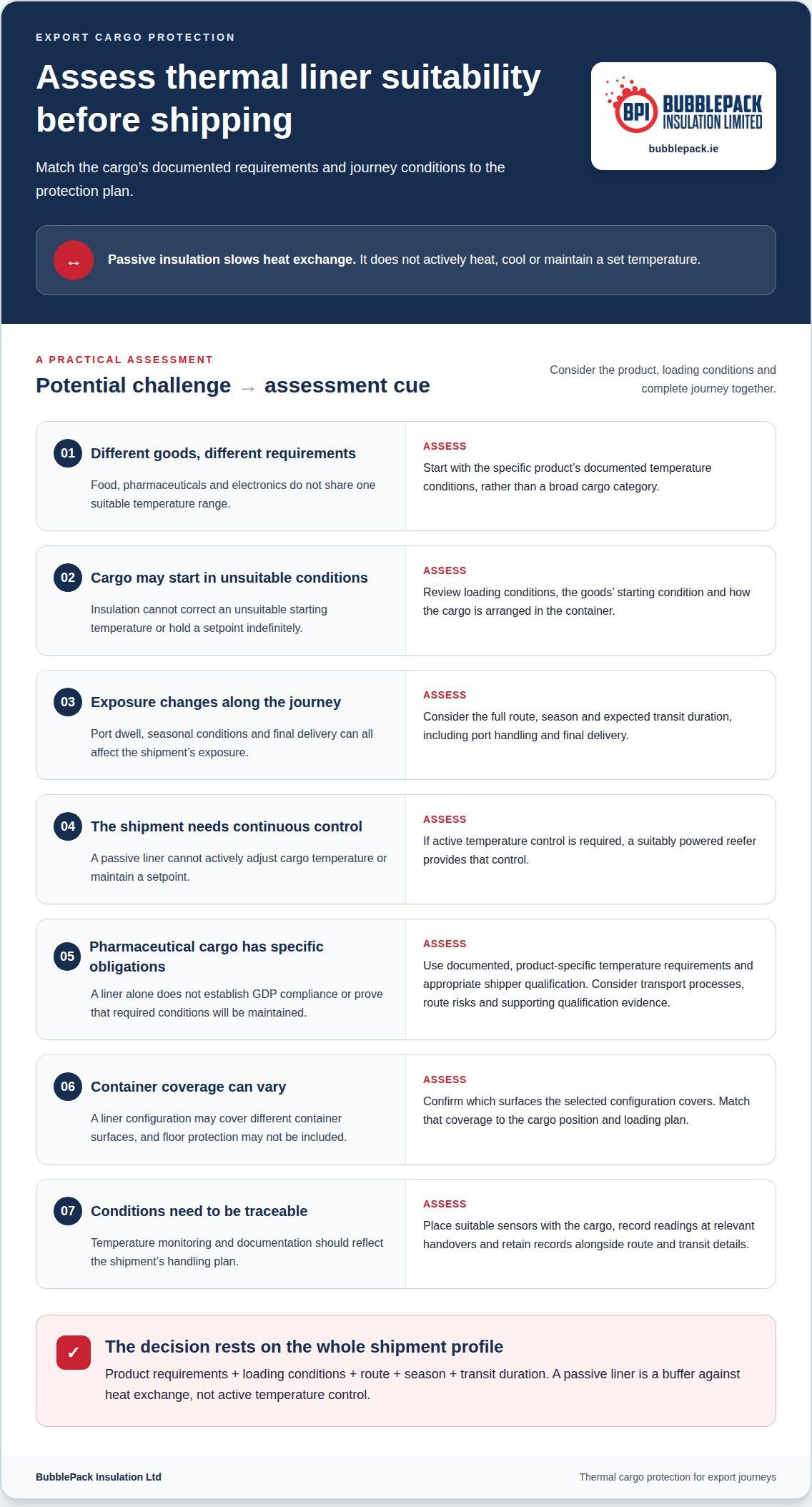
Food, medicines and electronics do not share one suitable temperature range. Use the product’s documented conditions to assess acceptable temperature variation, then consider loading conditions, route, season and transit duration. Insulation can slow temperature fluctuations, but it cannot correct an unsuitable starting temperature or maintain a setpoint indefinitely. A suitably powered reefer provides active control when required.
For export cargo, applicable requirements depend on the commodity and destination. Assess the documented product conditions and relevant sector requirements; a passive cover alone does not establish regulatory compliance.
Risks include prolonged port exposure, temperature extremes during inland transport and delays that extend the journey beyond the conditions assessed. Passive protection cannot actively heat or cool cargo, so it may not suit shipments requiring continuous temperature control.
Temperature monitoring and documentation should follow the shipment’s handling plan. Place suitable sensors with the cargo, record readings at relevant handovers and retain the records alongside route and transit details.
Passive thermal protection slows temperature change during transit without using power. The extent of protection provided by a passive pallet cover depends on the shipment and conditions. A thermal cover can complement refrigerated transport during handling stages.
The final delivery still needs attention. Environmental conditions and the level of temperature control available during inland transport vary, and temperature-sensitive products can be exposed to heat or cold during extended journeys. A passive thermal cover without an active source cannot restore cargo that starts at the wrong temperature or hold a setpoint indefinitely. Suitable loading temperature and realistic transit planning remain essential.
Assessing thermal liner suitability for food, pharmaceuticals and electronics
Suitability starts with the product’s documented temperature requirements, not a broad category label. Dairy ingredients, packaged beverages and electronic components may each have different acceptable conditions. Insulation can slow heat exchange during transport, but it cannot actively adjust cargo temperature. The decision depends on whether passive protection suits the shipment’s requirements and planned journey.
Assess the complete movement before choosing protection. Record the loading conditions, route, season and expected transit duration, including port dwell and final delivery. For example, a container loaded in warm conditions before a route with prolonged port exposure faces a different profile from one moving promptly through a cooler season. Cargo arrangement and the goods’ starting condition also affect the assessment.
Pharmaceutical shipments require documented, product-specific temperature requirements and appropriate shipper qualification. The responsible pharmaceutical business should consider the medicine’s stated conditions, transport process, route risks and supporting qualification evidence. A liner alone does not establish GDP compliance or demonstrate that a shipment will remain within its required conditions. Food exporters should likewise assess the specifications for the particular ingredient or finished product, rather than assume all food cargo behaves alike.
For electronics, use the manufacturer’s documented handling conditions and consider the route’s exposure and timing. Compare the planned shipment profile with those requirements, then decide whether passive insulation provides a suitable buffer or active temperature control is necessary. A practical assessment brings together product documents, loading details, seasonal conditions, route handovers and transit duration. Discuss your export cargo requirements as part of planning a suitable container protection approach.
Container liner configurations and shipment coverage
A liner’s configuration determines which container surfaces receive insulation. A completed liner should cover the intended walls, ceiling and door interiors. Floor insulation is an additional configuration option, rather than a requirement based on keeping floor space clear. Confirm whether floor insulation is included and assess its value against the shipment's thermal protection requirements.
Reflective surfaces and insulating construction can reduce heat exchange between the container interior and surrounding conditions. Their effect depends on the complete arrangement, not the material description alone. A material property does not predict performance for every load or route. Assess the cargo, container and planned transit together to determine the protection required.
The container floor can also transfer heat, whether goods are palletised or floor-loaded. Floor insulation may provide additional protection where justified by the cargo's temperature sensitivity, the expected exposure and the selected liner system. The decision is about thermal performance and configuration, not a supposed need to keep the floor space clear.
When specifying a liner, confirm the container size, coverage, floor option and planned loading arrangement. Evaluate these alongside route, season and transit duration so the selected configuration is appropriate for the cargo.
What steps are required to assess and validate a passive thermal shipment?
Start with the product’s documented temperature requirements and its condition at loading. Passive insulation cannot correct cargo loaded outside its required conditions. Record the goods, loading conditions and planned transit details before selecting a protection approach.
• Match the protection plan to the product’s documented requirements.
• Record loading conditions, including cargo position and the container configuration.
• Map the route, seasonal conditions, port exposure and expected transit duration.
• Review handovers and final delivery, where waiting or transport can extend exposure.
These details define the assessment. For medicines, use the product-specific documented conditions and require appropriate shipper qualification. A thermal cover does not establish qualification or prove that the shipment meets its required conditions. The responsible pharmaceutical business must include the shipment in its documented transport processes and risk assessment.
Any performance assessment should reflect the proposed shipment, not material properties alone. Document the liner configuration assessed, load contents and initial conditions, sensor positions, and the environmental profile used. Internal testing, laboratory work or a lane study can assess performance over a defined transit period. Keep the test configuration aligned with the planned shipment, including cargo arrangement and route exposure.
For monitoring, position sensors to capture relevant conditions within the load, then retain readings with shipment and handover records. Compare those records with the product requirements and assessment profile. If the route, season, cargo arrangement or transit duration changes, reassess the planned protection and supporting qualification. Discuss thermal protection for your export shipment with the team.
BubblePack Insulation: Container Liner Solutions
BubblePack Insulation helps exporters assess container insulation options against cargo requirements, route and loading plans. For international shipments, the BPI Integrated Liner is a prefabricated thermal container liner supplied for international use. It is available for 20ft, 40ft HC and 45ft containers, with installation by shippers or local partners where arranged.
The Integrated Liner uses a five-layer laminate with 95-97% radiant heat reflectivity. Its installation typically takes 7-20 minutes, depending on container size. These product details describe the liner, not guaranteed temperature outcomes for a shipment. Suitability still depends on the goods’ documented requirements, loading conditions, season, route and transit duration. Container coverage also depends on the selected configuration, including whether floor protection is included.
For Irish exporters seeking a professionally fitted option, the BPI Roll Liner is reflective bubble-foil insulation with a three-layer construction. BubblePack’s technicians supply and install it across Ireland, with fitting typically taking 20-45 minutes. Arrangements are commonly made at an empty-container depot before collection. Exporters should organise the container type, depot location, collection date, cargo requirements and fitting availability.
Both options provide passive insulation. Neither actively heats, cools or maintains a set temperature. For pharmaceuticals, use documented product conditions and appropriate shipper qualification when assessing any liner. The appropriate thermal container liner depends on the cargo and shipment plan.
To discuss thermal protection for your export cargo, contact BubblePack Insulation.
Plan the next export movement with confidence
Make the protection decision part of shipment planning, not a last-minute addition. Bring the cargo requirements, loading plan and expected route together in one brief. This gives your logistics team a clear basis for assessing whether passive thermal cargo protection suits the movement or whether active temperature control is required.
For pharmaceutical cargo, keep product-specific conditions and the responsible shipper’s qualification process central to the decision. For food and electronics, apply the same disciplined approach to the goods’ documented requirements and the journey’s exposure points. This creates a practical discussion about cargo needs, container coverage and operational arrangements, grounded in the shipment rather than assumptions.
BubblePack Insulation Ltd can discuss the appropriate liner or cargo protection option for your export plan. Contact BubblePack Insulation Ltd to take the next step in planning protection for your cargo.
Frequently Asked Questions
What is passive thermal cargo protection and how does it work?
Passive thermal protection uses insulation or reflective materials to slow heat transfer between cargo and its surroundings without powered heating or cooling. Container liners and pallet covers are two possible formats. Their effectiveness depends on material construction, coverage, loading conditions and the route. They cannot maintain a fixed temperature indefinitely, so assess suitability against the cargo's documented requirements.
What products are used for passive thermal protection of cargo?
Common formats include thermal covers for palletised freight and liners for shipping containers. The key question is where the cargo needs protection in the transport chain. A pallet cover travels with a defined load unit; a container liner relates to the container configuration. Changes in handling or load arrangement may affect which format is appropriate.
How do thermal blankets and active temperature-controlled shipping compare?
Thermal blankets, pallet covers and container liners provide passive insulation that slows heat exchange but cannot actively maintain a temperature setpoint. Powered refrigerated transport can provide active temperature control when the cargo requires it. Choose based on documented product conditions, the journey and appropriate performance evidence rather than treating passive insulation as equivalent to refrigeration.
What requirements apply to temperature-sensitive cargo based on its commodity and destination?
Requirements vary by product, destination and applicable regulations. Food, pharmaceuticals and electronic components may have different temperature and handling limits. Use documented product specifications and applicable transport requirements. For pharmaceuticals, the responsible business must assess and qualify the proposed shipping arrangement as appropriate; a thermal liner alone does not establish GDP compliance.