
En
Bubblepack supplies thermal container liners to exporters and freight forwarders across the United Kingdom. Take supply and installation and the container arrives ready to load through our network of installation partners, or take liner supply and fit it with your own team. Both are fully supported.
.avif)
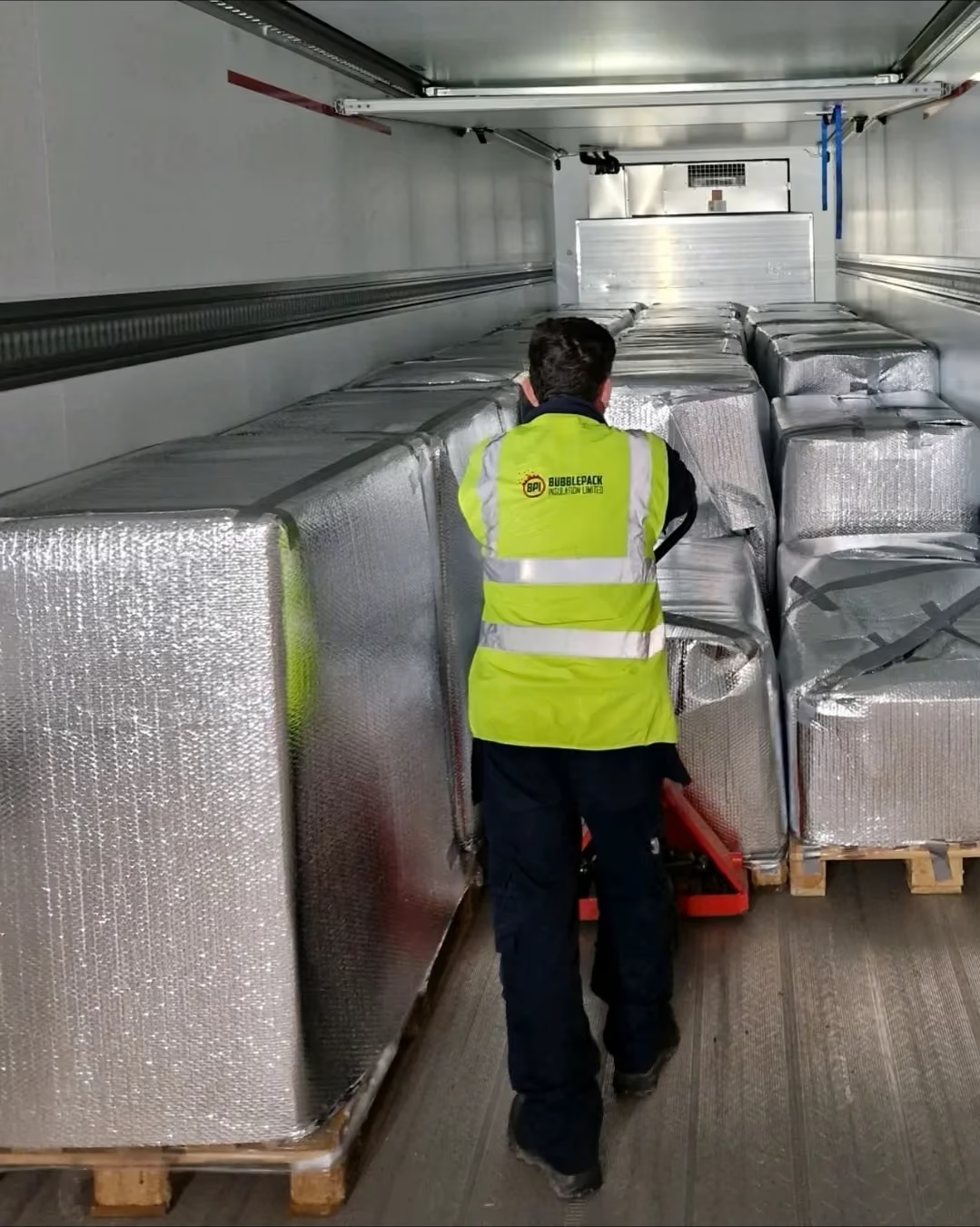
Different operations want different things, so both options carry equal weight and both are properly resourced.
Supply and installation. Fitting is delivered through our network of installation partners, so the container arrives ready to load with no change to your logistics workflow. This suits operations that would rather not add a task to the warehouse.
Liner supply for in-house fitting. The Integrated Liner is prefabricated to fit standard 20ft, 40ft, 40ft HC and 45ft dimensions, positioned inside the container and secured with its own attachment system, typically 7 to 20 minutes (depending on container size) with no trained fitter required.
Compact units, so liners can be held in your own stock and drawn down per shipment rather than ordered per container.
Tell us your annual container volume and where your containers are loaded, and we will quote both options so you can compare them properly.
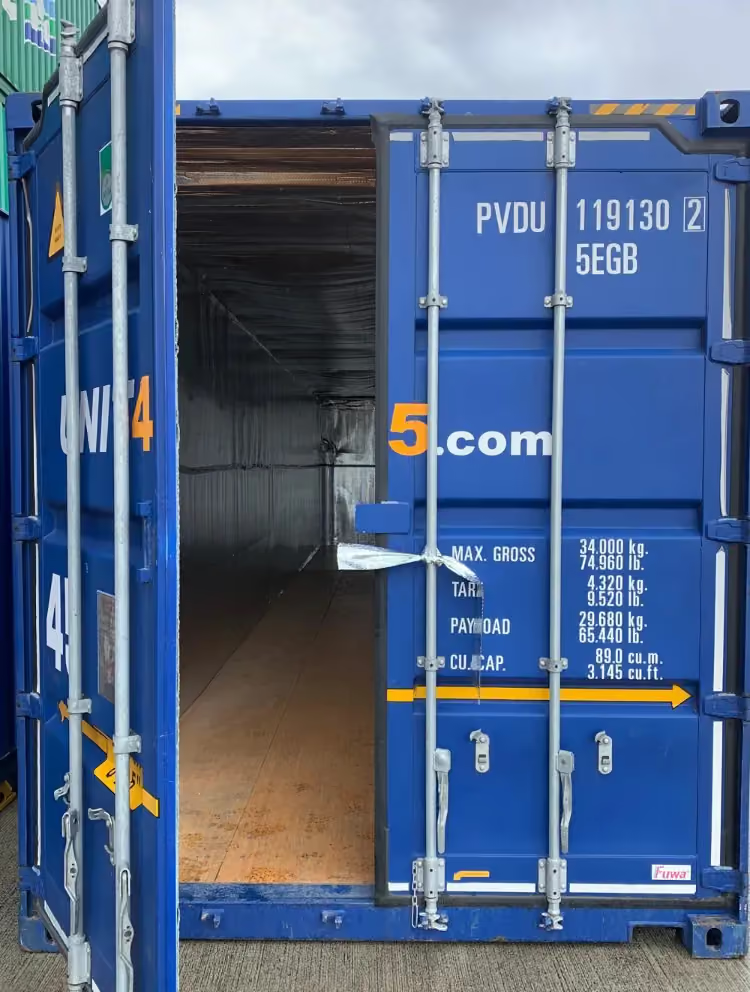
This is the genuinely UK-specific issue, and it is a temperature question as much as a customs one. Since Brexit, a large share of Irish and continental freight has moved off the UK landbridge onto direct sailings, and UK operators handling transit traffic face a different set of trade-offs. Every additional hour at sea or in a customs queue is another hour of thermal exposure, and every overnight is another condensation cycle.
Direct continental sailings from Ireland rose from 12 per week to 42, so landbridge volumes have shifted substantially.
A Rosslare to Dunkirk direct sailing runs around 24 hours at sea against roughly 13 hours for a Dublin to Dunkirk routing via the landbridge, so routing choices change exposure time significantly.
Customs holds and terminal dwell add unpowered standing time, which is precisely where a passive liner keeps working and a refrigerated container does not unless it is plugged in.
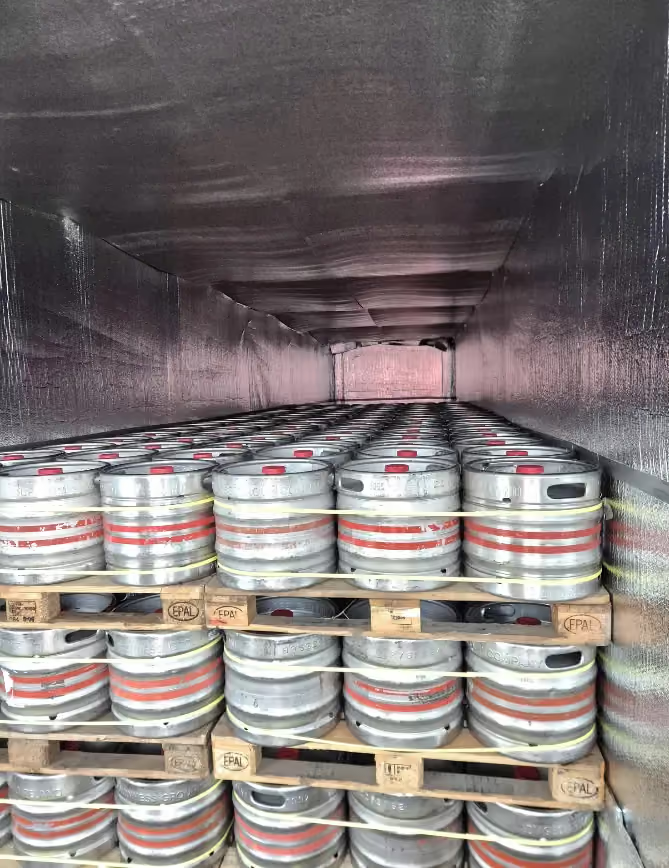
The strongest fit is an operator moving cargo with a genuine temperature tolerance rather than a strict single-degree requirement.
Freight forwarders attaching cargo protection to a client booking as an added-value service.
Exporters in food, drink, dairy, pharmaceutical and chemical sectors.
Operators holding liner stock at their own warehouse for repeat lanes.
Consideration
Uninsulated dry container
Dry container with Integrated Liner
Refrigerated container
Protection during customs holds and dwell
None
Continuous, needs no power
Only while powered and plugged in
Who fits it
Not applicable
Our installation partner network, or your own team in 7 to 20 minutes, whichever you prefer
Not applicable, equipment is hired
Relative cost
Lowest, carries the damage risk
A fraction of refrigerated container cost
Highest, plus fuel and power
Condensation and packaging damage risk
High on multi-week or multi-cycle routes
Reduced, rate of temperature change dampened
Lower, but refrigeration alone is not a moisture barrier
Suitability for strict single-degree cargo
Not suitable
Not suitable, book a reefer
Suitable, the correct choice


Yes, both. Bubblepack supplies thermal container liners to UK exporters and freight forwarders, and installation is delivered through our network of installation partners so the container arrives ready to load. If you would rather fit liners in-house, the Integrated Liner takes roughly 7 to 20 minutes per container (depending on container size) with no specialist training required.
No, on either route. If you take supply and installation, our installation partner network handles the fitting entirely. If you prefer to fit in-house, the Integrated Liner is prefabricated to fit standard container dimensions and secured using its own attachment system, so it needs minimal equipment and no specialist training. Only the Roll Liner, which is cut and fitted on site, requires trained installers.
The Integrated Liner is manufactured to fit standard 20ft, 40ft, 40ft HC and 45ft container dimensions.
Yes. The liner is entirely passive, with no power supply and no refrigerant, so it continues working through customs holds, terminal dwell and inland legs. A refrigerated container only maintains temperature while it is powered and plugged in, which is a real difference on routes where unpowered standing time is likely.
Exporters typically reduce shipping costs by 40 to 60 percent using thermal liners instead of refrigerated containers, depending on the route and the product requirements.
Yes. Forwarders make up the majority of Bubblepack's customer base. The liner is normally attached to a client's booking as an added-value service, which protects the cargo and reduces claims exposure without moving the client onto a refrigerated container.