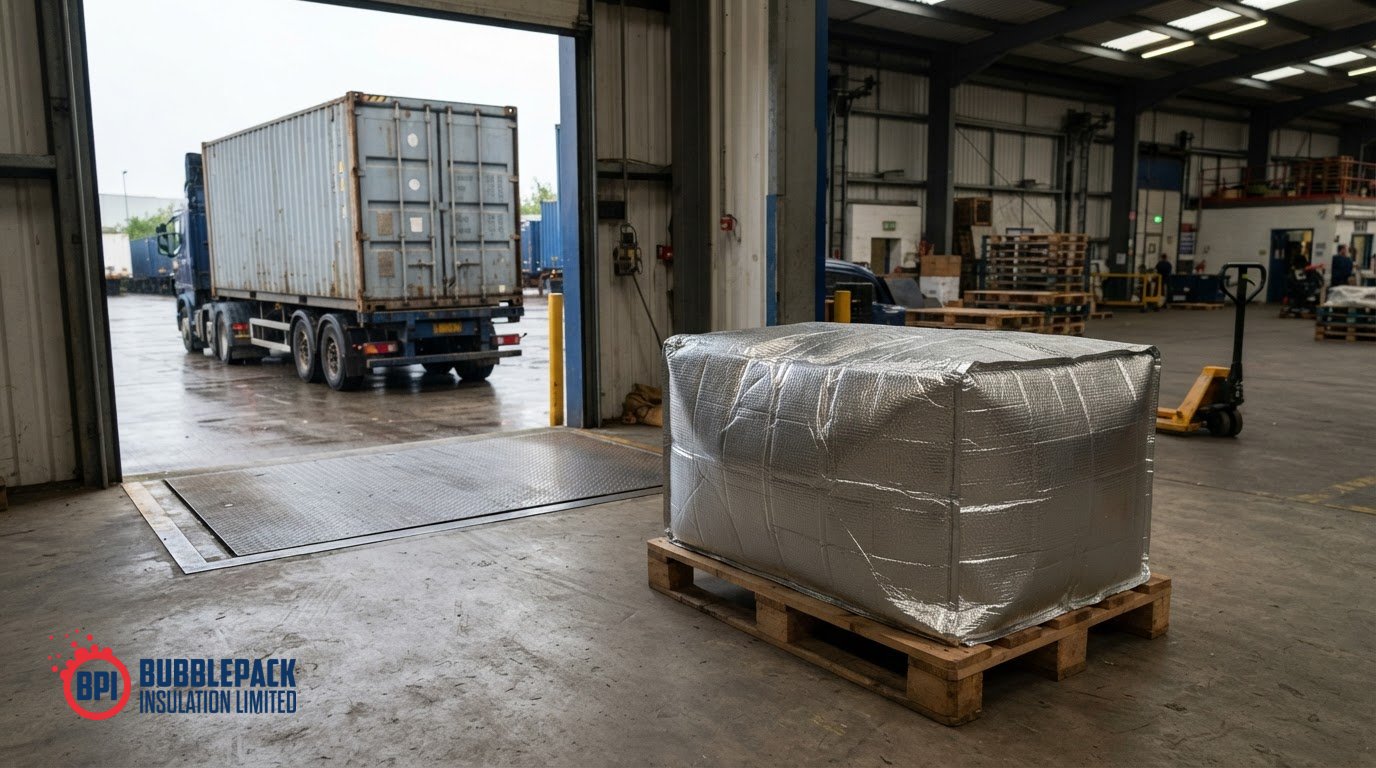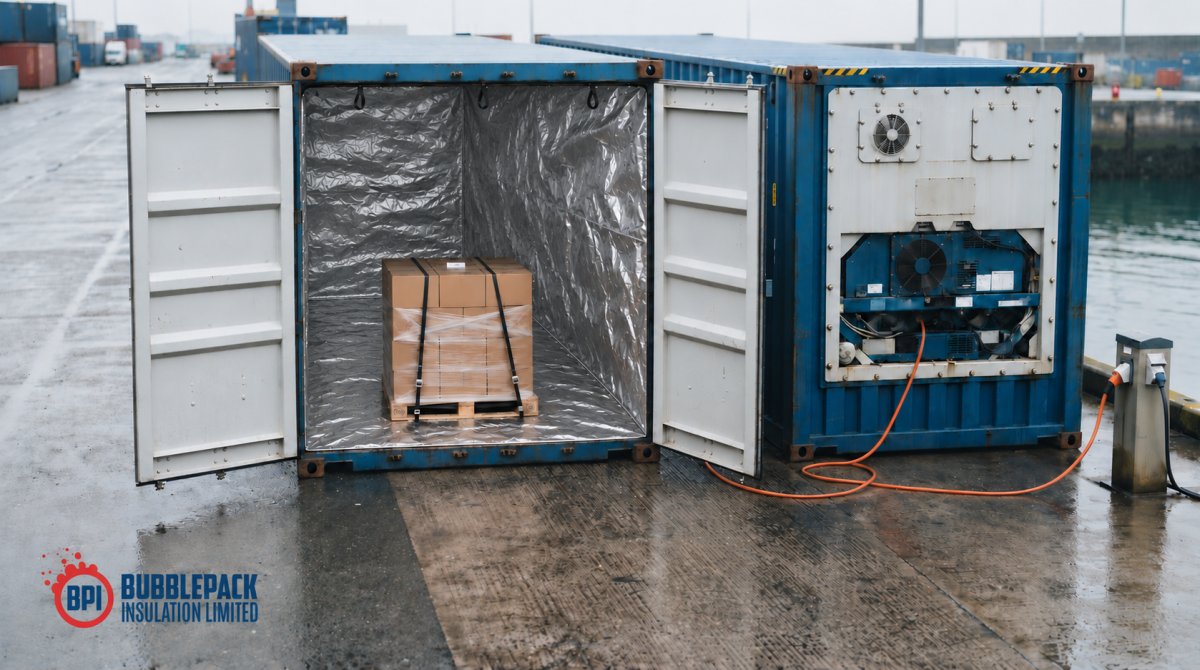
The most substantial insulation build-up isn’t automatically the best fit for an export container. With 40ft high cube container insulation, the decision also needs to account for condensation risk, thermal bridging and the interior space available for cargo. More material can reduce usable clearance, so the design needs to suit the shipment rather than a generic specification.
Moisture management and thermal bridging are practical concerns because temperature differences and conductive parts of a container can affect conditions inside. The right insulation choice depends on the cargo, route and loading requirements. This guide explains the factors that influence condensation and heat transfer, compares insulation and liner configurations, and outlines how to weigh quoted costs against interior space. It also clarifies why coverage matters, including whether floor protection is part of the selected configuration, so exporters can assess options in the context of their shipment.
Key Takeaways
• Check how the liner affects usable height, pallet clearances and loading access in a 40ft high cube container.
• Consider how the chosen configuration affects cargo space and whether floor protection is included.
• Compare the BPI Roll Liner’s professional installation in Ireland with the internationally supplied BPI Integrated Liner.
• For an Irish fitting, organise the container type, depot location, collection date, cargo requirements and fitting availability.
Table of Contents
• Planning thermal liner requirements for a 40ft high cube shipment
Planning thermal liner requirements for a 40ft high cube shipment
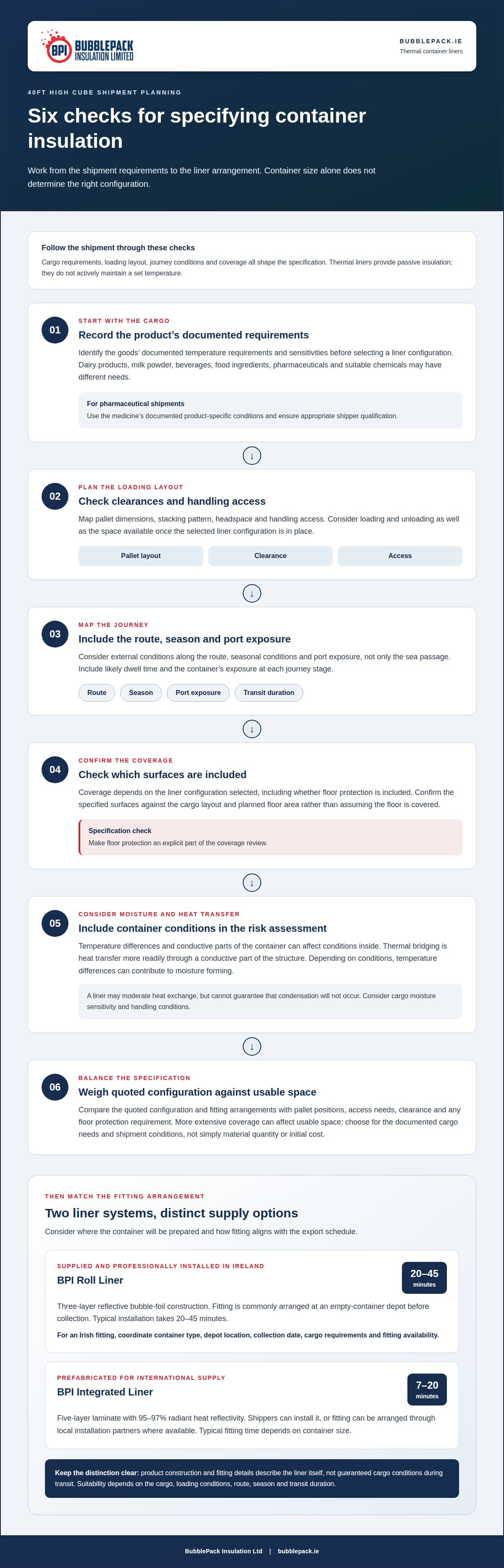
For a 40ft high cube freight shipment, a thermal container liner is the relevant passive insulation approach. Select its configuration against the cargo, loading plan and journey, rather than choosing by container size alone.
Comparing insulation materials
For commercial shipping, assess a thermal liner against the shipment’s needs rather than treating insulation as a stand-alone material choice. Review cargo requirements, coverage and loading layout together. For example, a beverage consignment with tight pallet clearances needs a different space assessment from a less densely loaded shipment. The specification should suit the export operation, not an abstract material comparison.
Why internal clearance matters in a high cube container
A high cube container provides additional internal height compared with a standard-height container of the same nominal length, but that space still needs to accommodate the cargo and handling equipment. Check the palletised load height, clearance at the door opening and the space available after lining. A thin flexible liner has a different space impact from bulky insulation systems. Confirm the actual container and load dimensions before booking rather than relying on nominal container size alone.
Start with the load itself. A 40ft high cube container may carry tall pallets, stacked cartons or other goods that make use of the additional height. Confirm the highest point of the loaded cargo, how it will pass through the door opening and whether the planned liner will interfere with loading or unloading. Where a product has specific temperature limits, those still govern the protection decision.
Next, map the loading arrangement. Pallet dimensions, stacking pattern, headspace and handling access all affect how the container is used. A beverage shipment stacked close to the walls has different clearances from palletised ingredients loaded with wider gaps. Include planned loading and unloading in the assessment. A configuration that fits the container but obstructs the loading plan may not suit the operation.
Container surfaces can be exposed to strong sunlight at a terminal, cooler conditions at sea and further changes during inland transport. The roof and upper walls are particularly relevant when considering radiant heat exposure, while a container floor presents a different contact surface. Assess the expected exposure pattern and whether the proposed liner covers the surfaces that matter to the shipment.
Ask where the liner will be fitted before the loaded container enters the export chain. An empty-depot installation can be coordinated before collection in Ireland; a prefabricated liner may suit a shipper arranging fitting elsewhere. The practical differences are the preparation location, responsibility for installation and time available before loading.
Door clearance
Check the height and width needed to move loaded pallets through the opening.
Headspace
Allow for the cargo's highest point and the fitted ceiling liner.
Floor
Confirm whether floor insulation is part of the selected arrangement.
Preparation
Decide where and by whom the liner will be installed before loading.
Check coverage against the cargo layout before finalising the specification. Coverage depends on the selected liner configuration, including whether floor protection is included. Do not assume that a liner covering the walls and ceiling also covers the floor. For palletised cargo, match the coverage decision to the planned floor area and loading arrangement.
Condensation and thermal bridging also need consideration. Thermal bridging occurs where heat transfers more readily through a conductive part of the container structure. Depending on conditions inside and outside, temperature differences can contribute to moisture forming. A liner may moderate heat exchange, but cannot guarantee that condensation will not occur. Include cargo moisture sensitivity and handling conditions in the shipment risk assessment.
When comparing quotations, check what is actually included: liner supply, floor coverage where specified, fitting responsibility and the installation location. Also confirm that the proposed arrangement works with the intended pallet pattern and available clearance. A lower material price is not necessarily a lower overall preparation cost if fitting or handling requirements differ.
BubblePack Insulation
BubblePack Insulation Ltd helps exporters assess thermal liner options for suitable commercial shipments, including 40ft high cube container insulation. The right arrangement depends on the export operation, the container preparation point and the product being shipped. The thermal liner systems include the BPI Roll Liner and BPI Integrated Liner, with distinct supply and fitting arrangements.
The BPI Roll Liner is a three-layer reflective bubble-foil construction, supplied and professionally installed by BubblePack’s technicians across Ireland. Fitting is commonly arranged at an empty-container depot before collection, so the installation can be coordinated with the container’s handover and loading schedule. Typical installation takes 20-45 minutes.
Choose an arrangement that fits the shipment
The BPI Integrated Liner is prefabricated for international supply. It uses a five-layer laminate with 95-97% radiant heat reflectivity. Shippers can install it, or fitting can be arranged through local installation partners where available. Typical fitting takes 7-20 minutes, depending on container size. These product details describe the liner itself, not guaranteed cargo conditions during transit.
Consider where the container will be prepared and how fitting aligns with the export schedule. An Irish exporter using the BPI Roll Liner should coordinate the empty container’s depot location, collection date and fitting arrangements. For international shipments, the prefabricated Integrated Liner can be fitted by the shipper or an installation partner. In either case, provide the cargo requirements so the liner option can be matched to the consignment.
BubblePack supplies liners for 20ft, 40ft HC and 45ft containers. Identifying the container type at the outset helps match the requested liner to the shipment. The selection should also reflect how the export operation manages container preparation and loading. A depot fitting arrangement may suit an Irish collection workflow, while international supply may suit a shipper coordinating preparation at its own location or through local partners.
Coordinate the fitting plan in Ireland
For an Irish Roll Liner installation, bring the key scheduling details together. BubblePack needs the container type, depot location, collection date, cargo requirements and fitting availability to coordinate the work. Providing these details as one brief helps relate the fitting plan to the actual export movement. If a booking or depot arrangement changes, update the information so the planned preparation remains aligned with collection.
Container type
Identify whether the shipment uses a 20ft, 40ft HC or 45ft container.
Depot location
Provide the location where the empty container will be prepared.
Collection date
Share the planned collection date for fitting coordination.
Cargo requirements
Set out the relevant requirements for the goods being shipped.
Fitting availability
Align the installation plan with the depot and export schedule.
To discuss a suitable liner and fitting arrangement for an export shipment, contact BubblePack Insulation Ltd.
Build liner planning into your next export cycle
Make 40ft high cube container insulation part of shipment planning, rather than a late adjustment before loading. Bringing cargo protection into procurement and scheduling gives your team time to align the specification with the movement and reduce avoidable changes at the depot. It also provides a useful basis for future planning, while keeping each decision specific to its cargo and route.
Use an upcoming export booking to decide when to discuss a liner. A clear brief helps align cargo protection with operational priorities, without treating passive insulation as active temperature control or a guarantee of shipment conditions.
Frequently Asked Questions
What affects the cost of insulating a 40ft high cube export container?
There is no single cost for a 40ft high cube container liner. The quotation depends on the selected configuration and the supply and fitting arrangements for the shipment. For procurement, compare the scope of each quotation, including the liner system and fitting responsibilities, rather than relying on a generic estimate. Request a project-specific quotation based on the container and export requirements.
Does container insulation reduce interior dimensions or require ventilation?
A thermal liner takes up some interior space, so include its fitted profile when confirming cargo clearances and pallet positions. It does not provide ventilation or determine the cargo’s ventilation requirements. Those depend on the goods and shipment plan. Follow the handling requirements for the product and ensure the loading arrangement does not obstruct any ventilation provisions required for the consignment.
What are the fire, moisture, and corrosion risks of insulating a shipping container?
A thermal liner is not a fire-safety measure or protection against corrosion. Moisture management remains part of shipment planning, and a liner cannot guarantee that moisture-related issues will not occur. Assess the container’s condition, cargo handling and the specific liner configuration together. Do not assume fire, water-resistance or corrosion-protection performance unless it is established for that product.
When should insulation be fitted before loading a 40ft high cube container?
For Irish Roll Liner installations, BubblePack commonly fits the liner at an empty-container depot before the container is collected for loading. International shippers using the prefabricated Integrated Liner can arrange installation at their own preparation location or through an available local partner. Confirm the container size, location and loading schedule early enough to coordinate fitting.
Can a thermal liner eliminate condensation in a 40ft high cube container?
Include thermal bridging, temperature differences, cargo moisture sensitivity and handling conditions in the shipment risk assessment. A liner can moderate heat exchange but cannot guarantee that condensation will not occur.