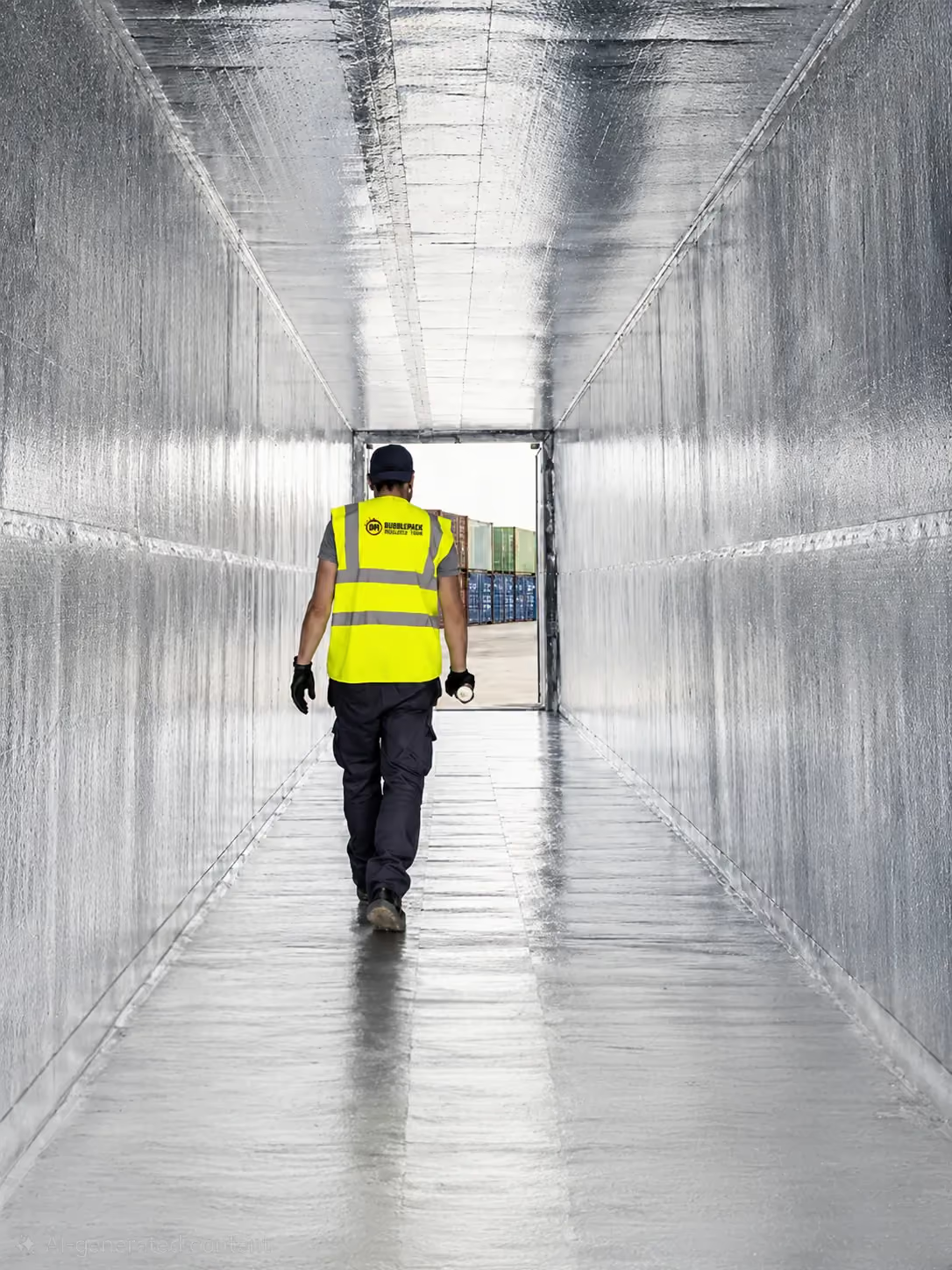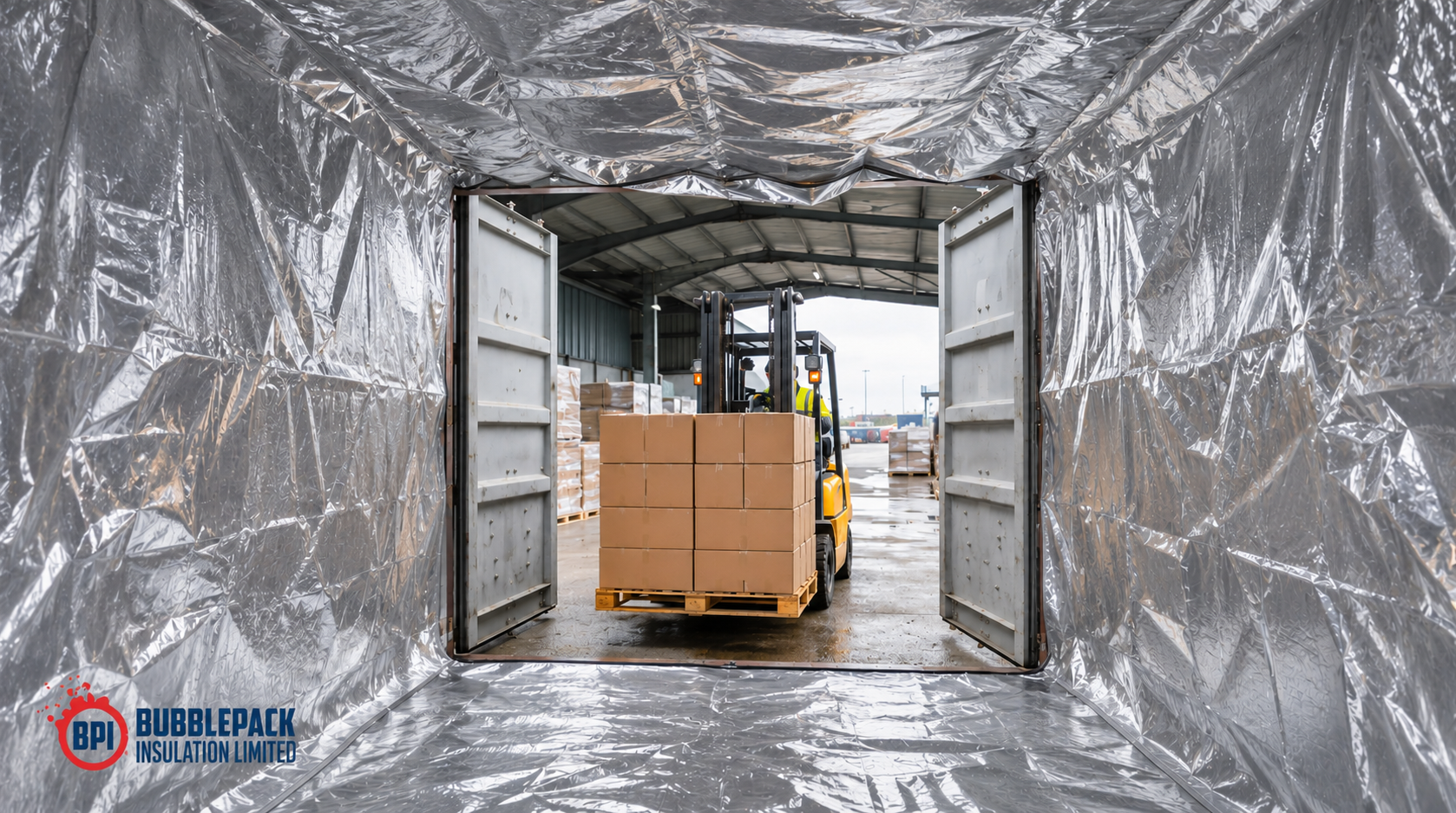
Heat exposure can put export cargo at risk before it reaches its destination. Thermal container liners provide passive insulation inside shipping containers, helping limit the effect of external temperature changes on cargo. They do not actively heat or cool the load or maintain a fixed temperature.
Transit conditions, cargo requirements and the type of protection all matter. This guide explains how thermal container liners can support cargo protection during shipping and considers factors relevant to selecting insulation for an export journey. Suitability depends on the goods and route, including the cargo’s documented temperature requirements and transit conditions. A liner does not replace active temperature control where the cargo requires it. Use these considerations to assess whether a thermal liner may be appropriate before planning an export shipment.
Key Takeaways
• Assess cargo sensitivity alongside loading conditions, route, season and transit duration before selecting a thermal container liner.
• Match the container liner configuration to the shipment’s requirements.
• Understand how passive insulation can reduce exposure to temperature changes without controlling a set temperature.
• For pharmaceutical cargo, use documented product temperature requirements and appropriate shipper qualification to guide decisions.
Heat-Related Risks to Shipped Goods
Heat exposure can affect export cargo during loading, port dwell and ocean transit. Food ingredients, beverages and pharmaceuticals may have product-specific temperature requirements. Protective packaging can operate at pallet level, while a thermal container liner insulates the container interior. Assess both options against the whole journey, not just conditions expected at departure. The key question is whether the selected protection suits the cargo and transport plan.
Start with the product’s documented requirements. Identify acceptable conditions, sensitivity to temperature fluctuations and the consequences of exposure. For medicines, the shipper’s product-specific requirements should guide transport planning. Pharmaceutical shipments also require appropriate shipper qualification. A thermal barrier does not replace these processes or guarantee that goods remain within a specified range.
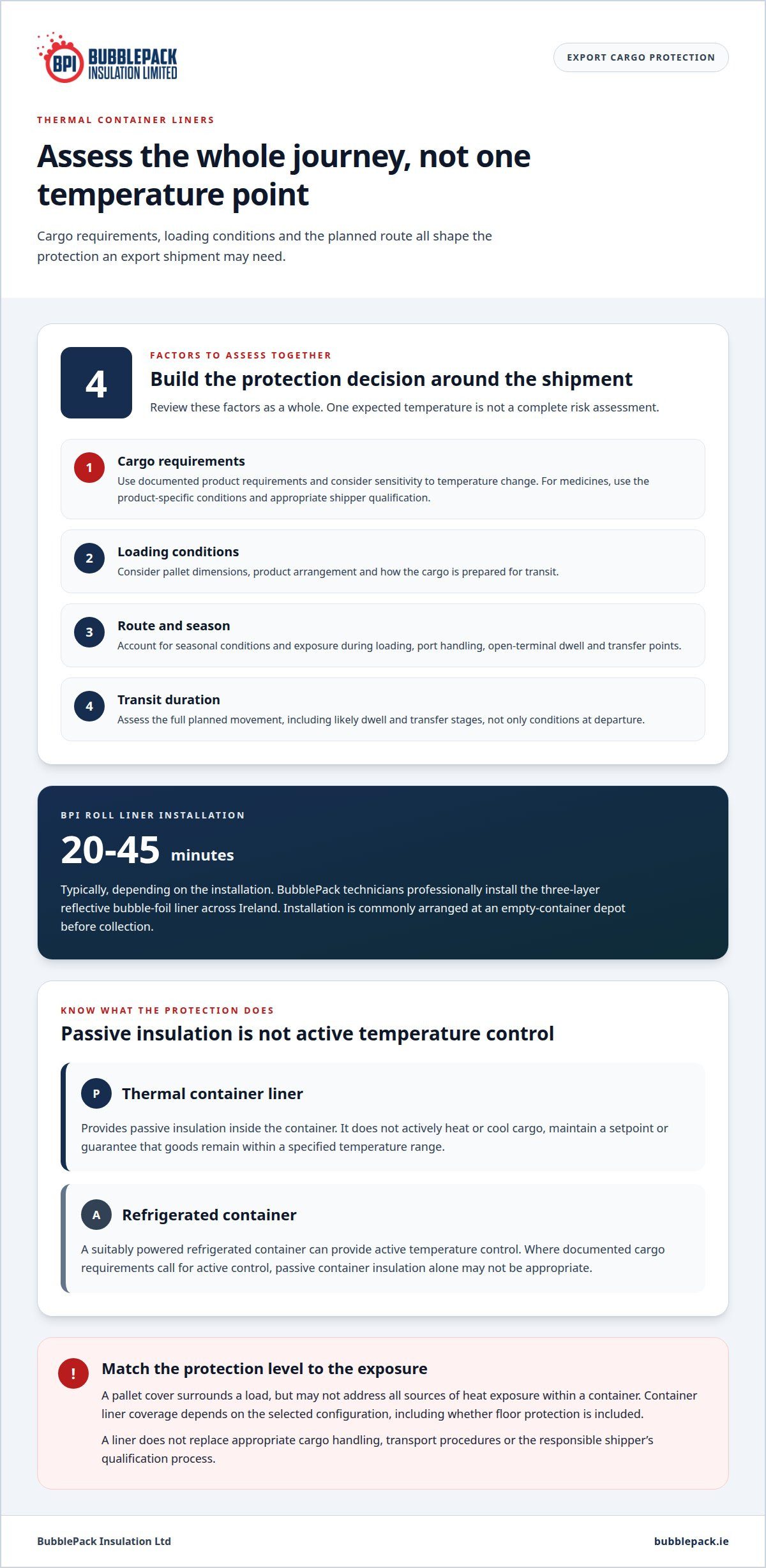
Next, consider how the load will be prepared and moved. Pallet dimensions, product arrangement and handling methods all affect the protection required. Route and season shape likely exposure, including time in open terminals or at transfer points. Transit duration matters too: cargo experiences conditions throughout the planned movement, not only at the port of origin. Review these factors together rather than treating one expected temperature as a complete risk assessment.
Cargo
Use the documented product requirements and sensitivity to temperature change.
Loading
Consider pallet configuration and how the cargo is prepared for transit.
Route
Account for seasonal conditions and exposure during port handling.
Duration
Assess the full planned transit, including likely dwell and transfer stages.
Material claims should be assessed in context. A stated reflectivity or insulation value describes a material under particular conditions and does not guarantee cargo temperature during a voyage. Consider the complete protection arrangement, the container and the expected route exposure when evaluating suitability.
Before choosing protective packaging, match the cargo's documented requirements to loading conditions, route, season and duration. Decide whether protection is needed around individual pallets, across the container interior, or both. Pallet wrapping and container lining are different applications; neither should be assumed suitable without assessing the shipment.
Thermal Container Liners and Passive Temperature Protection
A thermal container liner provides passive insulation within a shipping container. Its coverage depends on the liner configuration selected, including whether floor protection is included. Reflective layers are designed to reflect radiant heat, while the liner provides insulation around the cargo. Assess the selected configuration against the container and shipment requirements.
Unlike a refrigerated container, a thermal liner provides passive protection, not active temperature control. A suitably powered refrigerated container can control temperature, while a liner cannot maintain a setpoint. Liner suitability depends on the cargo’s documented temperature requirements, loading conditions, route, season and transit duration.
No single liner configuration suits every export shipment. Assess the container, cargo and required coverage before selecting a liner. Consider the loaded cargo and its documented requirements when discussing a suitable configuration. A thermal container liner is intended to provide insulation within the container, not to replace the shipment’s established transport arrangements.
A liner alone does not establish that a shipment meets applicable food, pharmaceutical or transport requirements. These depend on the cargo, destination and documented shipping arrangements. For pharmaceutical freight, the medicine’s documented conditions and the responsible shipper’s appropriate qualification process remain central; a liner does not replace them.
For a suitable selection, assess the cargo requirements and planned shipment conditions, then confirm the liner configuration and coverage required. Consider whether floor protection is included in the selected configuration. The liner is one part of the shipment’s arrangements and does not replace appropriate cargo handling or transport procedures.
There are important limitations. A liner cannot actively heat or cool goods, guarantee a fixed temperature, or eliminate condensation and temperature excursions. Conditions can change during handling and transit, and suitability depends on the liner configuration, cargo and journey. If documented product requirements call for active control, passive container insulation alone may not be appropriate.
Assess whether a thermal liner is suitable for your cargo and container configuration. Discuss suitable cargo protection in relation to your shipment’s requirements and planned transit.
BubblePack Insulation: Thermal Container Liner Supply and Installation
When cargo needs protection from temperature changes across the container, BubblePack Insulation Ltd offers container insulation solutions for exporters. Its BPI Roll Liner and BPI Integrated Liner provide passive thermal insulation inside shipping containers. Neither actively heats or cools cargo, so suitability depends on product requirements, loading conditions, route, season and transit duration.
The BPI Roll Liner is a three-layer reflective bubble-foil construction, supplied and professionally installed by BubblePack Insulation Ltd technicians across Ireland. Installation is commonly arranged at an empty-container depot before collection and typically takes 20-45 minutes. This option suits Irish exporters who need the liner fitted before loading. Planning involves the container type, depot location, collection date, cargo requirements and fitting availability, so these details shape the operational arrangement.
The prefabricated BPI Integrated Liner is available for international supply and supports container protection across export routes. It uses a five-layer laminate with 95-97% radiant heat reflectivity. That figure describes radiant heat reflectivity, not a guaranteed temperature result inside a loaded container. Typical fitting takes 7-20 minutes, depending on container size. Shippers can install it, or use local installation partners where arrangements are in place.
BubblePack Insulation Ltd supplies liners for 20ft, 40ft HC and 45ft containers. The selected liner configuration determines the extent of container coverage, including whether floor protection is included. This is a practical distinction when assessing how the container’s surfaces relate to the shipment’s protection needs. For configuration details, explore the BPI Integrated Liner information.
Select the appropriate container liner based on the shipment’s requirements. The Roll Liner or Integrated Liner may be suitable for container insulation, depending on the cargo and loading arrangements. Pharmaceutical shipments require documented product temperature requirements and appropriate shipper qualification; a liner alone does not establish compliance or maintain a set temperature.
Contact BubblePack Insulation Ltd to discuss thermal liner supply and installation for your shipment.
Build Cargo Protection into Export Planning
Make cargo protection part of the shipment plan, not a late adjustment during loading. Align liner selection with procurement, loading schedules and the information shared between teams. This gives logistics staff a clear basis for preparing the container and coordinating the movement of goods.
Plan thermal container liner supply and installation as part of the wider export process. Consider the cargo requirements and transport plan, then coordinate liner selection, availability and fitting with the shipment schedule. Clear communication between those responsible for product requirements, packing and shipment coordination can help ensure the liner is suitable for the load.
Bring the cargo requirements and planned shipment details into the discussion so the proposed protection can be assessed against the actual movement.
Frequently Asked Questions
How do I assess whether a thermal container liner is suitable for my cargo?
Assess the cargo’s documented temperature requirements alongside the loading conditions, route, season and transit duration. Thermal container liners provide passive insulation; they do not actively heat or cool cargo or maintain a fixed temperature. Pharmaceutical shipments require documented product-specific temperature requirements and appropriate shipper qualification.
Does a thermal container liner cover the container floor?
Container coverage depends on the liner configuration selected, including whether floor protection is included. Confirm the configuration required for your shipment when discussing a quotation with BubblePack, taking account of the cargo and loading conditions.
How are BubblePack thermal container liners supplied and installed?
BubblePack’s Roll Liner is professionally supplied and installed by its own technicians across Ireland. The Integrated Liner is prefabricated and supplied internationally; shippers can install it, or local installation partners may be arranged where confirmed. Irish exporters should provide the container type, depot location, collection date and cargo requirements, and check fitting availability.