
What Is Container Rain?
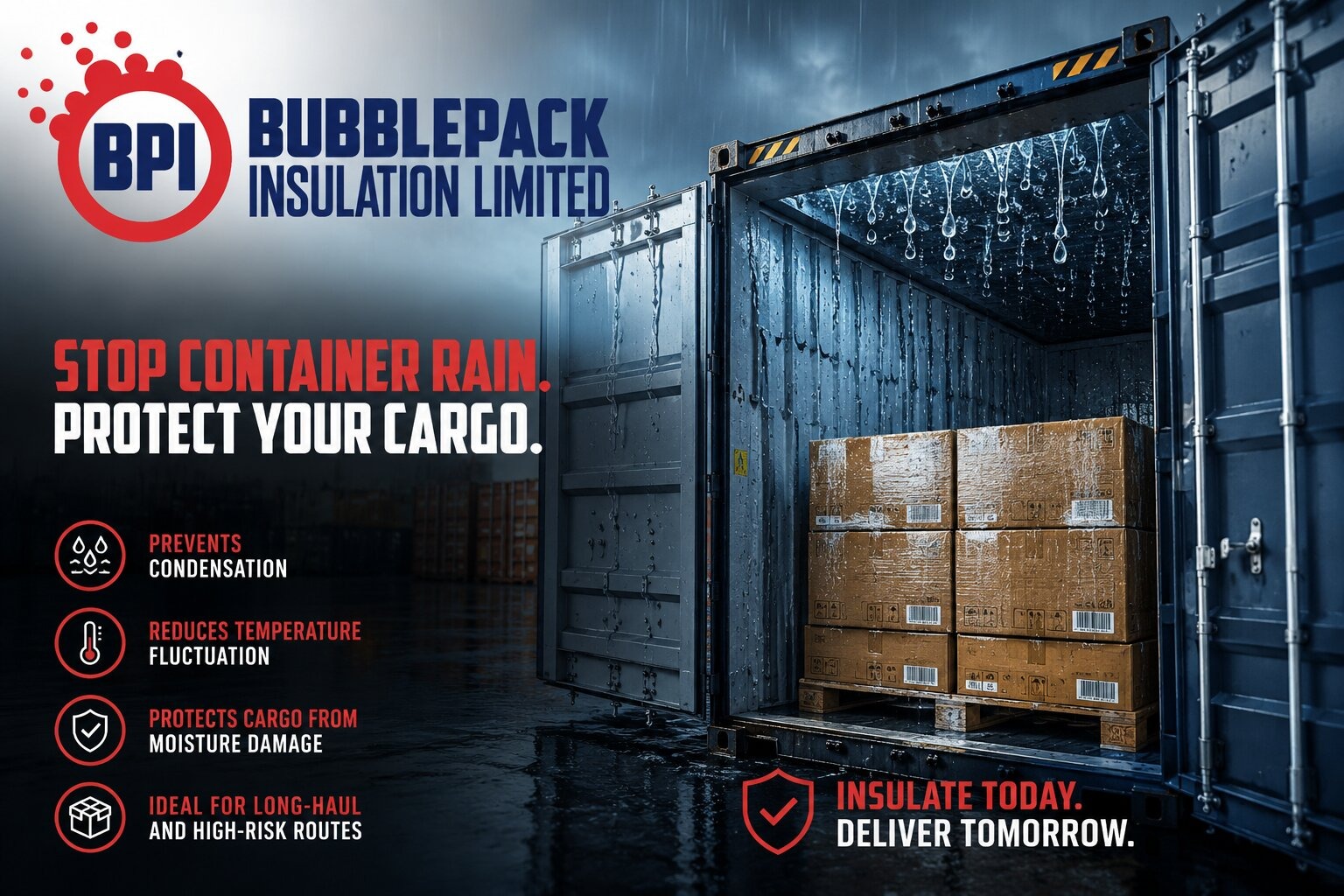
Container rain is water that forms inside a sealed shipping container during transit. Warm, moist air inside the box cools fast. It turns into droplets on the ceiling and walls. The droplets fall onto your cargo below. Some exporters search for the same event under the term rain container. Both terms point to the same physical process.
You do not need rain outside for this problem to start. Your container can sit under a dry sky and still soak your goods from the inside. Many exporters open a container and blame a leak. The real cause sits inside the box the whole time.
Why Does Warm Air Turn Into Water Inside a Sealed Steel Box?
Air carries water vapor. Warm air carries far more vapor than cold air. Your container picks up warm, humid air at the port when your goods go in. That air stays sealed inside once the doors close.
Temperature inside a steel box swings hard across a voyage. Direct sun heats the box fast during the day. Cooler air or open ocean pulls that heat back out fast at night. Air near the walls cannot hold its full moisture load once the temperature drops far enough.
Scientists call that drop point the dew point. The National Weather Service defines dew point as the temperature air must reach before it becomes saturated with moisture. Steel loses heat fast. Container walls often hit dew point before the air near your cargo does. Water then forms on the coldest surface inside the box. That surface sits right above your goods.
What Happens Inside the Container as It Crosses a Cold Night?
You should imagine a 40ft container loaded at a humid port in Southeast Asia. Air inside sits near 30°C at the time your goods go in. Humidity at that point often runs above 80 percent. The trapped air already carries a heavy load of water.
Night falls once the vessel reaches open water. The steel skin on the container can drop several degrees within hours. Exposed lanes can push surface temperature down near 10°C by early morning. Trapped air inside cannot cool at that same speed. A wide gap opens between air temperature and wall temperature.
Water vapor in that trapped air meets the cold steel. It turns straight to liquid. Droplets gather on the ceiling first. Gravity pulls the water down the walls once enough collects. The top layer of cargo takes the first hit.
The same cycle can repeat every night across a long voyage. Each cycle adds fresh moisture onto packaging that already softened the night before. Routes into northern Europe often follow this same pattern. Long transatlantic crossings follow it too. Both carry wide day-night temperature swings.
Which Cargo Gets Hit Hardest When the Ceiling Starts to Drip?
Paper, dry agricultural goods like (grain, cocoa and coffee), and cardboard soak up water fast. Boxes lose stiffness within hours. It can suffer damage when the container ceiling drips. Corners collapse. Labels lift away from the surface underneath.
Metal parts like machinery, auto parts, and unprotected steel react just as fast. Rust can start on bare steel or iron within a short spell of damp exposure. That rust can disqualify parts from quality checks once the shipment reaches the buyer.
Textiles, leather & food carry their own version of the risk. Mould can take hold inside a damp, sealed container within two days. A mould-marked shipment of clothing or food usually ends in a rejected load at the destination port. Machinery, electronics, and bulk powders face a quieter threat, since trapped moisture finds gaps, contacts, and seams that stay hidden until the goods reach the buyer.
How Much Cargo Does Container Rain Actually Destroy Each Year?
Numbers back up what exporters see on the dock. Approximately 10 % of container ruins of containerised goods worldwide get discarded because of moisture damage. The result of the financial loss at the end of each year is around $5 billion to $10 billion. This means that every year, about 15 to 17 million shipping containers' worth of goods are damaged or lost. According to marine insurance, about 12% of all ship losses in the maritime business are due to damage.
Packing practice plays a role too. TT Club, a major freight and logistics insurer, reports that most cargo damage claims trace back in part to how goods sit and move inside the container. That figure shows why loading practice and moisture control both need attention together.
Your own numbers may run higher depending on route and season. Cold-chain-sensitive cargo and long ocean legs both face more day-night swings. Risk climbs the longer your container spends at sea.
Why Do Desiccants Often Fail to Stop It?
Desiccant bags pull moisture out of trapped air. That job matters on every route. A bag placed near a wall cannot slow the temperature swing that starts the whole problem.
Steel still cools fast at night even with a desiccant hung close by. Local humidity around that cold steel can spike past saturation within minutes. A small bag often cannot absorb fast enough to stop droplets that form right at that spot.
Desiccants treat moisture after it builds up. They do not touch the temperature swing that creates fresh moisture demand every single night. Cargo on long or high-swing routes often needs a second layer of defence alongside any desiccant plan.
What Actually Slows the Temperature Swing Inside a Container?
Insulation changes the physics. It does not simply clean up water after the damage already starts. A thermal liner sits between the steel wall and your cargo. That layer slows how fast heat moves in or out of the box across each cycle.
Slower heat movement means a smaller day-night temperature gap. A smaller gap keeps trapped air further from its dew point through each cycle. Less water turns to liquid once that gap shrinks. You can check the full liner specification and coverage options on our thermal container liner page.
Exporters who ship paper goods, machinery, or food across long or high-swing routes often see the biggest gain from this approach. A liner will not replace good desiccant practice on every route. Insulation and moisture absorption cover both sides of the same problem together.
Will Your Cargo Insurance Even Cover the Damage?
It depend you whole on your specific root cause or the specific policy of the loss. Many standard cargo policies carry an inherent vice exclusion. That clause can rule out cover for damage judged to come from the natural condition of the goods rather than an outside event. Insurers sometimes classify condensation damage under that same exclusion.
You should check policy wording before you assume cover applies. A claim built around container rain can get contested or denied once an insurer points to that clause. A call to your broker before the next shipment can save a costly surprise later.
What Should You Check Before You Blame the Weather?
You should start with the container itself. Check door seals, floor condition, and any smell of damp before you load the box. A container that already carries moisture will only add to the problem once it seals shut.
You should check your cargo next. Dry pallets, dry packaging, and dry goods all cut the total moisture load trapped inside the box at closing time. Wet wood or damp cartons add fuel that no desiccant or insulation can fully offset.
Route and season matter just as much as the box. A shipment crossing several climate zones carries more risk than a short regional hop. Plan your protection around the real route rather than a generic checklist. You should ask your supplier what mix of desiccant, ventilation, and insulation fits your specific lane before the next container leaves the yard.
.jpg)
.jpg)