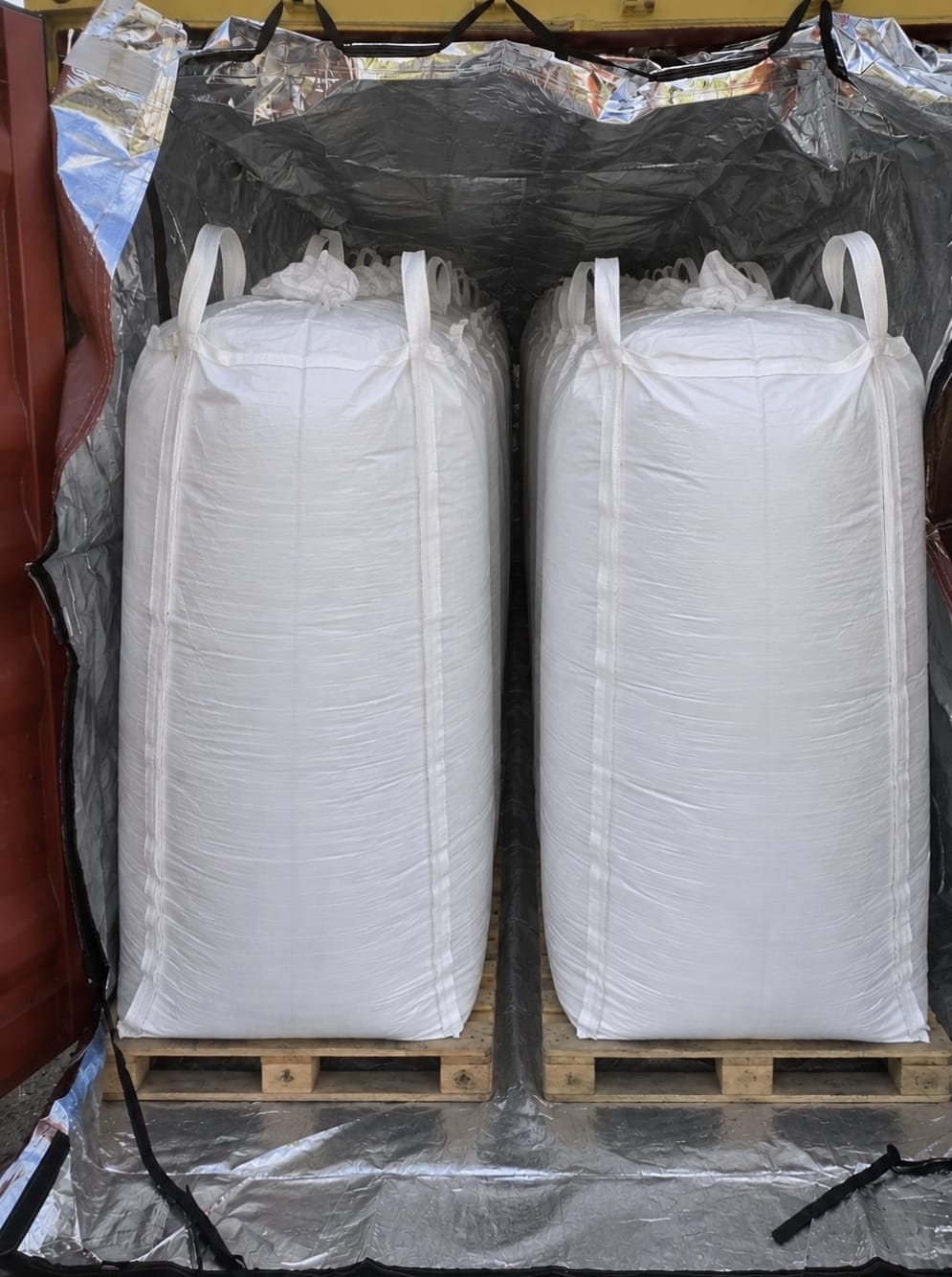

Protecting pharmaceutical cargo involves more than choosing between sea and air freight. Active pharmaceutical ingredient ocean shipping protection starts with the API’s documented requirements and packaging designed to protect it at primary, secondary and tertiary levels. Route, handling and exposure risks also shape the protection plan.
Ocean freight may suit some shipments, but longer transit times and port delays make it essential to assess whether product requirements can be maintained throughout the journey. Passive insulation can reduce the effects of external temperature changes, but it does not actively control temperature or replace active control when the product requires it.
This article compares ocean shipping with air freight, explains the role of protective packaging layers and outlines relevant regulatory considerations, including EU Good Distribution Practice and the IMO’s IMDG Code when dangerous-goods rules apply. It also covers why cargo-specific temperature requirements, monitoring and shipment planning matter when protecting APIs in transit.
Key Takeaways
• Compare sea and air freight against the API’s documented conditions, transit duration, route exposure and shelf-life requirements before selecting a transport method.
• Assess protection at primary, secondary and tertiary packaging levels, with suitable monitoring and contingency planning for the shipment.
• Apply pharmaceutical distribution requirements to documented transport processes and risk assessment; check whether the IMDG Code applies to the substance being shipped.
• Consider a thermal container liner when passive insulation suits the cargo and journey, remembering it does not actively control or maintain temperature.
Ocean versus air freight for temperature-sensitive pharmaceuticals
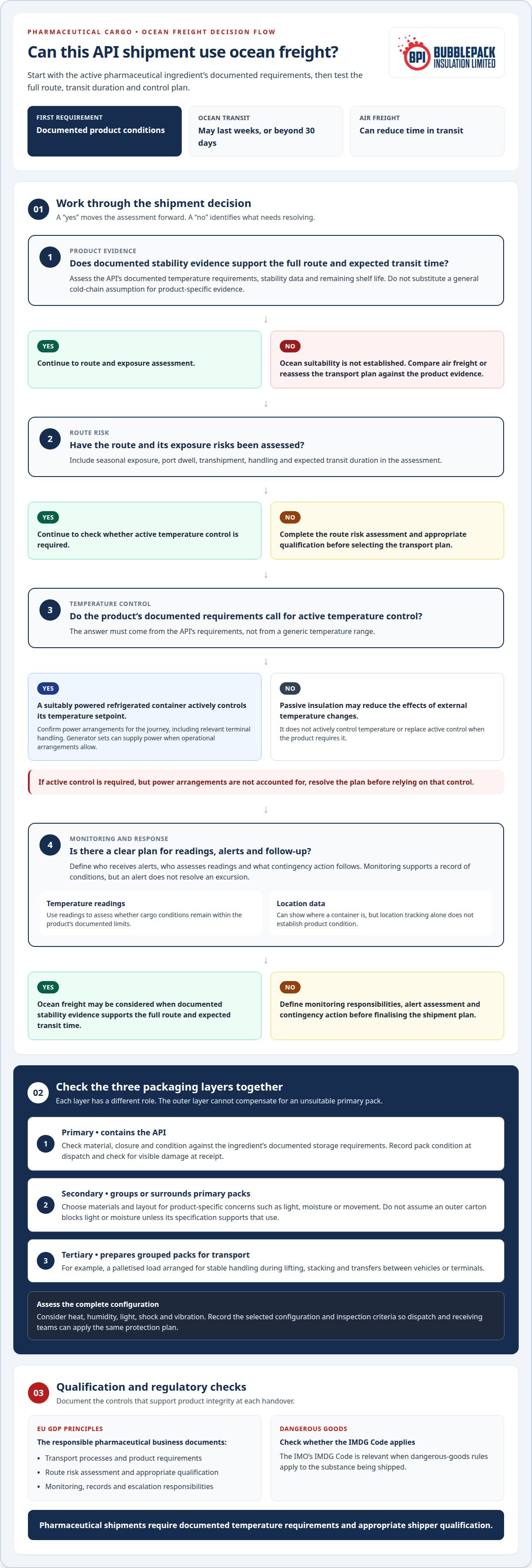
Ocean and air freight expose pharmaceutical cargo to different transit profiles. Air can reduce time in transit, while an ocean voyage may last weeks or extend beyond 30 days. For an active pharmaceutical ingredient (API), compare transport modes against its documented temperature requirements, stability data, shelf life and route. Effective active pharmaceutical ingredient ocean shipping protection starts with the product’s evidence, not a general cold-chain assumption. Biologics and other sensitive products need assessment against their own documented conditions.
A suitably powered refrigerated container actively controls its temperature setpoint during ocean transport. Performance depends on the container remaining powered throughout the journey, including relevant terminal handling. A power interruption can affect conditions, but reefers do not automatically lose control during delays: generator sets can supply power when operational arrangements allow. The shipper’s risk assessment should account for the route, seasonal exposure, port dwell and expected transit duration.
Temperature monitoring helps establish whether cargo conditions remain within the product’s documented limits. IoT-based systems can combine temperature readings with location data to show where a container is and when a reading changes. Location tracking alone does not establish product condition, and an alert does not resolve an excursion. Define who receives alerts, how readings are assessed and what contingency action follows. This monitoring plan is a practical part of active pharmaceutical ingredient ocean shipping protection.
Specialised packaging and the transport container serve different purposes. Validated packaging protects the product according to its qualified design, while an active container manages the wider cargo environment. Neither removes the need to assess handling at origin, transhipment and destination. Compare air and ocean freight against shipment volume, product value, remaining shelf life and the consequences of delay. Choose ocean freight only when documented stability evidence supports the full route and expected transit time.
Packaging for primary, secondary, and tertiary protection
Primary packaging directly contains the API, so its material, closure and condition matter. Check that the selected pack suits the ingredient and its documented storage requirements. For example, a compromised seal can expose the contents to moisture or contamination before the shipment reaches the container. Record the pack’s condition at dispatch, and include checks for visible damage in receipt procedures.
Secondary packaging groups or surrounds primary packs, helping protect them during handling and keep units organised. Consider whether light exposure, moisture or movement is a product-specific concern, then select materials and a layout suited to that risk. Do not assume an outer carton blocks light or moisture unless its packaging specification supports that use. Separating individual packs can also limit direct contact during transit.
Tertiary packaging prepares grouped packs for transport as a shipment unit, such as a palletised load. Arrange it to support stable handling during lifting, stacking and transfers between vehicles or terminals. A shifting load can damage outer packs and compromise the layers beneath them. Clear, documented handling arrangements help preserve the intended configuration from dispatch to delivery.
Assess all three packaging levels together against the API’s documented conditions and the route’s handling profile. Consider exposure to heat, humidity, light, shock and vibration, then identify which layer addresses each risk. The outer layer cannot compensate for a primary pack that is unsuitable for the ingredient. Likewise, protective packaging does not replace monitoring or procedures for investigating damage. Record the chosen configuration and inspection criteria so dispatch and receiving teams can apply the same protection plan consistently.
Pharmaceutical shipping regulations
API shippers qualify carriers, containers, packaging and routes against the product’s documented conditions, risk assessment and transport process. Under EU Good Distribution Practice (GDP) principles, the responsible pharmaceutical business documents these controls and appropriate qualification to support product integrity at every handover.
GDP does not set one temperature band for every medicine. The specific API’s documented requirements should guide temperature control, packaging selection and monitoring throughout transport. Vaccines and APIs, for example, can have different requirements; a generic cold-chain assumption cannot replace the product’s documented conditions. For Irish operations, the Health Products Regulatory Authority (HPRA) provides national regulatory context for pharmaceutical distribution.
Qualification should examine how the carrier manages the shipment and its records, whether the selected container suits the required transport conditions, and whether packaging has been assessed for the planned route. Include origin handling, port dwell, transhipment and destination processes in the route risk assessment. Set out monitoring responsibilities and how temperature readings, alerts and any excursion are recorded and escalated.
Monitoring temperature during truck transport, ocean voyages and warehouse storage supports a continuous record of conditions. The monitoring plan should identify who reviews readings and what action follows an alert. These records connect intended controls with actual transport events, helping the responsible business investigate deviations and assess product impact under its procedures.
Where an API is classified as dangerous goods, apply the relevant maritime requirements as well as pharmaceutical distribution controls. The International Maritime Organization (IMO) states that the IMDG Code sets substance-specific requirements for packing, container traffic and stowage, including segregation of incompatible substances. Classification therefore matters: the Code’s provisions depend on the substance and its applicable dangerous-goods status.
For global shipments, align carrier procedures, container arrangements, packaging evidence, monitoring records and route risks before transport. More handovers increase the need for clear responsibilities and consistent records, so qualification should cover every party in the documented transport chain.
What are the main risks of ocean shipping APIs, and how can delays, excursions, theft, and contamination be prevented?
Ocean delays can occur at port, during transhipment or aboard ship. Because delays may last days rather than hours, a missed connection can affect delivery timing and product shelf life. Build route-specific delay scenarios into the shipment plan. Assign responsibility for tracking milestones, reviewing delay notices and deciding whether to escalate or reroute cargo. Record each decision and its rationale so the responsible pharmaceutical business can assess the impact.
Temperature excursions may follow exposure to changing conditions or an interruption to active temperature control. Map likely exposure points, such as terminal storage and handovers, against the API’s documented requirements. Define who reviews monitoring alerts and how each is handled. If a reading falls outside the product’s limits, follow the responsible business’s procedures, retain relevant records and assess the event before deciding how to handle the cargo.
To manage theft risk, document custody at each handover and record who accepts the shipment. Compare the load’s external condition at dispatch and receipt. For example, if an outer package appears disturbed on arrival, record the observation and escalate it before routine handling continues. Clear custody records help the responsible team investigate discrepancies and assess whether product integrity may have been affected.
Contamination concerns call for consistent packaging and handling controls. Keep the API in its intended primary packaging, with secondary and tertiary layers suited to the route. At origin, inspect the container and outer packaging; record visible damage before loading. At destination, compare the received condition with dispatch records. Define these checks in staff procedures so that handovers follow a consistent process. For practical guidance on shipment-specific cargo protection, discuss your requirements with the team.
BubblePack Insulation: BPI ROLL LINER
BPI ROLL LINER provides passive thermal insulation for suitable container shipments, using a reflective thermal-barrier system. It does not actively heat, cool or maintain a set temperature, so its suitability for pharmaceutical cargo depends on the API’s documented requirements and appropriate qualification by the shipper.
BubblePack Insulation professionally supplies and installs the Roll Liner across Ireland. Installation typically takes 20-45 minutes. For an Irish export, arrange the container type, depot location, collection date, cargo requirements and fitting availability. Container coverage depends on the liner configuration selected, including whether floor protection is included.
For international shipments, BPI INTEGRATED LINER is available as a prefabricated liner for installation by shippers or local partners. Pallet & Cargo Protection offers another option for suitable cargo-level protection.
Put a shipment-specific protection plan in place
The next step is to turn the API’s documented requirements into a practical transport plan. Match the packaging approach to the cargo, route and handling conditions, then assign clear responsibility for monitoring and incident escalation. This keeps active pharmaceutical ingredient ocean shipping protection grounded in the shipment’s actual risks, rather than assumptions about medicines or routes.
When passive thermal insulation forms part of the plan, treat it as one layer of protection, not a substitute for active temperature control or pharmaceutical qualification. BubblePack Insulation supplies and installs thermal container liners and provides cargo protection for suitable export shipments.
Share the container type, depot location, collection date and cargo requirements when discussing an Irish export shipment. These details help align the protection approach with the operational plan. Contact BubblePack Insulation to discuss your shipment, and take the next step towards a considered, cargo-specific plan.
Frequently Asked Questions
What are the ocean shipping requirements for active pharmaceutical ingredients (APIs)?
Requirements depend on the API’s documented conditions and the shipment route. Before booking, align the product’s stability information, packaging configuration, monitoring plan and handling instructions. For example, confirm that the planned transit duration fits the product’s documented shelf life and that a named party is responsible for recording condition and custody at each handover. Retain records within the responsible pharmaceutical business’s quality processes.
How should APIs be packaged and protected against moisture, heat, light, and contamination during sea transport?
Choose packaging for the specific API and its documented sensitivities. The primary package contains the ingredient; secondary and tertiary packaging support grouping, handling and transport. If light sensitivity or moisture exposure matters, address it in the product-appropriate packaging design rather than assuming an outer cover provides protection. Inspect package integrity before dispatch and on receipt, and record visible damage or compromised closures for investigation.
What temperature ranges and humidity limits are required for shipping APIs by ocean?
No single temperature range or humidity limit applies to every API. Use the product’s documented storage and transport conditions, supported by its stability information, rather than applying a general cold-chain band. For example, a temperature-sensitive ingredient and a stable ambient product may need different controls. Documented requirements should guide monitoring thresholds, packaging selection and the decision about whether ocean transit is suitable.
When is refrigerated or temperature-controlled ocean shipping required for pharmaceutical ingredients?
Use active temperature-controlled shipping when the API’s documented requirements exceed what the planned passive protection can provide. A suitably powered refrigerated container can actively manage its setpoint; a thermal liner provides passive insulation only. Consider route conditions, seasonal exposure, loading and expected transit duration. For an ingredient with narrow documented limits, assess the complete journey and monitoring arrangements before choosing the transport method.
What international regulations and standards apply to ocean transport of APIs, including GDP and ICH guidance?
EU Good Distribution Practice (GDP) informs documented distribution processes, risk assessment and appropriate qualification by the responsible pharmaceutical business. ICH stability guidance supports a product-specific understanding of storage conditions and stability; it does not set one universal transport temperature for all APIs. Apply the relevant requirements for the product and markets involved, and align transport records with the company’s quality system.
How do IMDG Code rules apply to APIs classified as dangerous goods?
If an API is classified as dangerous goods for sea transport, the applicable IMDG Code requirements depend on the substance and its classification. According to the International Maritime Organization (IMO), the Code covers substance-specific packing, container traffic and stowage, including segregation of incompatible substances. Classification therefore informs how the consignment is prepared and positioned. Pharmaceutical handling controls remain relevant alongside these maritime dangerous-goods provisions.