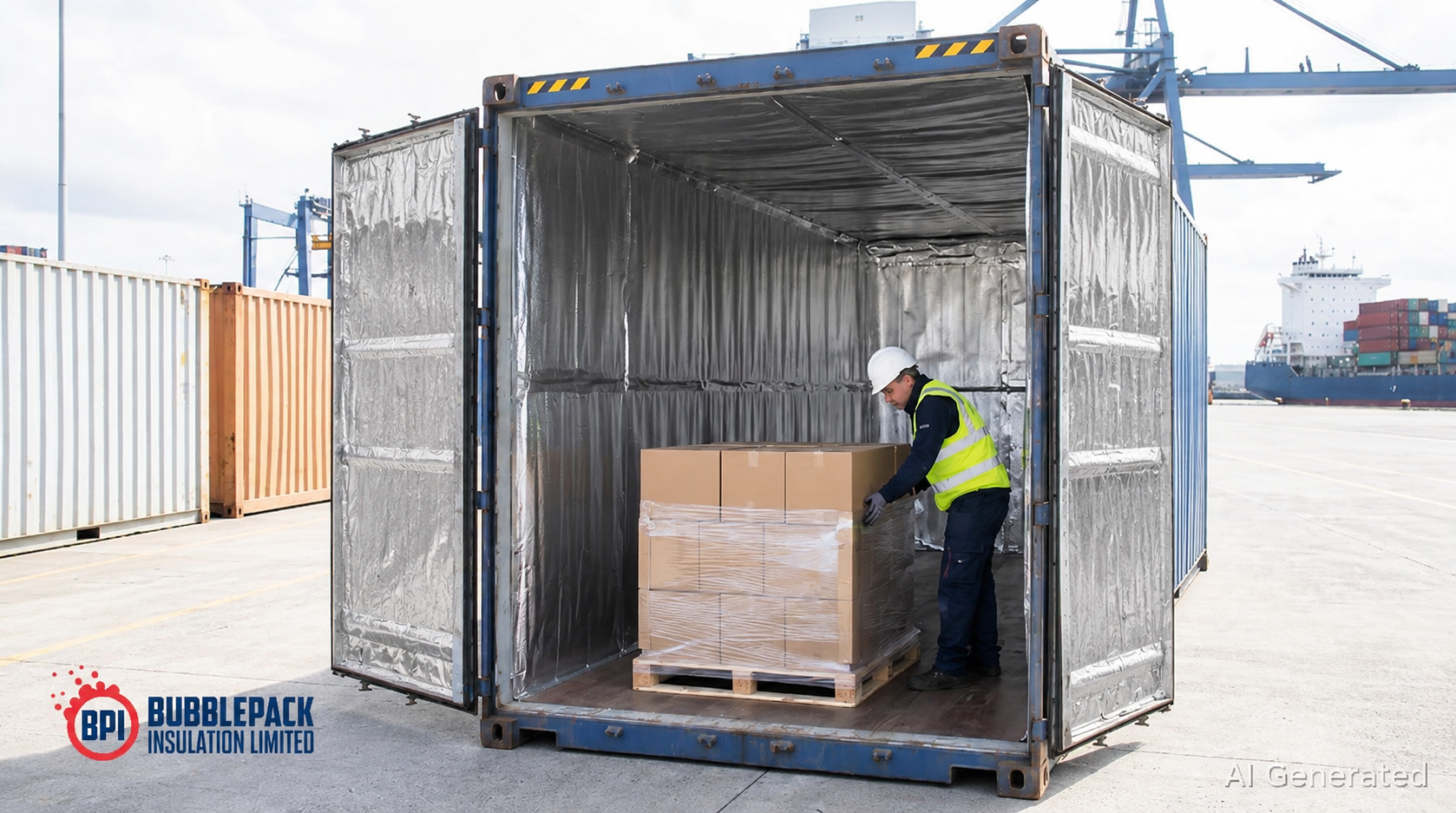

Container condensation can damage cargo packaging even when no rainwater enters the shipping container. Before choosing a moisture-control product, exporters need to check the container, the goods being loaded and the conditions along the route. This checklist focuses on decisions that can be made before a dry container is sealed, rather than promising that any one measure will prevent condensation.
For an explanation of how droplets develop on internal steel surfaces, see our guide to container rain.
Why a sound container can still develop condensation
Condensation occurs when moisture in the air meets a surface at or below its dew point. The temperature of a container's roof and walls can change during transport, allowing water to collect on those surfaces and drip onto packaging. Water can also condense directly on cold cargo. These mechanisms differ from rainwater entering through damaged doors, seals or panels.
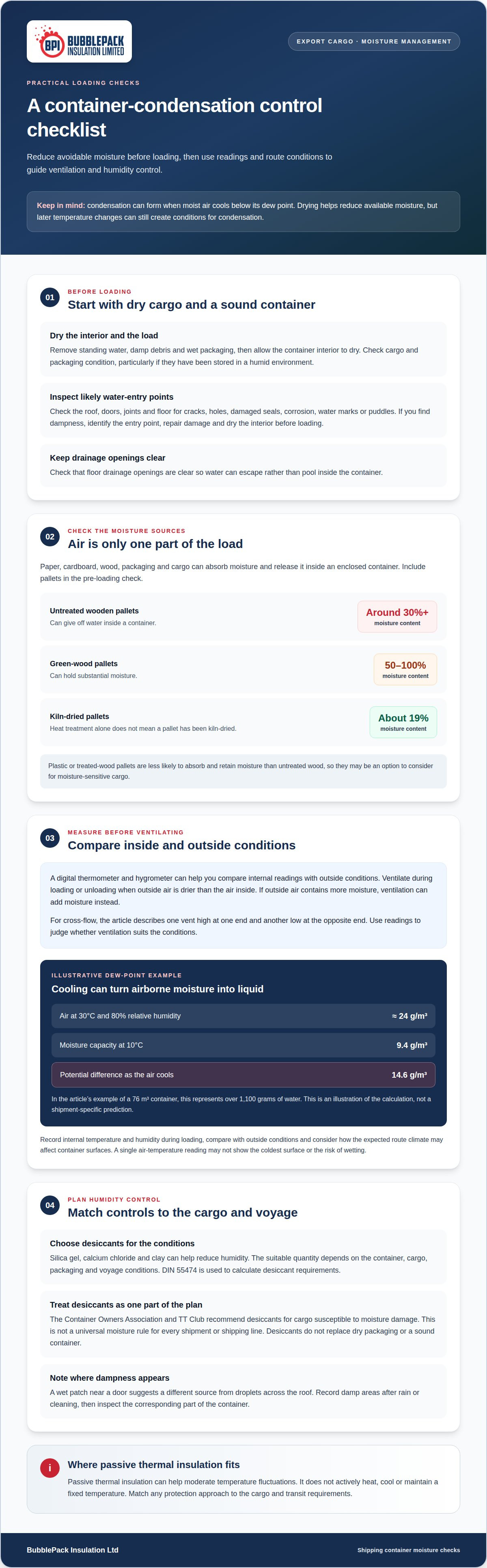
Humidity does not come from air alone. Wooden pallets, cardboard packaging and some goods can absorb and release moisture. Virginia Tech's guidance on sea-container moisture discusses these sources and explains why heat treatment and kiln drying are not interchangeable descriptions of pallet condition.
A pre-loading moisture checklist for exporters
1. Confirm the cargo requirements
Identify any documented temperature, humidity, packaging or handling limits before selecting a protection method. Consider the origin, destination, season, transit duration, expected dwell time and exposure during loading. Sensitive pharmaceutical cargo requires additional product-specific assessment and approval of the transport arrangements by the responsible organisation.
2. Inspect the empty container
Check the roof, walls, door seals, joints and floor for damage, water ingress, residue or standing water. The interior should be dry and suitable for the cargo before loading. If you suspect a leak or find significant dampness, ask the container provider to investigate or replace the unit. Do not assume a liner or desiccant will solve an existing leak.
3. Check pallets, packaging and the goods
Look for wet cartons, damp dunnage and moisture-bearing wooden pallets. Use dry, suitable pallets and packaging according to the cargo's requirements. Heat-treated wooden pallets are not necessarily kiln-dried, and appearance alone cannot establish moisture content. Resolve visible dampness before loading.
4. Record loading conditions where appropriate
For moisture-sensitive shipments, record ambient temperature, relative humidity and visible moisture conditions during loading when those observations are relevant. These readings can support a dew-point assessment, but a single air measurement cannot establish the temperature of every roof panel, wall or cargo surface during a voyage.
5. Select moisture controls for the shipment
Desiccants may be suitable for some goods, but their type, capacity, placement and leakage containment should be assessed against the anticipated moisture load and transit conditions. Avoid generic quantities that ignore cargo and packaging. Ventilation may help when outside air is genuinely drier, but opening doors in humid conditions can add moisture. Do not alter the container's vents, seals or drainage arrangements without the container owner's authorisation.
6. Decide whether passive insulation is suitable
Thermal liners slow heat transfer and may moderate some temperature changes involved in condensation risk. They do not remove moisture, actively control temperature or guarantee a dry shipment. Goods that require a defined temperature setpoint may need a suitably qualified active temperature-control solution.
7. Retain a loading record
Keep relevant photographs of the empty container, packaging and pallet checks, moisture observations and the protection measures used. Records can support quality reviews and help distinguish recurring route conditions from an isolated damaged container or damp load.
How to interpret humidity and dew-point readings
Dew point depends on water vapour content. Condensation can form on a sufficiently cool surface even when nearby air is warmer. Relative humidity also depends on temperature, so a percentage by itself does not establish how much moisture is present. Consider readings alongside the cargo, packaging, surface temperatures and expected shipping conditions. A hypothetical temperature swing or single humidity threshold is not proof that condensation will occur on a particular voyage.
Limits of ventilation and desiccants
Desiccants reduce available water vapour when correctly chosen, but their capacity is finite. Ventilation exchanges air and may help or worsen conditions depending on outside moisture levels and the container's design. Neither measure repairs a damaged container or substitutes for dry cargo preparation. Our separate comparison of desiccants, ventilation and insulation explores the differences.
Where BubblePack's Roll Liner fits
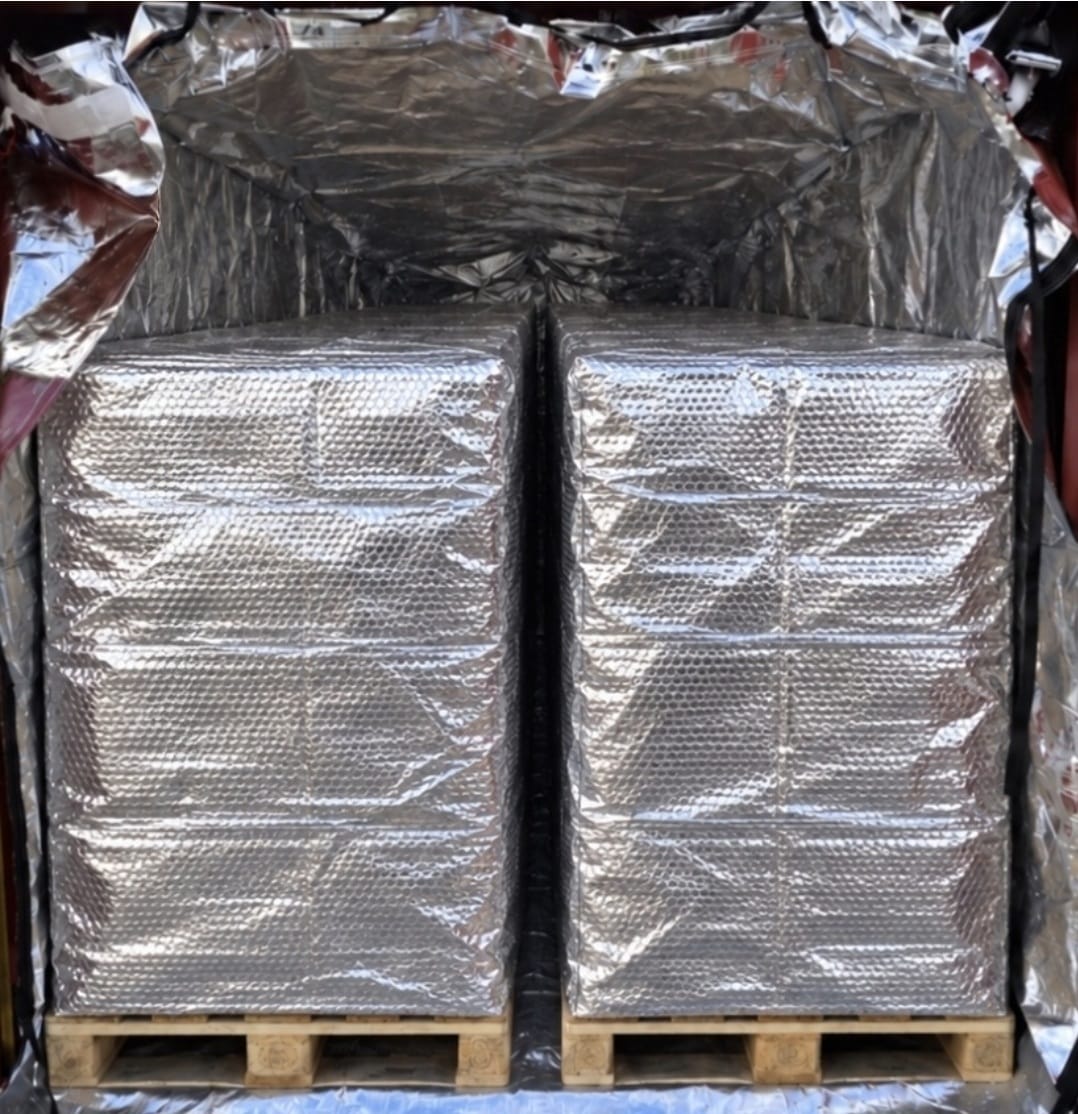
BubblePack's Roll Liner is a three-layer reflective bubble-foil thermal insulation system supplied and professionally installed in Ireland, often in an empty container at a depot before collection. The areas lined depend on the agreed configuration, including whether floor coverage is required.
It may be considered as part of a suitable cargo-protection plan where moderating heat transfer is relevant. A liner cannot dry damp goods, repair leaks or guarantee that condensation will not form. Suitability depends on cargo requirements, route, season and transit conditions.
If dampness is found at destination
Record where moisture appears on the container and goods, photograph affected packaging, retain loading and shipment records, and follow relevant carrier, quality and insurance-notification procedures. The pattern of moisture can help an investigation, but it may not establish the cause on its own.
Frequently asked questions
Can condensation develop inside a container that does not leak?
Yes. Moisture already inside can condense on cool internal surfaces, even when there is no external water ingress.
Will kiln-dried pallets eliminate condensation?
No. They may reduce moisture introduced with timber, but the cargo, packaging and air can still contribute water vapour.
Does a thermal liner prevent all container rain?
No. Passive insulation slows heat transfer but does not remove humidity or guarantee that condensation cannot form.
Discuss the next shipment
Share your product type, packaging, documented temperature requirements, container size, route, transit duration and planned loading arrangements with BubblePack. These details help assess whether passive thermal insulation may be appropriate alongside other cargo-preparation measures. Contact BubblePack about your shipment.