
A room-temperature label is not, by itself, a temperature-control plan. For pharmaceutical sea freight, the product's approved storage and transport conditions must guide how exposure is managed. Terms such as "ambient", "room temperature" and "controlled room temperature" have different definitions across reference standards; none should replace the instructions for the specific medicine.
That distinction matters at sea, where exterior temperatures, route, season and transit duration can all affect cargo conditions. The right packaging approach depends on the medicine’s requirements and the shipper’s qualification of the transport process.
This article explains what controlled room temperature means for pharmaceutical sea freight, how external heat and cold affect packaging, and which product ranges and regulatory considerations shape shipment planning. It also explains where passive container insulation may support cargo protection and where active temperature control is needed instead.
Key Takeaways
- Use the medicine’s documented storage range to define shipment requirements, rather than relying on a general label such as “ambient”.
- Assess route, season, transit duration and loading conditions to understand how external temperatures may affect the packaging.
- Align transport records, risk assessment and shipper qualification with the product’s requirements and applicable GDP processes.
- Consider passive container insulation only when it suits the shipment’s requirements; it does not actively control temperature or replace a qualified transport process.
Table of Contents
- What is Controlled Room Temperature Shipping?
- Effects of exterior temperature on packaging performance
- Controlled room temperature ranges for pharmaceutical products
- International pharmaceutical logistics regulations
- BubblePack Insulation: BPI Roll Liner
What is Controlled Room Temperature Shipping?
Controlled room temperature shipping manages pharmaceutical cargo within its documented temperature range. For sea freight, packaging and transport conditions must account for exposure to external conditions.
Pharmaceutical Shipping Temperature Guidelines
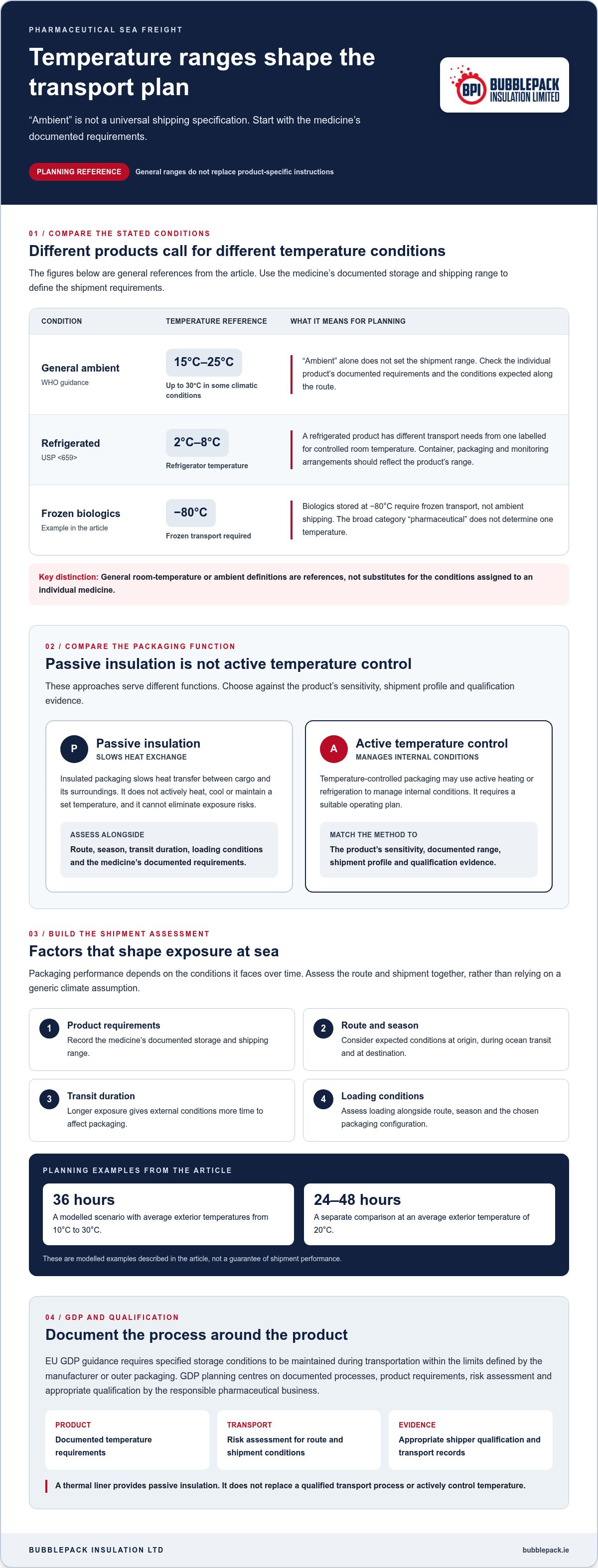
For example, USP <659> describes controlled room temperature as normally 20°C to 25°C, with conditions for certain excursions. Other pharmacopoeias use different room-temperature definitions. These are not universal shipping allowances: follow each medicine's approved conditions and the responsible quality team's assessment. USP <659> reference.
Ambient Shipping and Cold Chain Logistics
Ambient shipping exposes cargo to surrounding conditions, while cold chain logistics uses refrigerated transport for products requiring chilled conditions. USP <659> defines refrigerator temperature as 2°C to 8°C. A medicine labelled for controlled room temperature therefore has different requirements from a refrigerated product. The distinction informs container selection, packaging and shipment monitoring, rather than being a simple choice between sea and air.
Pharmaceutical and Biologic Shipping Temperatures
Temperature requirements vary by medicine. Some products require refrigeration, often 2°C to 8°C, while others require freezing or specified room-temperature conditions. Product labelling and stability evidence, not the broad category "pharmaceutical" or "biologic", determine the appropriate transport arrangement.
Pharmaceutical Shipping Regulations and Standards
The EU GDP guidelines, Chapter 9, require specified transport conditions to be maintained within the manufacturer's or outer packaging's defined limits. WHO TRS 961 Annex 9 provides model guidance for time- and temperature-sensitive pharmaceutical products, not a replacement for national rules. For broader GDP responsibilities, read BubblePack's pharmaceutical GDP transport guide.
Choose an ocean carrier and container that suit the product’s documented range, route, handling plan and temperature-monitoring arrangements. The shipper’s qualification must support the selected transport process.
Sea transit time varies by route and schedule. Longer exposure gives external conditions more time to affect packaging, so duration should form part of the temperature risk assessment.
Effects of exterior temperature on packaging performance
External heat and cold change the temperature difference across pharmaceutical packaging, influencing how quickly cargo gains or loses heat. For controlled room temperature sea freight pharma, assess the route, season, transit duration, loading conditions and packaging together. Insulation slows heat transfer; it cannot actively maintain a set temperature or eliminate exposure risks.
Plan for the actual route rather than relying on a generic climate assumption. Consider expected conditions at origin, during ocean transit and at destination, alongside the medicine’s documented requirements. A shipment passing through warmer regions may face different external exposure from one travelling through cooler conditions. These factors help determine whether insulated packaging is appropriate or active temperature control is needed.
Insulated packaging provides passive protection by slowing heat exchange between cargo and its surroundings. Temperature-controlled packaging may use active heating or refrigeration to manage internal conditions. These approaches serve different functions: insulation does not cool or heat cargo, while active systems require a suitable operating plan. Choose according to the product’s sensitivity, shipment profile and qualification evidence.
Single-use and reusable packaging bring different supply-chain considerations. Single-use packaging travels with the shipment, while reusable equipment requires a return and reuse process. Assess packaging performance alongside handling, storage, inspection and return logistics, rather than treating the package alone as proof of temperature control. The responsible shipper’s qualification process should account for the chosen configuration and route.
Controlled room temperature ranges for pharmaceutical products
A controlled room temperature range is associated with a medicine's specified storage conditions, not a universal shipping requirement. The applicable range and any accepted transport excursions depend on the product's approved information and quality assessment. International reference definitions differ, so exporters should start with the requirements for the medicine being shipped.
Read the relevant product documentation before translating its requirements into transport instructions. Clearly record the stated range, including any distinction between routine storage and transport conditions. Avoid using “room temperature” or “ambient” alone in shipping instructions, as these terms can be interpreted differently across markets and operational teams. Precise wording helps align the shipper, logistics personnel and receiving team on the conditions intended for that cargo.
For controlled room-temperature sea freight of pharmaceuticals, the range should inform the shipment plan, not stand alone as a label. Consider how packaging, container conditions, handling and monitoring support the documented product requirements. The chosen approach should fit the cargo and journey: a range appropriate for one medicine cannot automatically be applied to another product in the same shipment.
If a consignment contains different products, identify their separate storage conditions before planning how they will travel together. If requirements differ, address each product’s needs separately in the shipment documentation and monitoring plan. This helps assess whether the transport arrangement is suitable and interpret records on arrival. A precise range gives the responsible team a meaningful reference for reviewing the shipment, rather than a broad ambient description.
International pharmaceutical logistics regulations
Pharmaceutical sea-freight compliance depends on the product’s authorised conditions and the distribution process used to meet them. EU GDP guidelines address the storage, transport and handling of medicinal products. Directive 2001/83/EC governs medicinal products’ production, distribution and use in the EU. These frameworks provide context for shipment controls, rather than one universal temperature instruction for every medicine.
In Ireland, the HPRA is relevant to medicines regulation. Exporters and distribution teams should consider applicable national requirements alongside EU GDP expectations when setting procedures for a shipment. WHO TRS 961 Annex 9 provides an international reference for good distribution practice. The responsible pharmaceutical business remains accountable for applying the appropriate requirements to its product and supply chain.
Operational records should clearly link product conditions to transport decisions. Maintain the product’s documented storage requirements, shipment risk assessment, qualification evidence, handling procedures and temperature-monitoring records. Together, these records help teams review how the distribution plan addressed route conditions and whether monitoring data needs assessment after arrival.
For an Irish-to-EU movement, align the distribution procedure with applicable product requirements and document who reviews shipment records. On routes involving other markets, the receiving market’s applicable medicines requirements also matter. A shipping container, insulated packaging or temperature logger does not by itself demonstrate regulatory compliance; each has a defined role in the responsible business’s documented process.
Apply the same discipline when route, handling arrangements or packaging configuration change. Record the assessment and rationale within the relevant quality procedures so teams can trace why the transport plan was selected. This supports consistent distribution decisions without treating packaging as a substitute for pharmaceutical qualification or regulatory oversight.
BubblePack Insulation: BPI Thermal Liner
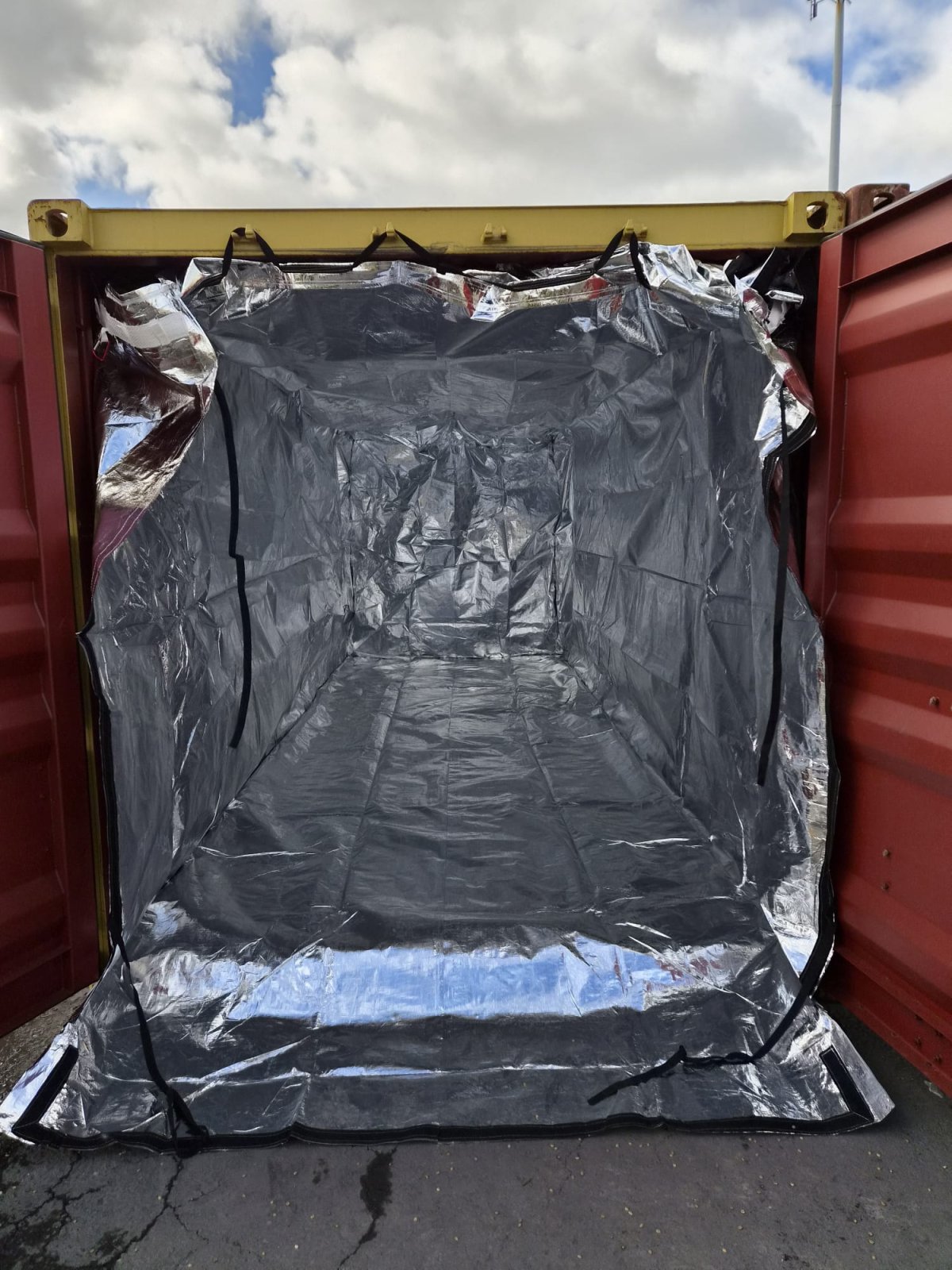
BPI Thermal Liners provide passive thermal insulation for shipping containers, using reflective foil construction. BubblePack Insulation supplies and professionally installs the liner across Ireland, supporting exporters seeking to reduce cargo exposure to external temperature changes.
For pharmaceutical shipments, a liner is a packaging consideration, not temperature-control equipment or proof of GDP compliance. Suitability depends on the product’s documented requirements, loading conditions, route, season and transit duration, as well as appropriate shipper qualification. The selected configuration also determines container coverage, including whether floor protection is included.
Where a qualified transport plan identifies passive insulation as appropriate, discuss the container type, depot location, collection date, cargo requirements and fitting arrangements. Contact BubblePack Insulation to discuss BPI Thermal Liner for your export shipment.
Carry the temperature plan into your next shipment
A useful next step is to align pharmaceutical quality, procurement and export operations around a single shipment brief. Define who is responsible for packaging selection, monitoring arrangements, route assumptions and record review before booking. Pay particular attention to handovers between the manufacturer, export team and transport partners so agreed instructions remain clear through cargo preparation and dispatch.
For teams planning pharmaceutical sea freight, BubblePack's BPI Roll Liner or BPI Integrated Liner may be considered as part of a shipper-approved transport arrangement. Neither provides active heating or cooling or independently establishes GDP compliance.
Bring your intended container movement and cargo requirements into the conversation. Discuss your pharmaceutical cargo protection needs with BubblePack Insulation and take the next planning step with confidence.
Frequently Asked Questions
What Are the Standard Temperature Guidelines for the Pharmaceutical Industry?
Pharmaceutical temperature guidelines are product-specific: the authorised product information and manufacturer’s instructions establish the relevant conditions. In Ireland, teams can use HPRA requirements alongside applicable EU medicines rules when developing internal procedures. Distinguish stated storage conditions from any separate transport instructions, and ensure shipment paperwork reflects the wording relevant to the consignment.
What does controlled room temperature mean for pharmaceutical sea freight?
For sea freight, controlled room temperature describes a defined transport requirement for a medicine, not a particular shipping mode or a guarantee of constant conditions. The shipment plan must account for how cargo is handled throughout its journey. A standard dry container alone does not establish that the medicine’s required conditions have been achieved.
What temperature range qualifies as controlled room temperature for pharma shipping?
There is no single range that qualifies every pharmaceutical product for controlled room temperature shipping. Use the conditions stated for the specific medicine rather than inferring a range from a general room-temperature label. If product information distinguishes storage from transport conditions, preserve that distinction in shipment instructions, especially when consignments contain products with different requirements.
What packaging and temperature monitoring systems are used for controlled room temperature sea freight?
Packaging may be passive, such as insulated protection, or use active temperature control where the shipment requires it. A temperature logger can provide a record for review, but its position and use should suit the cargo and monitoring plan. Define how readings will be retrieved, how timestamps will be interpreted and who will review unexpected data after transit.
How is temperature-controlled pharmaceutical ocean freight validated and qualified?
Qualification should establish whether a defined transport arrangement suits the intended pharmaceutical shipment. A practical protocol sets acceptance criteria in advance, evaluates representative handling and route conditions, and records the evidence used for approval. If the route, packaging or handling process changes, assess whether the existing qualification still applies and document the decision through the responsible quality process.
What are the risks of temperature excursions during pharmaceutical ocean shipping?
An excursion may prompt a product-quality assessment, but a temperature reading alone does not establish whether a medicine remains suitable for use. The review should consider the affected batch, recorded temperature profile, exposure duration and relevant product stability information. The responsible quality team can then determine the appropriate stock disposition and document its rationale before affected goods continue through distribution.