
Good Distribution Practice (GDP) places important requirements on the handling and transport of medicinal products. For pharmaceutical exporters, an insulated dry-container liner may be worth evaluating on an appropriate route—but insulation alone does not make a shipment GDP-compliant.
The decisive questions are whether the proposed shipping system can meet the product's documented transport conditions, how that performance has been assessed, and who is responsible for monitoring and reviewing the journey. This guide explains those questions and the role BubblePack's thermal liners may play.
Can a thermal liner be described as GDP-compliant?
Not by itself. GDP is a set of distribution practices and quality-system requirements, not a blanket performance certificate for an insulation material. A liner can form part of a transport arrangement assessed and approved by the responsible pharmaceutical organisation, but installing a liner does not certify the cargo, container or journey.
The European Commission's GDP guidelines for medicinal products for human use (2013/C 343/01) address the control of transport conditions, equipment suitability, route risk assessment, records and the handling of deviations. In Ireland, the Health Products Regulatory Authority (HPRA) oversees wholesale distribution and GDP compliance.
What does GDP mean for pharmaceutical transport?
Chapter 9 of the EU GDP guidelines puts the emphasis on protecting medicines and maintaining the required conditions throughout transport. The applicable temperature limits come from the manufacturer or product labelling—not from a generic assumption about pharmaceutical cargo.
In practice, the responsible supply-chain organisation needs an appropriate process for:
- Product requirements: identifying the approved temperature limits and other relevant handling conditions.
- Route risk assessment: considering expected exposure, transit duration, intermediate storage, transhipment and seasonal variations.
- Suitable equipment: selecting packaging, containers or vehicles appropriate to the required transport conditions.
- Qualification and monitoring: establishing evidence that the proposed configuration is suitable, with calibrated monitoring equipment as applicable.
- Excursion management: recording, reporting and investigating deviations under approved quality procedures.
These responsibilities extend beyond the insulation supplier. Relevant manufacturers, distributors, contractors and transport partners must work within the requirements and quality agreements applicable to their roles.
Passive insulation versus active refrigeration
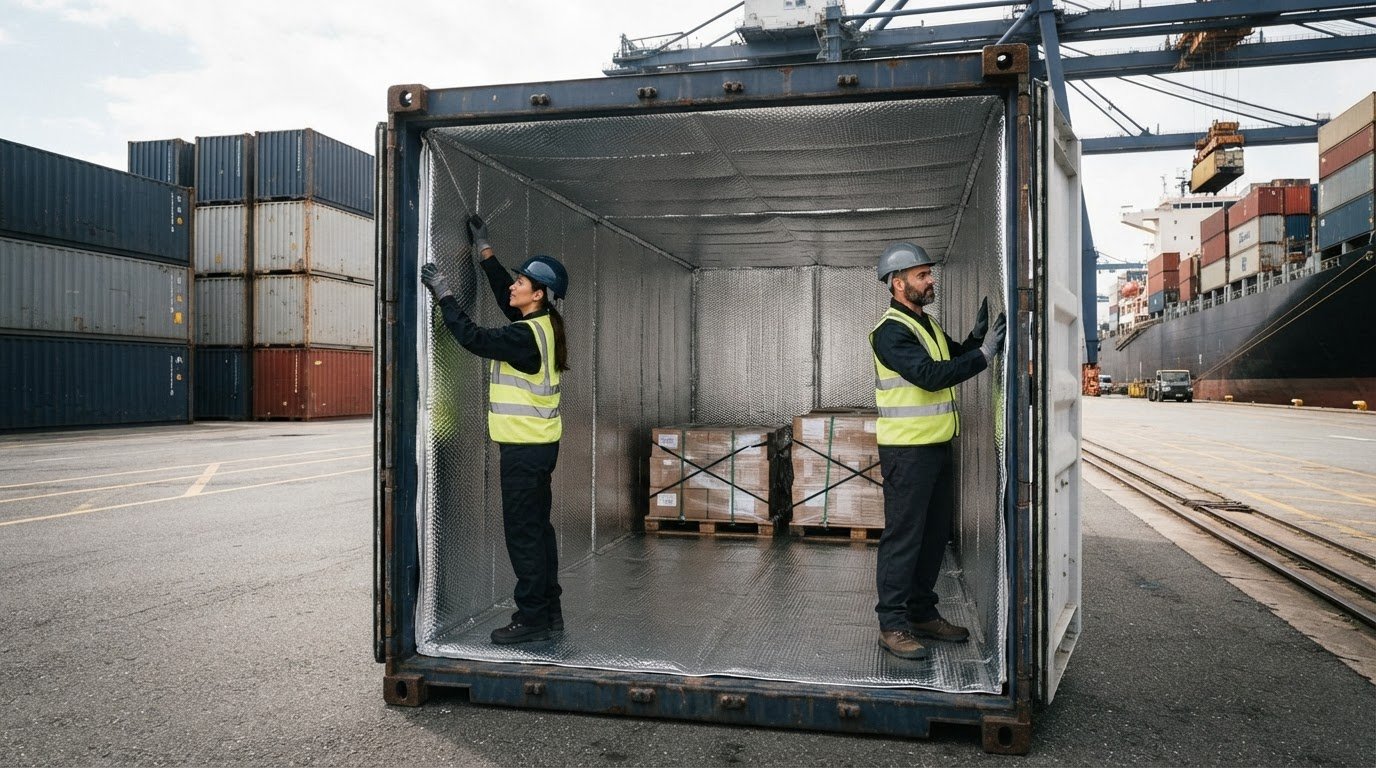
Thermal liner inside a dry container
A passive thermal liner slows heat transfer between the container shell and cargo space. It uses no electricity to perform its insulating function, but does not actively cool, heat or maintain a temperature setpoint. Its effect depends on the initial cargo temperature, load arrangement, external conditions and duration of exposure.
For some products and approved transport configurations, passive insulation may be considered as one element of the shipping system. It must not be assumed suitable solely because another pharmaceutical customer has used a similar liner.
Refrigerated container (reefer)
A reefer offers active temperature control when appropriately powered, including by a generator set where fitted. It may be necessary where the product requires controlled conditions that passive insulation cannot maintain. A reefer is not automatically a GDP-qualified solution either: its operating arrangements, qualification, monitoring and contingency procedures still need to satisfy the relevant quality requirements.
The correct comparison is therefore between two complete shipping arrangements that can meet the same documented cargo requirements—not simply between the purchase cost of a liner and the quoted reefer freight rate.
How should a pharmaceutical exporter assess a liner for a route?
1. Establish the product specification
Confirm the approved transport temperature range, acceptable exposure conditions and any special restrictions. Products at risk of freezing, or requiring tightly maintained refrigerated conditions, may need active temperature control. A general category such as 'pharmaceuticals' does not establish a uniform temperature range.
2. Map the complete journey
Include loading, empty-container collection, port dwell, ocean transit, transhipment, unloading and onward delivery. Consider the intended shipping season and credible delays. Risk may differ significantly between direct services and routes with multiple handling points.
3. Define the actual equipment and loading arrangement
Document the container size and condition, liner type and coverage, cargo placement, packaging, loading temperature and fitting method. A trial performed with one load configuration should not automatically be treated as proof for every other configuration.
4. Determine what qualification evidence is needed
The shipper's quality team should decide the required assessment and evidence for its intended use. Depending on the cargo and route, this may include representative temperature studies, seasonal or worst-case evaluation and defined monitoring locations. Insulation material characteristics alone do not establish loaded-container performance.
5. Monitor and review results
Temperature data loggers can provide valuable shipment records, provided their specification, placement and calibration are appropriate to the quality plan. Any temperature excursion must be handled through the responsible organisation's established procedures. Data from one successful journey may inform future decisions, but does not guarantee subsequent shipments.
Where BubblePack's thermal liner systems fit
BubblePack offers two passive container-lining formats, with different installation arrangements:
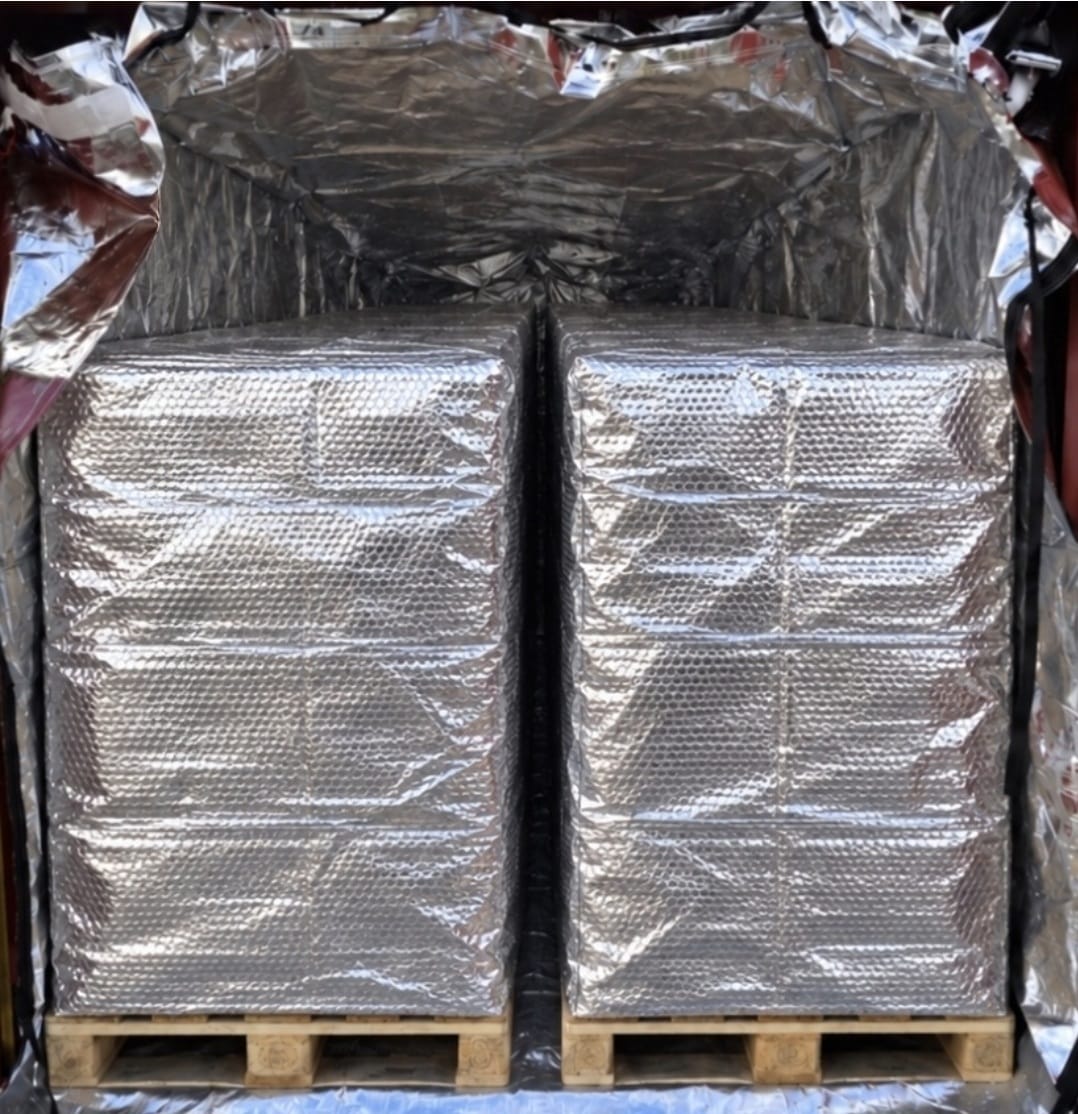
- BPI Roll Liner: reflective metalised foil, insulating bubble core and reflective foil in a three-layer roll format. BubblePack's own technicians supply and install this system in Ireland, commonly at empty-container depots before collection. The coverage can be tailored to the agreed job, including whether floor insulation is required.
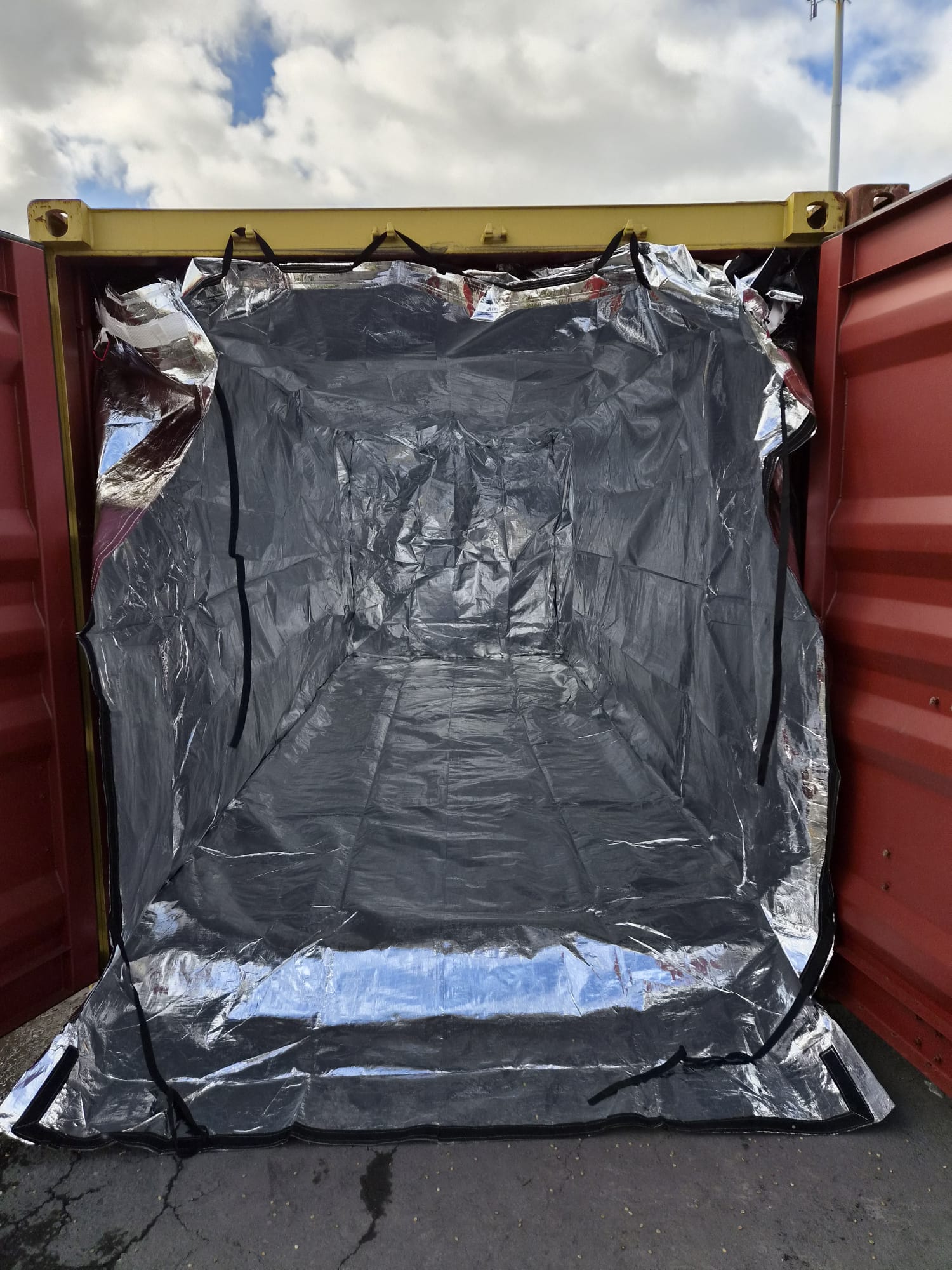
- BPI Integrated Liner: a prefabricated liner designed for standard container sizes and international supply. Shippers can fit it using the supplied guidance, or local installation can be discussed where available. Typical fitting time is 7–20 minutes depending on container size.
Both provide passive insulation rather than active refrigeration. Neither product should be represented as independently 'GDP-certified' or suitable for every medicinal product. The pharmaceutical shipper's approved transport assessment governs whether a particular configuration is appropriate.
Questions to ask before requesting a quotation
- What is the cargo, and what documented transport conditions apply?
- Which container size, route, season and transit duration are planned?
- Is a fully maintained setpoint required, or is passive protection being considered within an approved qualification process?
- Will installation be required at an Irish depot or an international loading location?
- What performance evidence, monitoring and quality documentation will the responsible shipper need?
Frequently asked questions
Does the use of an insulated container guarantee GDP compliance?
No. Suitable equipment is only one component of a compliant distribution process. Product requirements, documented procedures, qualification where required, monitoring and deviation management remain essential.
Can a data logger make an unqualified shipping configuration acceptable?
No. A logger records conditions; it does not control them or independently establish that the configuration is suitable. Its use and interpretation must sit within the responsible organisation's quality process.
Does every pharmaceutical shipment need a reefer?
Not necessarily. The approved product requirements and the assessed transport configuration determine the choice. Some shipments may be candidates for qualified passive arrangements, while others need active temperature control.
Discuss a route assessment with BubblePack
If you are assessing passive insulation for an export programme, send the cargo type, documented temperature requirements, container size, shipping route, season, estimated transit duration and loading location. BubblePack can discuss the available liner systems and installation arrangements to support your evaluation. Final cargo suitability and GDP approval remain with the responsible pharmaceutical quality team.
Contact BubblePack about your proposed shipping route.
Regulatory references: EU GDP Guidelines (2013/C 343/01), Chapter 9; HPRA wholesale distribution and GDP guidance. This article is general information, not a product-specific qualification or regulatory determination.