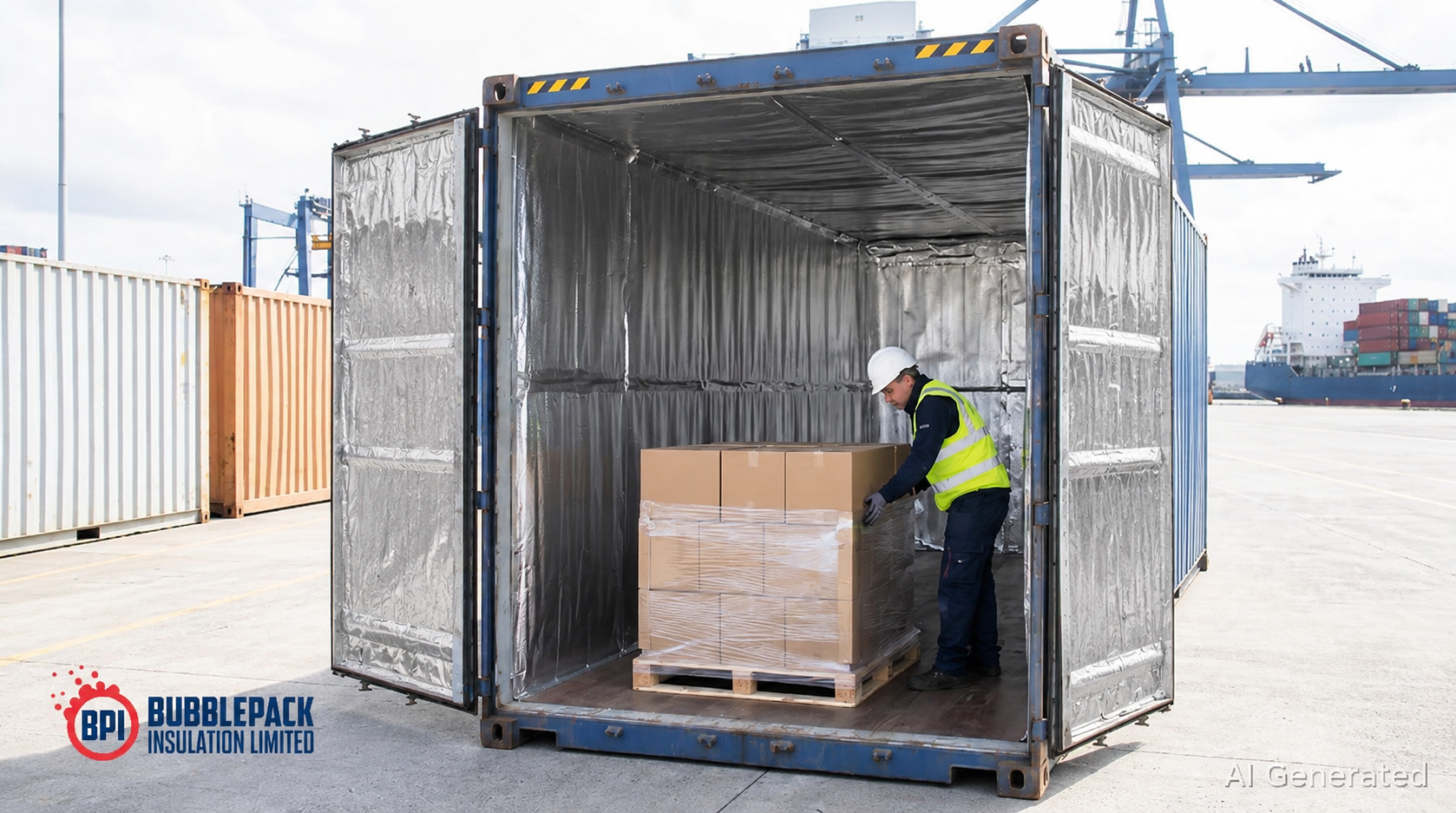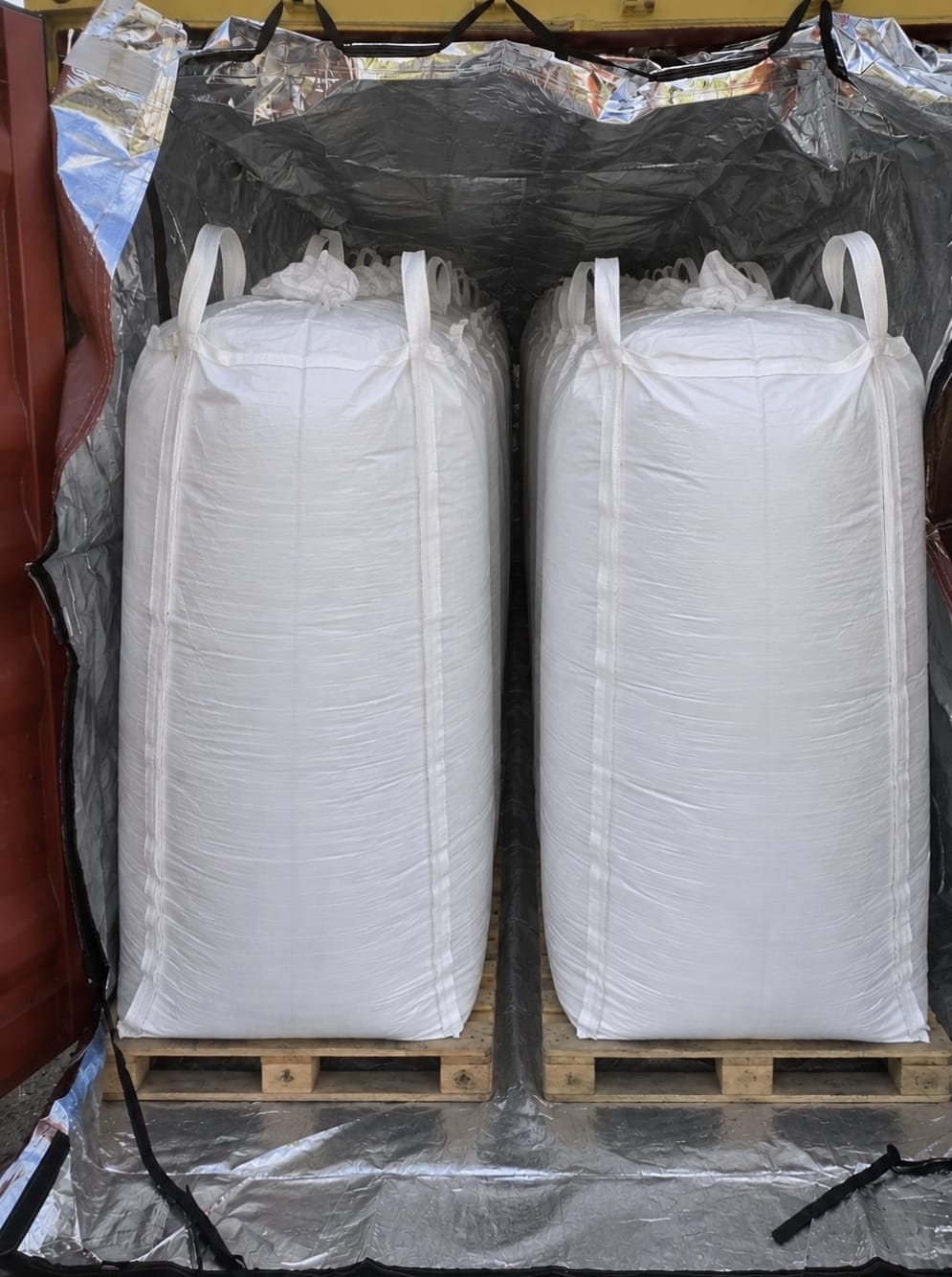

A thermal pallet cover is a passive layer around palletised goods that slows heat transfer from the surrounding air. It can reduce the rate of temperature change during handling and transit, but it does not heat or cool cargo or maintain a fixed temperature. Insulation covers for palletised freight therefore act as a buffer, not a substitute for active temperature control when a shipment requires it.
That distinction is central to choosing protection: a cover can help moderate exposure, but its value depends on cargo requirements and route conditions. For exporters and logistics teams, fit alone is not enough. Transit duration, loading conditions, weather exposure and hygiene controls all shape the decision.
This article explains how thermal pallet covers work, where their limits lie and how to assess route conditions and hygiene needs. It also explains how BubblePack's flexible insulation rolls can be used around pallets of different sizes, as well as for whole-container lining.
Key Takeaways
• Use thermal covers to slow temperature change during handling and transit, not to actively heat or cool cargo.
• Assess reusable covers as part of hygiene controls, including how they’ll be cleaned between uses.
• Match protection to the cargo’s temperature requirements, loading conditions, route, season and transit duration.
• Consider whether pallet-level protection or a container liner better suits the shipment’s exposure and handling pattern.
Table of Contents
• What are thermal pallet covers?
• Can a reusable cover create hygiene or contamination concerns?
• Protection limits of pallet insulation covers
• Choosing covers for shipment lanes and route conditions
• BubblePack Insulation: BPI ROLL LINER
What are thermal pallet covers?
Insulation covers for palletised freight are removable layers that slow heat transfer around a load. They provide passive protection, not active temperature control.
Temperature protection during handling
A thermal pallet cover surrounds sensitive goods to reduce exposure during loading, unloading and temporary staging. This can matter when dairy, beverages or food ingredients move between controlled storage and a vehicle. Follow the cover manufacturer's fitting and removal instructions. Confirm that the selected cover fits the loaded pallet and does not interfere with safe handling.
Cold-chain temperature and humidity challenges
The cold chain is the connected handling and transport process used to protect temperature-sensitive cargo. During a transfer, warm or cold ambient air can affect exposed outer cases before freight reaches storage or a container. Humidity can also affect packaging and cargo condition, particularly when goods move between environments. For example, record product requirements for milk powder separately from those for chilled dairy.
Thermal ratings and temperature separation
A thermal rating describes performance under stated test conditions; it does not show what temperature a shipment will maintain. Treat a cover rating as product information under defined test conditions, not proof that cargo will meet every shipping requirement. Use the shipper’s documented conditions and the cargo’s handling specification. A cover can create a barrier between a load and its surroundings, but cannot create independent active temperature zones.
Risks to mixed-temperature freight
Mixed-temperature freight combines products with different documented handling conditions in one load. Wine, dairy and pharmaceuticals, for example, may have distinct requirements, so one shared cover cannot actively control each product’s temperature. Separate incompatible cargo where the loading plan allows, and assess each item against its own specification. Pharmaceutical shipments require documented temperature requirements and appropriate shipper qualification.
Can a reusable cover create hygiene or contamination concerns?
In the United States, pallet insulation options include reusable insulated covers, single-use thermal covers and custom-sized covers. Reusable versions may use quilted or bubble-style layers, while single-use formats are intended for one shipment. The choice depends on handling frequency, cargo hygiene requirements, storage conditions and whether a standard cover fits the pallet load. A cover’s insulating function does not, by itself, establish cleanliness or protect cargo from every source of contamination.
A reusable cover can pick up dust, moisture, product residue or odours during storage and handling. If used for different cargo types, residue from one shipment could affect another load or its outer packaging. For example, a cover used around food ingredients should not return to service simply because it looks clean. Assess its condition and handling history against the next cargo’s hygiene controls, including any separation requirements.
Set a cleaning and inspection process before reuse. Follow the cover manufacturer’s care instructions and the site’s documented hygiene procedures, since cleaning methods must suit the cover’s materials. After cleaning, check that the cover is dry and free from visible residue, damage or persistent odour before storage. Keep covers for different cargo categories separate where the operation’s contamination controls require it. Do not treat a damaged or damp cover as ready for the next load.
Custom sizing can help match a cover to a pallet’s footprint and load profile, improving fit around a particular consignment. Confirm dimensions and handling needs when specifying the cover, especially for non-standard pallets or irregularly stacked cartons. Reusable covers suit operations with repeat movements and a managed return, inspection and cleaning cycle. Single-use covers avoid return handling but create disposal needs after transit. Compare the full operating process, including hygiene controls and storage, rather than insulation alone. Record the inspection and cleaning status before assigning each cover to a new load.
Protection limits of pallet insulation covers
Insulated pallet covers can reduce exposure to changing ambient conditions, but they do not control temperature actively. Their role differs from refrigerated shipping and insulation fitted across a container.
Thermal protection during transport
A pallet cover places an insulating layer around the load, but its performance depends on its construction, fit and condition. The cargo’s starting temperature, loading arrangement and exposure during handling also matter. Do not assume a claim for one product applies to another cover or shipment. Review any manufacturer performance statement alongside its test conditions and the requirements of the cargo being transported.
On an ocean route, loading, terminal handling and discharge can expose freight to changing conditions. A cover may slow temperature change during those stages, but it cannot actively restore the cargo’s temperature. Damage, poor fit or a load unsuited to the cover can also limit the protection available.
Covers, refrigerated shipping and thermal liners
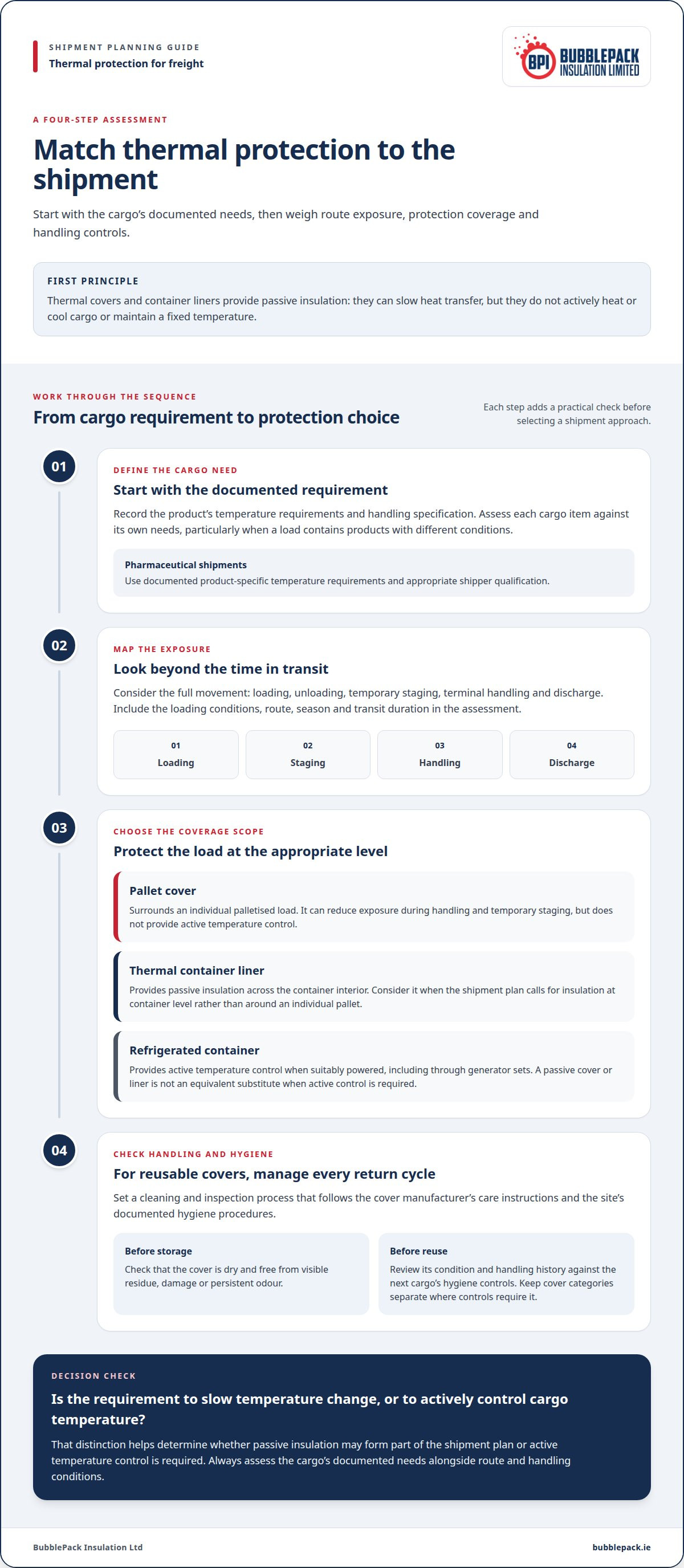
A pallet cover surrounds an individual load; a thermal container liner provides passive insulation across the container interior. Neither actively heats or cools cargo. Refrigerated containers provide active temperature control when suitably powered, including through generator sets. The appropriate option depends on the shipment’s documented requirements and operating conditions.
For cargo that needs active control, a passive cover or liner is not an equivalent substitute. Where the requirement is to slow heat transfer rather than maintain a temperature setpoint, passive insulation may form part of the shipment plan. Assess the product’s documented conditions, loading plan, route, season and transit duration before choosing an approach.
Pharmaceutical shipments require documented temperature requirements and appropriate shipper qualification. The insulation method alone does not establish that qualification or prove a shipment meets its product-specific conditions.
Choosing covers for shipment lanes and route conditions
Start with the cargo specification and map each handover on the planned lane. A direct movement from dispatch to port differs from a route involving transhipment, terminal storage and onward delivery. This map helps identify where pallet-level exposure occurs and whether a cover suits the shipment’s operating plan.
For ocean freight, consider the full sequence: loading at origin, terminal dwell, vessel transit, discharge and onward transport. A pallet may move between covered storage and exposed handling areas during port operations. Transhipment can add handling stages, while a direct sailing may follow a simpler sequence. Assess the actual lane rather than treating all ocean journeys as equivalent.
Then examine the shipment schedule. Planned transit duration matters, as do expected port waiting periods and the conditions cargo encounters during transfers. A short handling interval differs from extended staging before loading or collection after discharge. A cover slows heat transfer, but cannot actively correct cargo temperature or compensate for every period of exposure.
Use a lane review to capture the operational details that affect cover choice:
Cargo
Record the documented requirements for each product, including pharmaceuticals and food ingredients.
Route
Note port calls, transhipment and the number of handling stages.
Exposure
Identify where pallets may wait outside or move between environments.
Schedule
Consider planned transit time and likely staging points in the transport plan.
For pharmaceuticals, use the medicine’s documented temperature requirements and appropriate shipper qualification. A cover does not establish qualification or replace documented transport processes. Also consider whether pallets share compatible handling conditions, since one passive cover cannot create separate temperature zones for mixed cargo.
Choose passive pallet protection only when it suits the cargo requirements and route exposure. If the product requires active temperature control, a suitably powered refrigerated unit provides that control. Compare the lane’s handling pattern and loading plan before choosing protection, rather than relying on a cover label alone.
BubblePack Insulation: BPI Roll Liner for Pallets and Containers
BubblePack’s BPI Roll Liner is flexible reflective foil/bubble/foil insulation supplied in rolls. We use the material to line shipping containers, but it can also be wrapped around individual pallet loads. Because it is supplied in rolls, it can accommodate different pallet footprints and loaded heights without requiring a prefabricated cover in a fixed size.
For pallet protection, choose coverage based on the loaded pallet, cargo handling arrangements and route exposure. The insulation provides passive thermal protection; it does not actively heat, cool or maintain a set temperature. Do not assume a particular wrapping or securing method without referring to the instructions for the application.
For full-container protection in Ireland, BubblePack supplies and professionally installs its Roll Liner in dry shipping containers, commonly before collection at an empty-container depot. The separate prefabricated BPI Integrated Liner is also available for suitable international full-container shipments. Floor insulation depends on the selected container-lining configuration.
For pallet-specific enquiries, see BubblePack’s Pallet & Cargo Protection service or contact BubblePack to discuss your cargo, pallet dimensions and shipping route.
Turn route assessment into a shipping plan
Make the protection decision part of the shipment’s operating plan, not an isolated purchasing choice. Record who is responsible for preparing the load, applying the selected protection and handling it at transfer points. Clear ownership helps teams follow the same approach across dispatch, terminal handover and receipt, even when different parties manage each stage.
Selecting insulation covers for palletised freight should support the cargo’s documented requirements and the logistics process around it. Set out the relevant shipment information for procurement and operations teams, then align the chosen approach with their handling procedures. This provides a practical basis for reviewing future lanes as cargo profiles or shipping arrangements change.
For a discussion about suitable cargo protection for your shipment, contact BubblePack Insulation. A clear plan is a sound next step towards more controlled freight handling.
Frequently Asked Questions
What should I check before placing a bulk order?
Confirm pallet dimensions, loaded height, cargo requirements and intended routes before ordering. Then assess how covers will be issued, returned, inspected, cleaned and stored between shipments. For example, a multi-site operation needs consistent specifications and handling procedures at each dispatch point. Agree how damaged or contaminated covers are removed from circulation, so purchasing quantities account for operational replacements as well as planned use.
What are insulation covers for palletised freight and how do they work?
Insulation covers for palletised freight enclose a pallet load with material designed to slow heat transfer. They provide passive buffering, not powered temperature control. Practical coverage depends on the load’s shape and how much of it the cover encloses. For example, cartons extending beyond the pallet footprint may leave areas exposed or affect how the cover sits around the load.
What temperature ranges can insulated pallet covers maintain, and for how long?
There is no single temperature range or transit duration that applies to every insulated pallet cover. A cover slows temperature change; it cannot maintain a setpoint independently. Assess product-specific temperature requirements alongside the cargo’s starting condition, route exposure, loading arrangement and transit time. Treat a performance statement as relevant only to its stated test conditions, rather than applying it automatically to another shipment.
What sizes and specifications should I choose for a standard pallet?
Choose dimensions based on the loaded pallet, not just its empty base. Record the footprint, stacked height and any cartons or goods extending beyond the edges. Then compare these measurements with the cover’s stated fit and coverage. Check how it closes around the load and whether the arrangement suits handling equipment and dispatch procedures. Pallet formats can differ, so do not assume one nominal size suits every operation.
Which materials provide the best thermal protection, moisture resistance, and durability?
No material is automatically best for thermal protection, moisture exposure and repeated handling. Compare each cover’s documented construction and performance information with the shipment conditions. Review how the manufacturer describes its seams, closures, outer surface and care requirements. In damp handling environments, look for specific moisture-related product information and consider abrasion or puncture exposure during loading. Do not infer these properties from appearance alone.
Can pallet insulation covers be reused, recycled, or customised?
Some covers are designed for reuse, and custom sizing may be available, but suitability depends on the specific product. Follow its care instructions and inspect it between loads for damage, residue or moisture before returning it to service. Recycling depends on the cover’s material composition and the collection options available locally. Confirm dimensions against the loaded pallet, and do not assume every cover can be recycled or adapted.