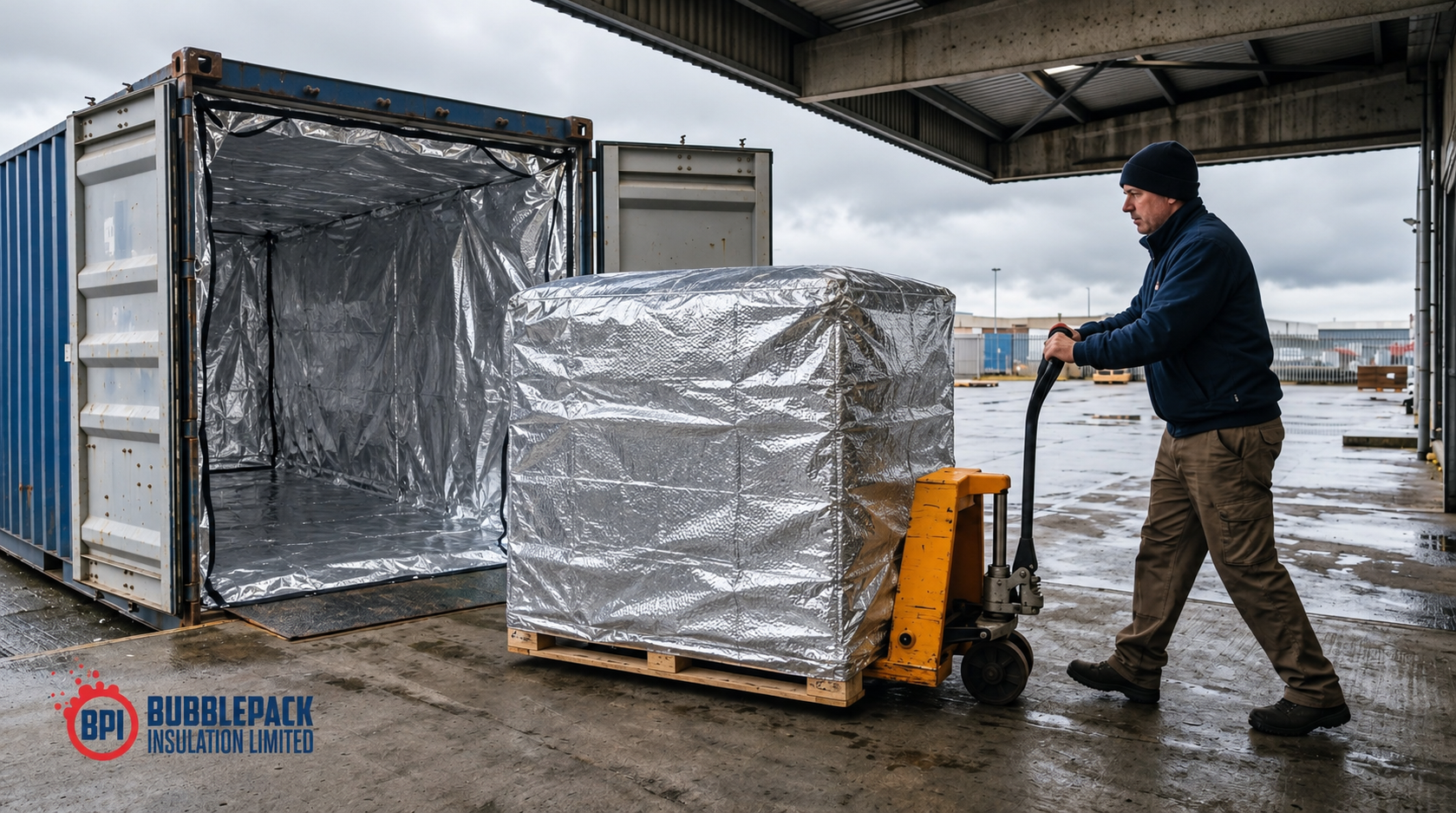

A reflective barrier can buy time, but it does not replace temperature control. Thermal pallet covers can reflect radiant heat and slow heat transfer around a loaded pallet during a temporary interruption in the cold chain. They do not actively cool cargo or maintain a fixed temperature. Their role is to provide passive protection while goods face changing conditions.
A cover’s materials and insulating layers affect how it limits heat transfer. Its fit, the cargo’s requirements, handling and the length of an interruption also matter. This guide explains how reflective surfaces and insulating layers work, what to consider for different products and journeys, and how pallet covers differ from thermal protection for shipping containers. Use these factors to assess whether a cover suits your cargo and the risks along its route.
Key Takeaways
• Use a thermal cover as passive protection during a temporary interruption, not as a substitute for active temperature control.
• Match the protection to the cargo’s documented temperature requirements, loading conditions, route, season and transit duration.
• Consider how reflective surfaces and insulating layers work together to limit heat transfer, while recognising that actual results depend on shipment conditions.
• Distinguish pallet-level covers from container liners when deciding how to protect cargo through its journey.
Table of Contents
• Protection during temporary cold-chain interruptions
• Choosing covers for different products and journeys
• Reflecting thermal radiation and limiting heat transfer
• Thermal pallet cover materials and insulation layers
• BubblePack Insulation: Pallet & Cargo Protection
Protection during temporary cold-chain interruptions
During a brief handover or loading delay, thermal pallet covers provide passive insulation around temperature-sensitive cargo. They slow heat transfer but do not actively cool or heat goods, or hold them at a fixed temperature.
Protecting temperature-sensitive goods
A cover adds a barrier between palletised goods and surrounding conditions during cold-chain shipping. It can help limit temperature changes during loading, cross-docking or a temporary wait between transport stages. Dairy products, food ingredients and beverages have distinct handling requirements, so check each product’s documented temperature range before choosing protection. Pharmaceutical shipments require documented, product-specific temperature requirements and appropriate shipper qualification. A cover supports a transport plan; it does not replace active temperature control when the cargo requires it.
Cold-chain logistics applications
Possible use cases include staging a chilled ingredient pallet before loading, transferring beverages between vehicles, or handling goods during a planned connection delay. Consider where exposure occurs, such as a loading bay, terminal handover or unheated vehicle. The route and season affect surrounding conditions, while the cargo’s starting temperature and packing arrangement affect how it responds. Identify the interruption point in the transport plan, then assess whether passive insulation suits that specific exposure.
Maintaining safe temperatures during interruptions
There is no single safe holding time for every covered pallet. Suitable duration depends on the cargo’s documented limits and starting condition, as well as the surrounding temperature, exposure and loading arrangement. A cover slows heat transfer but cannot guarantee a set temperature. Assess the likely interruption against the product’s allowable conditions and the transport plan. If active temperature control is required, a passive cover is not a substitute.
For a practical assessment, map the shipment from dispatch to delivery. Identify each handover, waiting period and point where the load may face changing conditions. Compare those exposures with the product requirements, and decide whether the interruption is brief and predictable or part of a longer transit risk. This helps establish whether a pallet-level cover is appropriate or another form of cargo protection is needed.
Choosing covers for different products and journeys
For fixed-size covers, match the cover’s footprint and height to the loaded pallet. BubblePack's reflective insulation is supplied in rolls, allowing material to be used around pallet loads of different sizes. Assess the needed coverage against the cargo, route and handling conditions.
Matching cover size to the pallet
Measure the pallet footprint and the full height of its load, including uneven cartons or exposed corners. An undersized cover may leave areas exposed; excess material can complicate handling during transfer. For example, compare a uniform stack of boxed ingredients with a beverage pallet of mixed heights. Confirm that the chosen size accommodates the entire load, not just the pallet base.
Selecting cover materials
Assess the material by its role in the journey, not by appearance alone. Check the cover’s stated construction and intended use, then compare them with the cargo and likely exposure. A pallet staged near a loading-bay entrance may face different conditions from one transferred directly between enclosed vehicles. The material should suit the required passive protection and the route’s handling demands.
Next, map the shipment’s main stages: dispatch, vehicle transfer, terminal handling and delivery. Note where a pallet may wait, whether it will be handled more than once, and how the load is secured. A beverage pallet transferred between vehicles, for example, may need a cover that fits its full profile without obstructing routine handling.
Use the product’s documented temperature requirements as your baseline. Then consider the goods’ starting condition, the season, route and transit duration. These factors help distinguish brief exposure during loading from repeated exposure across several handovers. Choose a cover for the actual journey rather than treating every shipment of the same product as identical.
Before dispatch, record the loaded pallet dimensions, cargo type and planned route. For fixed-size products, compare these with the cover's stated dimensions. For BubblePack's flexible rolls, assess the quantity of material and coverage required for the specific load, without assuming a fixed-size prefabricated cover. This gives procurement and logistics teams a consistent basis for selecting protection across products and export movements.
Reflecting thermal radiation and limiting heat transfer
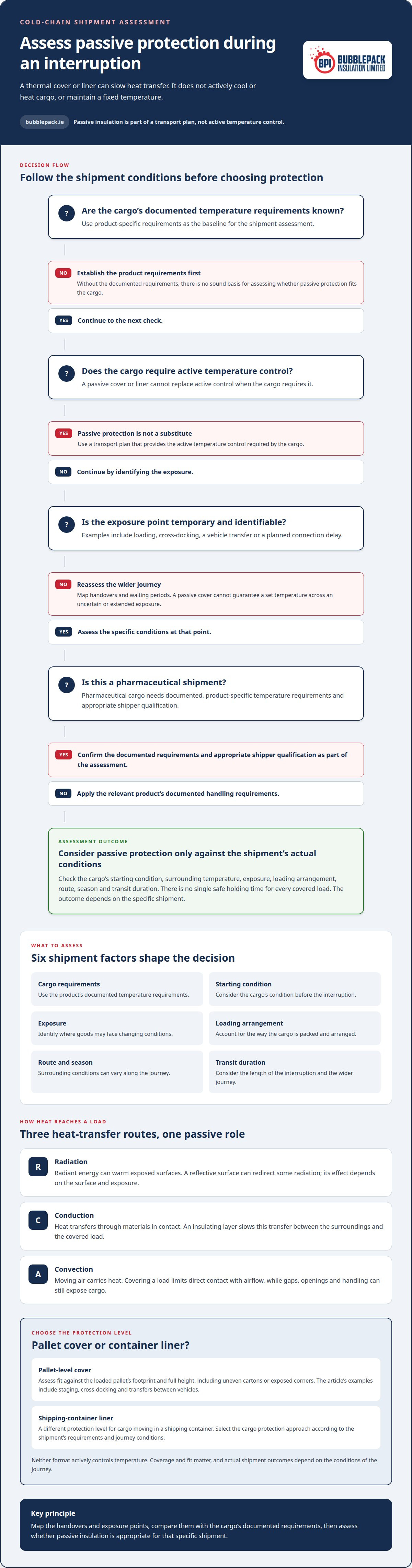
Heat reaches a pallet through radiation, conduction and convection. In a sunlit loading bay, radiant energy can warm exposed surfaces without direct contact. A reflective cover surface can redirect some radiation, reducing the energy absorbed at the cargo boundary. The effect depends on the surface and exposure, so a cover should not be treated as active cooling or temperature control.
Conduction transfers heat through materials in contact. For example, a pallet against a warm vehicle wall may gain heat through contact, while a cold floor can draw heat away. An insulating layer slows this transfer between the surroundings and the covered load. The cover does not remove heat already in the goods; it changes how quickly external conditions affect them.
Convection is heat transfer carried by moving air. Air passing over exposed cartons can exchange heat with their surfaces, particularly during a delay near an open loading-bay door. Covering the pallet limits direct contact between moving air and the load. Gaps, openings and handling can still expose parts of the cargo, so coverage and fit matter throughout the journey.
These mechanisms work together. A reflective surface addresses radiant exchange, an insulating layer slows conductive transfer, and coverage reduces direct airflow across the goods. Consider a pallet waiting beside a sunlit terminal wall: radiation, surrounding air and nearby surfaces may all affect it. A cover can slow these influences, but performance also depends on the cargo, loading arrangement, route and exposure duration.
For a practical assessment, identify the main heat sources at each stage of the shipment. Note direct sunlight, contact with warm or cold surfaces, and airflow around the pallet. Then assess whether the cover can maintain coverage during normal handling. This step-by-step review helps identify which heat-transfer mechanisms the shipment needs to address, without assuming a reflective surface alone controls them all.
Thermal pallet cover materials and insulation layers
Cover constructions differ. BubblePack's flexible reflective roll insulation uses a foil/bubble/foil construction and can be wrapped around pallet loads of different footprints and heights. Do not apply specifications from other manufacturers' fixed-size covers to BubblePack's material.
A pallet shroud covers the load, while an insulated cover also has specified insulating layers. A powered refrigerated container actively controls temperature; a passive pallet cover does not. The right option depends on the cargo requirements and conditions along the route.
There is no single R-value or temperature-protection figure that applies to every cover. Material specifications alone cannot establish the temperature outcome for a shipment. Assess the cargo requirements and actual transit conditions.
Whether a cover can be reused depends on its construction, condition and care instructions. Recyclability depends on its materials and the local processes available. Assess the shipping requirements against the cargo, destination and route rather than assuming one cover suits every shipment.
There is no single price for all covers. Cost depends on the materials, dimensions and order requirements, so compare quotations with the cargo and intended journey.
Installation and removal depend on the design. Follow the maker’s instructions, fit the cover around the entire loaded pallet, and remove it as directed. Afterwards, inspect it for damage before considering reuse.
A cover cannot actively heat or cool goods, guarantee a set temperature, or eliminate temperature excursions. Exposure, loading and transit conditions all affect its suitability. For pharmaceutical shipments, assess the protection plan against documented product temperature requirements and appropriate shipper qualification.
BubblePack Insulation: Pallet & Cargo Protection
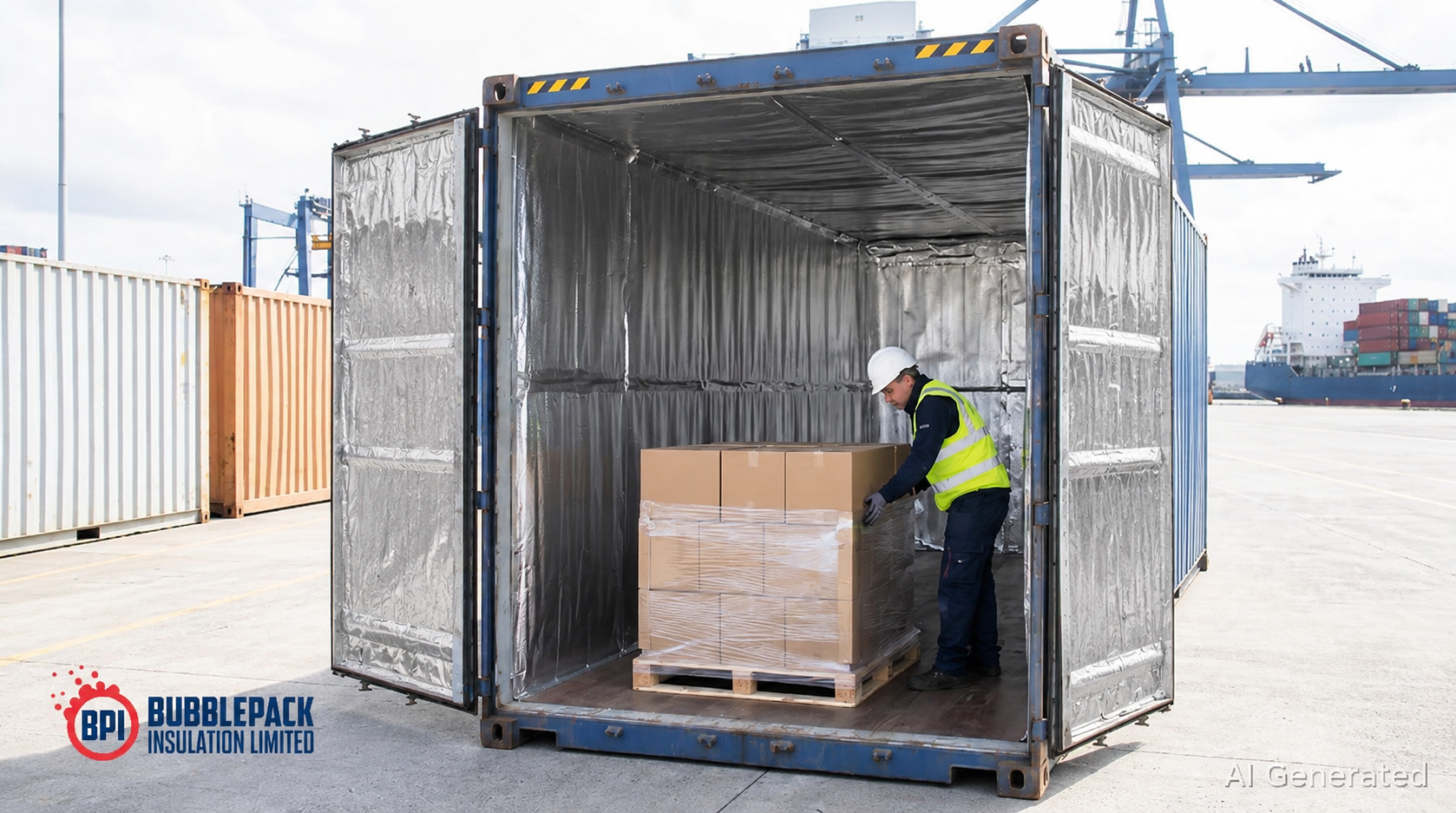
BubblePack Insulation’s Pallet & Cargo Protection helps exporters assess protection for palletised goods and containerised cargo. Insulation applied around an individual pallet addresses pallet-level exposure, while a thermal liner fitted to a shipping container addresses the container interior. The right approach depends on the product’s documented temperature requirements, loading conditions, route, season and transit duration.
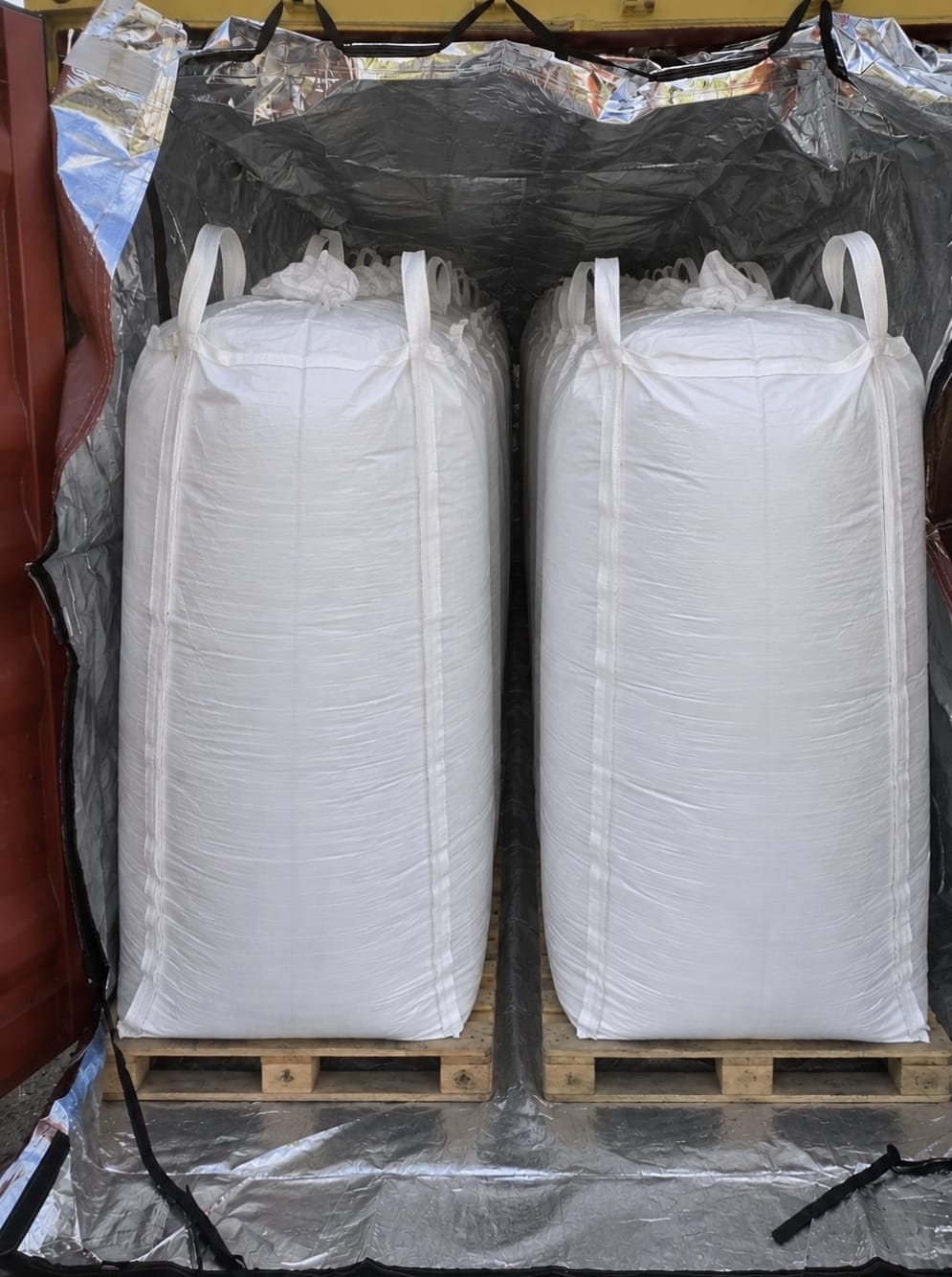
BubblePack's BPI Roll Liner material is supplied in flexible rolls and can be used both to wrap palletised cargo and to line dry shipping containers. For suitable full-container international shipments, BubblePack also offers the separate prefabricated BPI Integrated Liner. These are passive insulation options and neither actively cools or heats cargo. Assess each application against documented cargo requirements and route risks.
Review BubblePack's Pallet & Cargo Protection service or contact BubblePack with your cargo requirements and shipping plan.
Make cargo protection part of the shipment plan
Build cargo protection decisions into the next planning cycle. Map where pallets are staged, transferred and loaded, then align the protection approach with product requirements and handover responsibilities. This gives procurement, warehouse and logistics teams a shared basis for planning, instead of leaving cover selection until the last minute.
When assessing thermal pallet covers alongside container-level protection, consider how each option fits the shipment’s route and handling plan. Bringing these details together before preparing the next load helps make cargo protection a deliberate part of export planning.
A clear plan gives every shipment a more considered starting point.
Frequently Asked Questions
What Are Thermal Pallet Covers And How Do They Work?
Thermal pallet covers enclose palletised goods in material designed to slow heat exchange during handling or transit. Reflective surfaces can reduce radiant heat absorption, while insulating layers slow heat transfer through the cover. For example, a covered pallet waiting at a cross-dock has an added passive barrier during the handover. The cover does not actively cool or heat the goods.
What types of thermal pallet covers are available?
Covers vary in construction, material layers, reflective surfaces and fit around a loaded pallet. Some use reflective material; insulated designs combine a reflective outer surface with insulating layers. Cargo wraps may cover a load differently from a full pallet cover. Compare the construction and intended use with the pallet dimensions, handling process and shipment requirements, rather than choosing by product name alone.
What products and industries commonly use thermal pallet covers?
Temperature-sensitive goods in food, beverage, pharmaceutical and chemical supply chains may use pallet-level protection during handling or temporary exposure. Examples include dairy products, milk powder, food ingredients and beverages moving through a loading or transfer stage. Pharmaceutical shipments require documented product temperature requirements and appropriate shipper qualification. Suitability depends on the cargo and journey, so a cover should form part of the wider temperature-control plan.