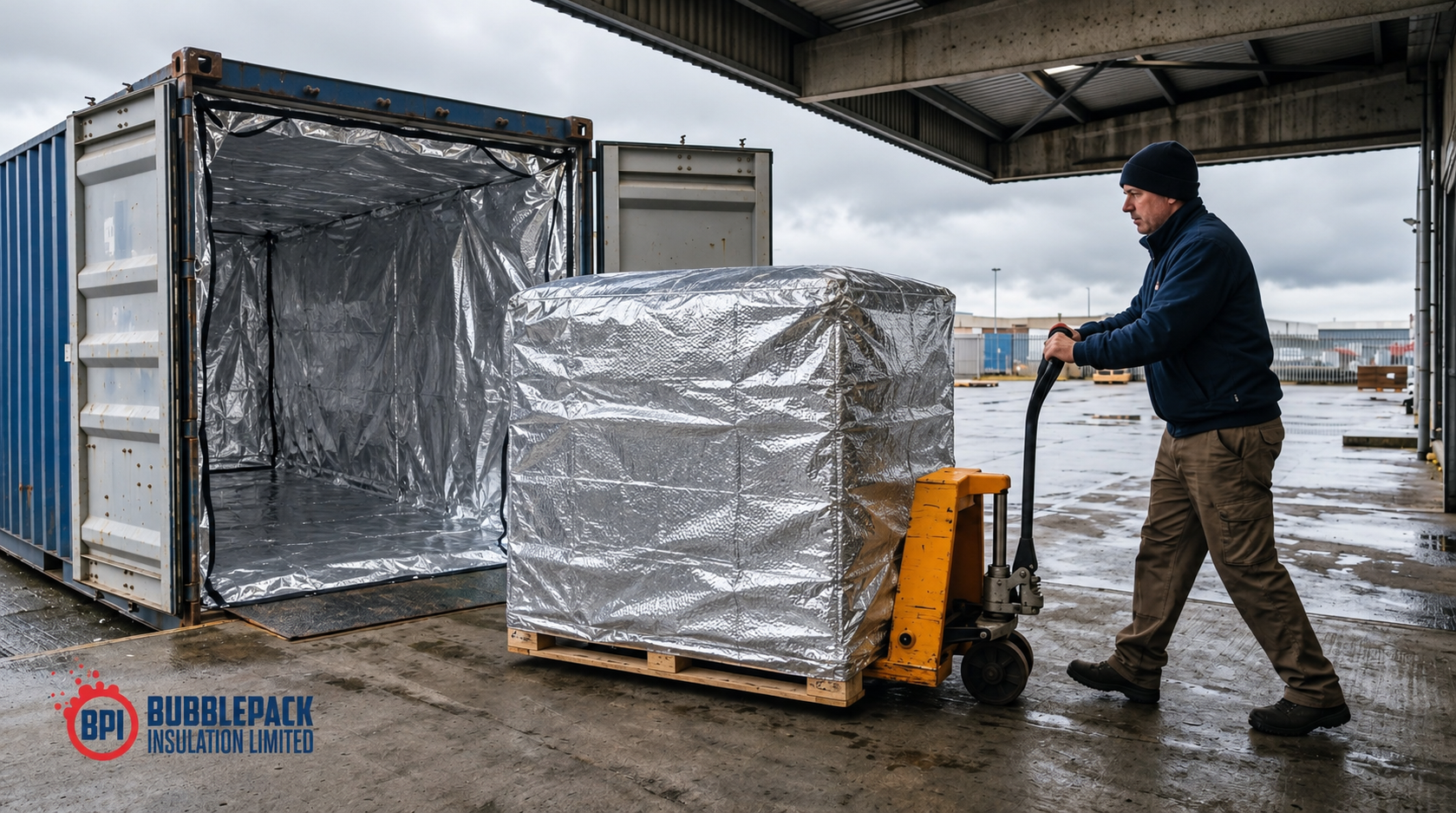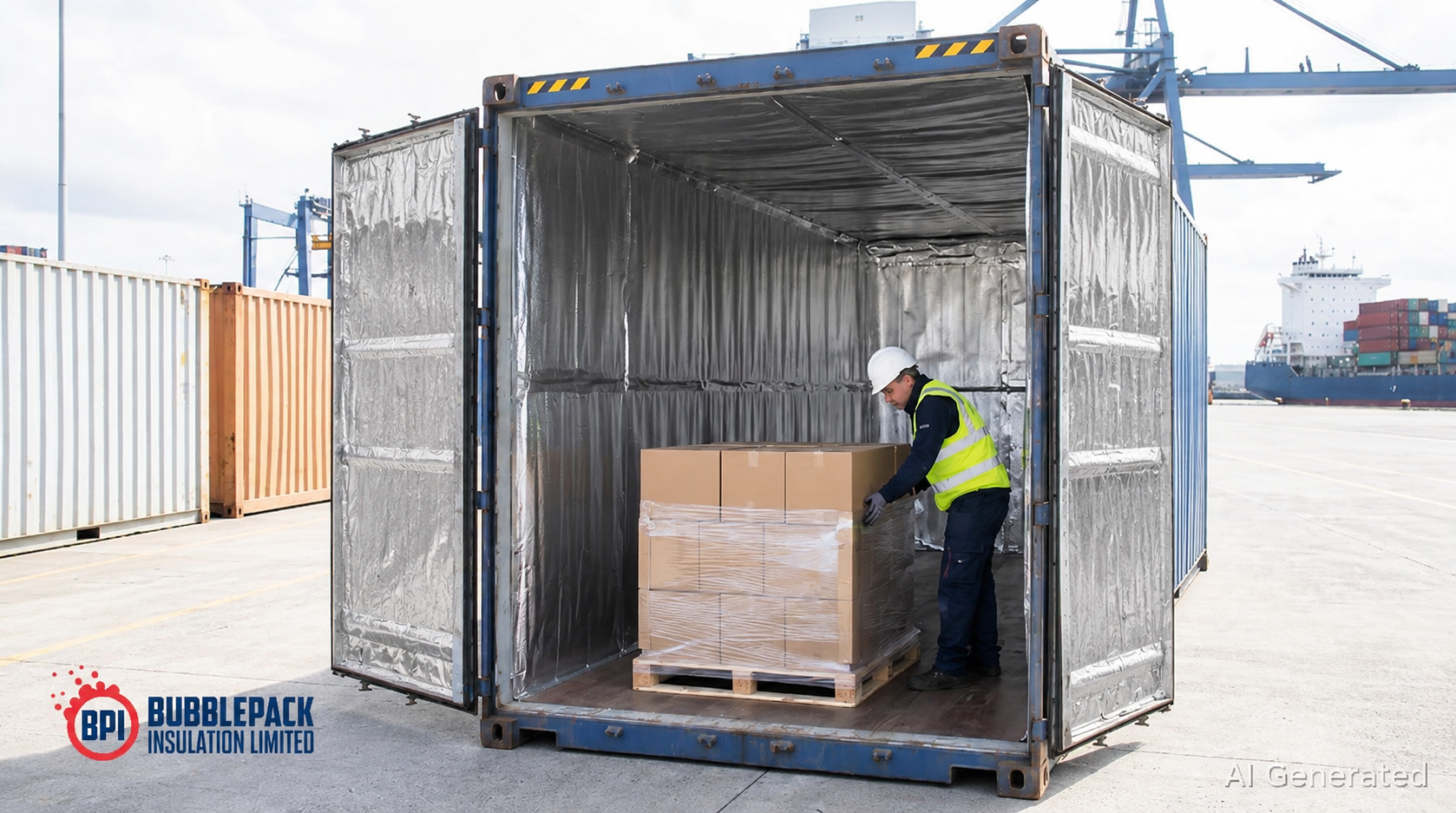
A thermal transport blanket is a passive cover that helps shield temperature-sensitive cargo from surrounding heat and cold during transit. It doesn’t actively heat or cool a load. For export freight, thermal cargo blankets provide passive protection around palletised or packaged goods as part of a shipment-specific handling plan.
Cargo blankets vary by material, construction, coverage and intended use. This guide explains how reflective cargo covers work, how to assess suitability for a particular export shipment and how they differ from full shipping container liners.
Key Takeaways
• Assess whether cargo requires pallet-level protection or insulation across the shipping container interior.
• Compare blanket materials, thickness and weight in light of their intended use, not as standalone measures of performance.
• Consider loading conditions, storage delays, route, season and transit duration when assessing cargo protection.
• For export cargo, treat reflective properties as one consideration; assess protection against the goods and transit conditions.
Table of Contents
• What Are Thermal Cargo Blankets?
• Thermal cargo covers during shipping delays
• Materials used in common thermal blankets
• Thermal cargo blanket definition and alternate names
What Are Thermal Cargo Blankets?
Thermal cargo blankets are covers that help protect temperature-sensitive freight from changing conditions during transport. Reflective types can reduce radiant heat transfer, while the cover creates a barrier around a pallet or load. They provide passive protection, not active heating or cooling.
For exporters, start by checking the cargo’s documented temperature requirements. A pallet of dairy ingredients, for example, may need different protection from a load of beverages. Loading conditions, route, season and transit duration also affect suitability. Reflectivity alone doesn’t establish how a particular shipment will perform.
An insulated container and a cargo blanket protect different areas: a blanket covers the load, while a liner covers the container interior. A suitably powered refrigerated container actively controls temperature; a blanket does not. The right choice depends on the cargo requirements and transport plan, including whether active control is needed.
For food shipments, assess the product’s handling requirements alongside its packaging and expected transit conditions. Pharmaceutical shipments require documented temperature requirements and appropriate shipper qualification. A thermal cover alone doesn’t establish compliance with pharmaceutical transport processes.
Blanket costs depend on the product and shipment requirements; the price for a commercial order is provided after a quotation request. Coverage also varies by design: check whether the cover protects the top and sides of the palletised load. For a container liner, assess floor insulation separately.
For container freight, fitting depends on the configuration. Follow the product’s supplied fitting guidance and ensure the intended cargo coverage is achieved. Don’t treat a pallet blanket as a container liner. For cleaning and storage, follow the product care instructions and inspect reusable covers for visible damage before use.
Thermal cargo covers during shipping delays
For export teams, an unexpected delay can leave palletised cargo exposed during staging, cross-docking or a change in collection arrangements. A thermal cargo cover can form part of a contingency plan for a load awaiting onward movement. For example, a beverage pallet held temporarily in a covered dispatch area may still face different conditions from those planned for transit.
Weather can complicate handling when cargo waits outside a warehouse or at a port. Rain, wind and direct sunlight create different exposure concerns, so follow the cargo’s handling plan and move freight to a suitable sheltered area when available. A cover can support the planned protection, but it shouldn’t be treated as a solution for every type of exposure.
Standard handling blankets and thermal covers serve different operational purposes. A handling blanket may protect surfaces from scuffing during movement, while a thermal cover is selected for temperature-sensitive freight. In an urgent shipment, confusing the two can leave a pallet without its intended protection. Specify the cover type in dispatch instructions and cargo-handling records.
If a cover is torn, displaced or wet during loading, record the issue and escalate it through the shipment’s usual operational process. For a pallet of food ingredients, this helps the responsible team decide whether the load can proceed under its documented requirements. Avoid improvising with unrelated materials that could obstruct inspection, handling or access to the goods.
Contingency plans should identify who makes decisions when a shipment is delayed or its handling conditions change. Exporters, warehouse teams and freight partners can use shared instructions to clarify escalation routes and the cargo information needed. Pharmaceutical loads need particular attention to documented product requirements and appropriate shipper qualification.
Where active temperature control is required, use the transport arrangement specified for the cargo rather than relying on an improvised cover. A thermal blanket is one element of cargo protection planning, not a substitute for the shipment’s agreed controls or escalation procedures.
Materials used in common thermal blankets
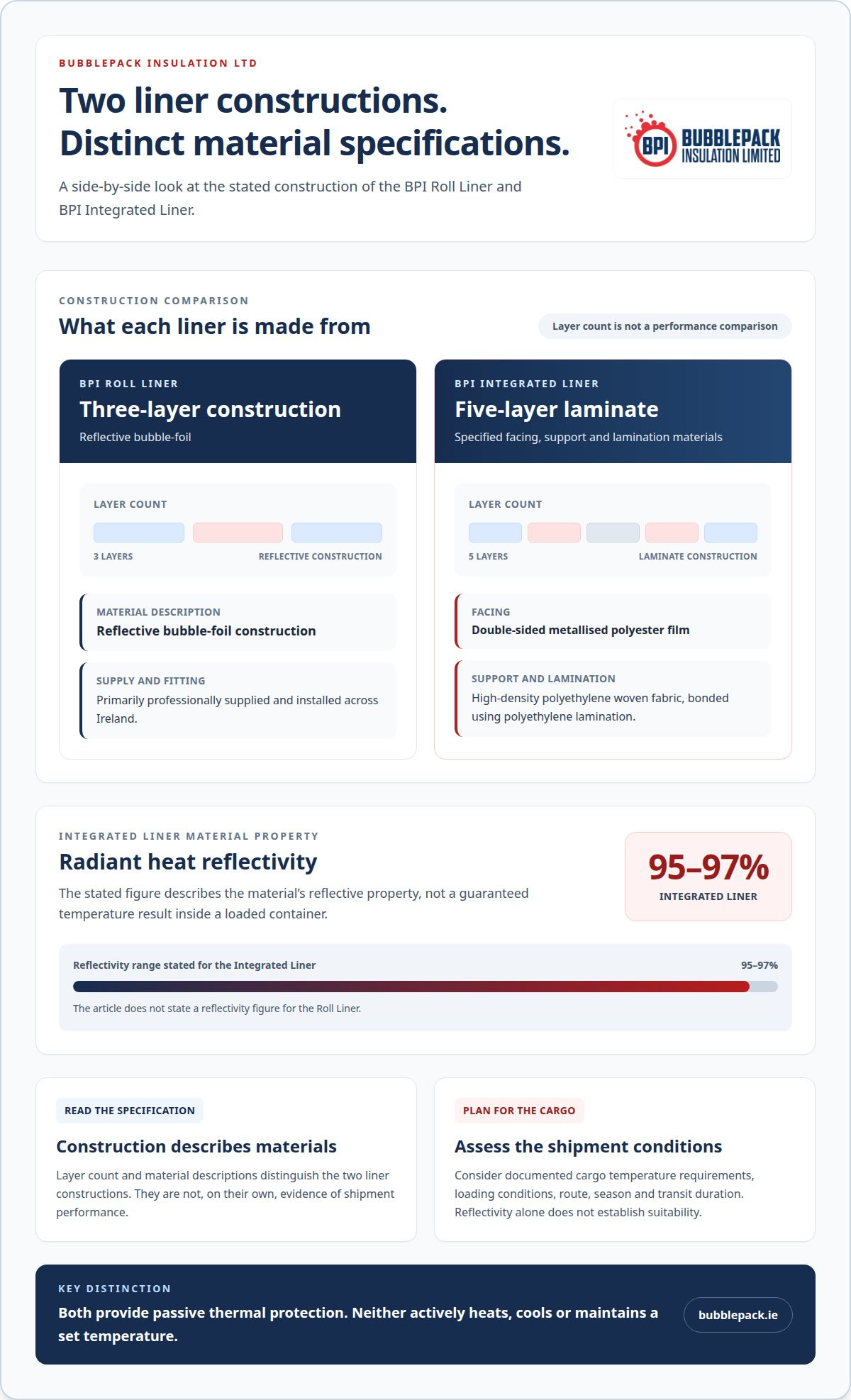
Commercial freight covers use materials suited to pallet or container applications. Bubble-foil and laminated film are two examples, but their layer arrangements differ. Identifying the material structure helps procurement teams distinguish a reflective cover from a container liner, without treating a material description as proof of shipment performance.
The BPI Roll Liner has a three-layer reflective bubble-foil construction. This describes the product category and layer count, not its complete performance. For exporters assessing cargo protection, compare the stated construction with the handling requirements of the intended load.
The 40ft HC with-floor BPI Integrated Liner specification describes a five-layer laminate incorporating metallised polyester film, high-density polyethylene woven fabric and polyethylene lamination. This construction detail applies to the specified product configuration and should not automatically be assumed for every liner size.
The 40ft HC with-floor Integrated Liner specification lists radiant heat reflectivity of 95 to 97% for its metallised surfaces. This is a material property, not a guaranteed reduction in cargo temperature. A material rating should therefore be read alongside shipment conditions and cargo requirements, rather than as a standalone assurance.
This layered construction differs from a single reflective film: the liner’s woven fabric and laminated layers form its specified material structure. Don’t assume the BPI Roll Liner and BPI Integrated Liner share the same laminate simply because both provide reflective thermal protection. Their material descriptions identify distinct constructions.
When reviewing a freight cover, record its stated materials and layer design in the cargo-protection specification. Keep the material description separate from claims about load performance. This gives exporters, manufacturers and logistics teams a precise basis for discussing the chosen cover and its intended application, without confusing reflective properties with active temperature control.
Thermal cargo blanket definition and alternate names
In freight shipping, thermal cargo blankets provide passive protection for palletised or packaged goods during handling and transport.
Thermal Cargo Blanket Definition
A thermal cargo blanket is a passive cover intended to protect temperature-sensitive products from surrounding conditions during cold-chain transport. It can help reduce heat exchange, but doesn’t actively control the cargo’s temperature.
Understanding the definition and uses of thermal transport blankets helps prevent confusion when planning a shipment. In freight, consider the goods, packaging and transport environment together. For example, a pallet of food ingredients may need a suitable protective cover during handling, while its documented product requirements still guide the wider transport plan.
A cargo cover's suitability depends on its construction, fit and the environmental conditions the load is likely to encounter. Its reflective properties should be evaluated alongside the cargo's documented transport requirements.
Alternate Names
Thermal cargo blankets are also called pallet covers, thermal cargo covers, insulated pallet covers and cargo covers. The terms overlap but may emphasise different aspects of the cover.
“Pallet cover” identifies what is covered, such as a pallet of beverages. “Insulated pallet cover” highlights its thermal purpose, while “cargo cover” is broader. The name alone doesn’t establish the material, coverage or performance, so match the product description to the shipment’s needs.
A freight specification might say “thermal cargo cover”, while warehouse staff use “insulated pallet cover” for the same type of item. Clear terminology helps exporters, carriers and handlers agree on the intended cargo protection and the areas of the load that need coverage.
BubblePack Insulation
BubblePack Insulation Ltd helps exporters and logistics teams plan passive thermal protection for temperature-sensitive cargo in shipping containers. Its BPI Roll Liner, BPI Integrated Liner and Pallet & Cargo Protection offerings address different cargo protection needs. Thermal liners can help limit heat exchange, but they don't actively heat, cool or maintain a set temperature. The right approach depends on cargo requirements, loading conditions, route, season and transit duration. For pharmaceutical shipments, documented temperature requirements and appropriate shipper qualification remain essential; a liner alone doesn't establish compliance. To discuss thermal protection for an export load, contact BubblePack Insulation Ltd.
Plan the next shipment with confidence
Understanding the definition and uses of thermal transport blankets helps your team frame the right operational discussion. Before choosing cargo protection, align procurement, shipping and receiving teams on the shipment’s requirements and the role a passive thermal solution is expected to play.
Use that discussion to identify decision-makers, handling arrangements and the information needed for a considered choice. A shared brief helps keep the protection approach connected to the cargo and its journey, rather than treating a blanket as a standalone fix. That clarity also supports a more useful conversation with a specialist.
For export cargo protection, BubblePack Insulation can discuss the requirements behind your shipment and the options relevant to it. Contact BubblePack Insulation to discuss your cargo protection requirements, and take the next planning step with a clear operational picture.
Frequently Asked Questions
What is a thermal transport blanket?
A thermal transport blanket is a covering that provides thermal protection for goods during a journey. In freight, the term usually means a passive cargo cover, not a device that controls temperature. This distinction matters when planning a shipment: the blanket is one part of the protection approach, alongside packaging, handling and the transport environment.
How do thermal transport blankets work?
Reflective cargo blankets reduce some heat transfer by reflecting radiant energy and creating a barrier around the load. Their effect depends on the cover’s design and how it is used. They do not actively heat or cool freight, and they cannot guarantee a particular cargo temperature.
What are thermal transport blankets used for?
They help protect temperature-sensitive freight during handling and transport, including when a load may face changing conditions. For example, a pallet waiting between loading stages may need a protective cover as part of its planned handling arrangements. The blanket supports the wider shipping plan; it doesn’t replace cargo-specific requirements or active temperature control when needed.
What types of thermal transport blankets are available?
Commercial freight options include reflective pallet covers and insulated cargo covers with different materials and coverage designs. Choose based on the size and configuration of the load, documented handling requirements and expected transit conditions.
Are there regulations or temperature requirements for thermal transport blankets in food and pharmaceutical shipping?
Assess food shipments against the product’s handling requirements, packaging and expected transit conditions. Pharmaceutical shipments require documented temperature requirements and appropriate shipper qualification; the blanket itself doesn’t establish compliance with transport processes.
How should thermal transport blankets be installed and secured?
Follow the selected product's fitting guidance and check coverage of the load, including its top and sides. A pallet cover and a shipping container liner are different solutions with different installation arrangements.