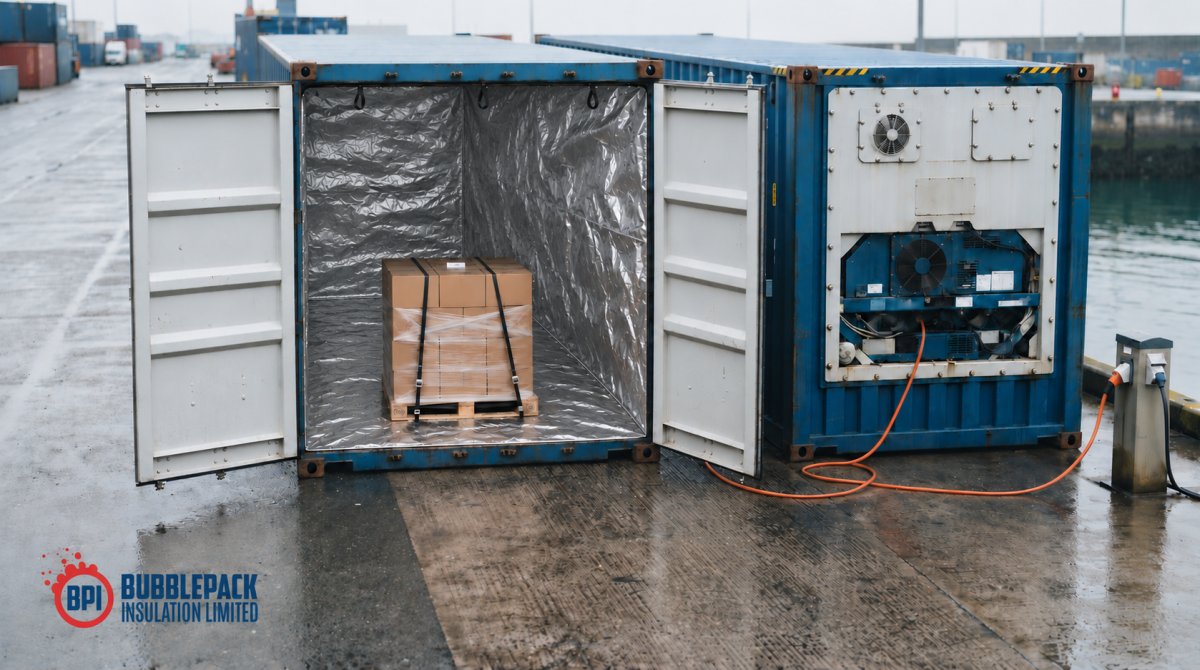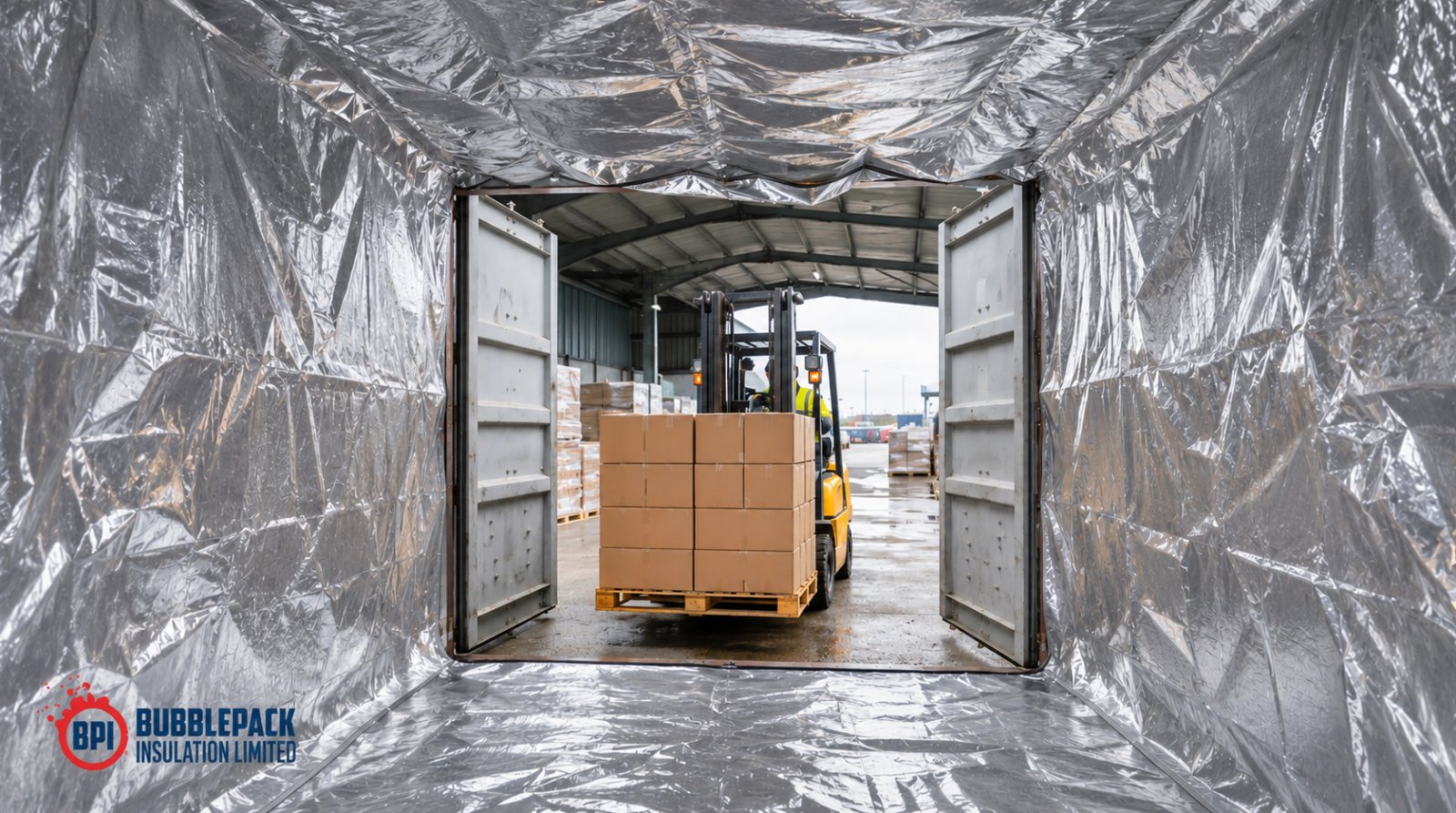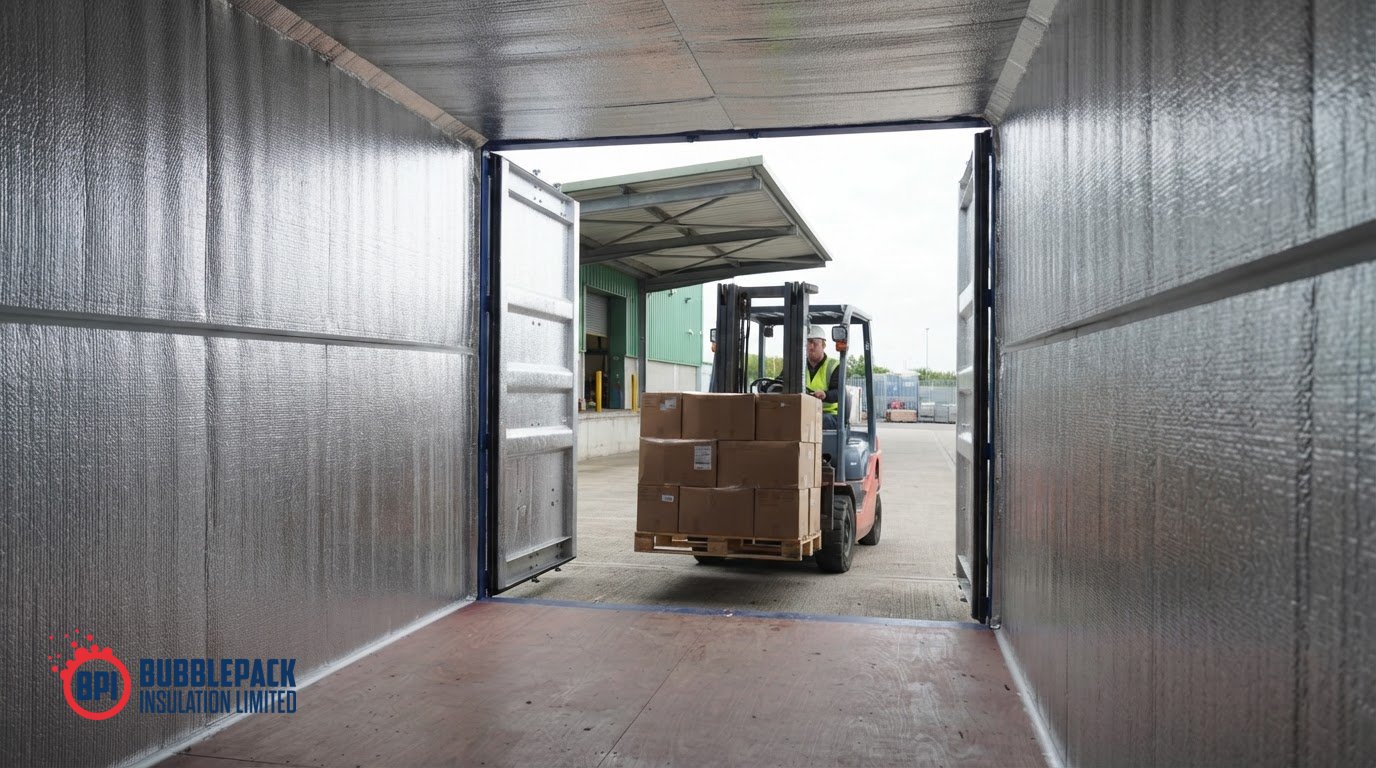
Temperature swings can put beverage quality and packaging at risk, even when a shipment is sealed. Heat may affect wine freshness and beer flavour, while freezing can expand liquid and stress bottles or closures. Effective thermal protection for beverage shipments slows heat transfer during exposure, but it does not keep cargo at a fixed temperature.
Thermal covers and blankets provide a passive buffer around cargo, but they do not actively control temperature. The level and location of protection depend on the shipment: a pallet cover surrounds a load, while container insulation can help moderate temperature changes during a sea journey.
This article explains how heat and cold can affect wine, beer and spirits, then compares covers, blankets and passive insulation for beverage freight. It also outlines practical factors that shape the choice, including cargo requirements, loading conditions, route, season and transit duration.
Key Takeaways
• Choose protection according to the cargo’s documented requirements: passive insulation slows temperature change, while active refrigeration controls temperature when required.
• Assess each shipment in context, including its loading conditions, route, season and transit duration.
• Compare container liner options by their supply and installation arrangements, and by the coverage provided in the selected configuration.
• Match the liner option to your export operation: BubblePack’s Roll Liner is supplied and professionally installed across Ireland, while its Integrated Liner is supplied internationally.
What thermal protection options are relevant to beverage shipments?
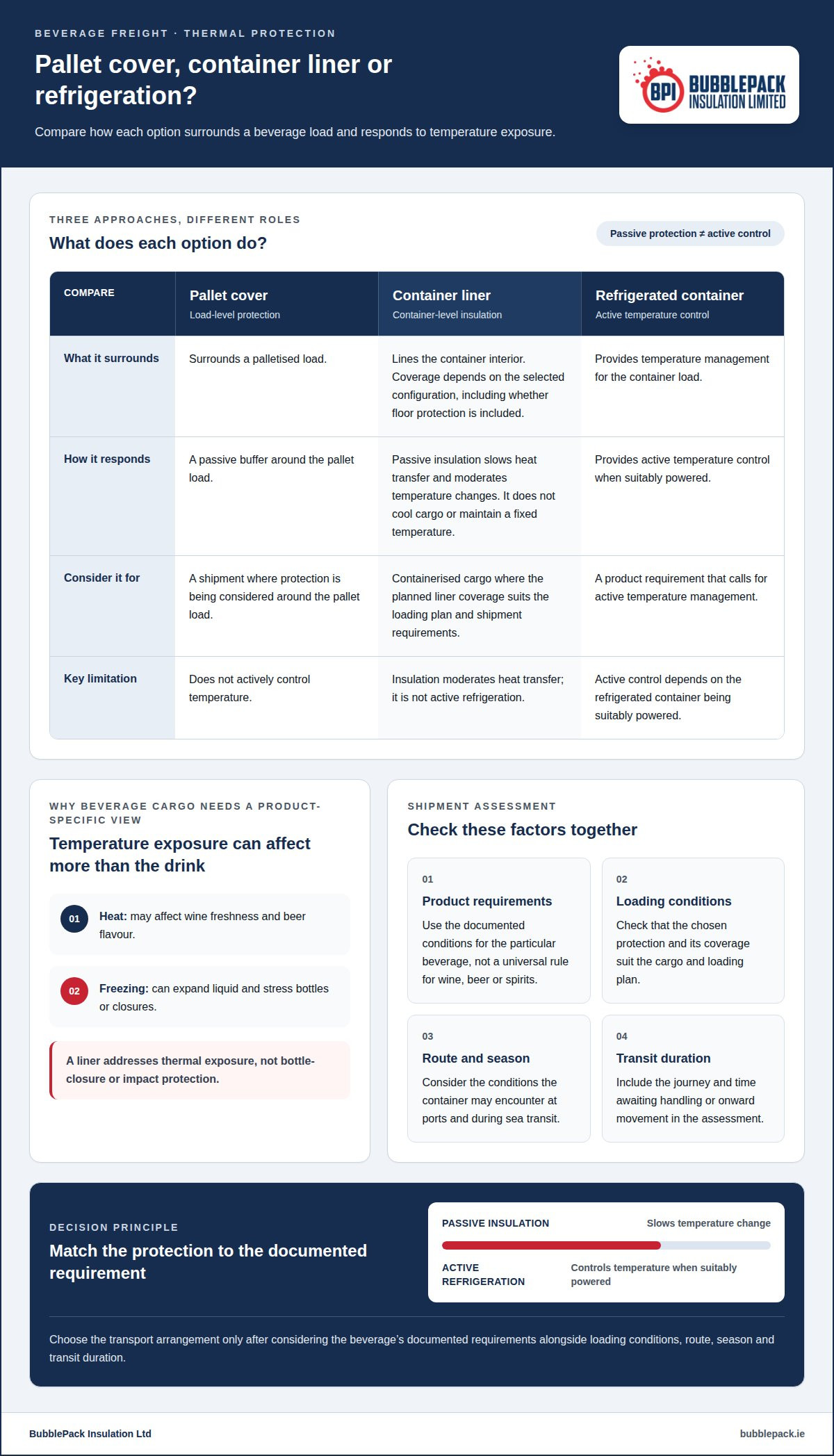
Container thermal liners and refrigerated containers address temperature exposure differently. A liner provides passive insulation within a shipping container, while suitably powered refrigeration provides active control. For thermal protection for beverage shipments, the choice depends on whether the product needs active temperature management or can travel with exposure moderated by insulation.
Container liner coverage
For container freight, a thermal wall liner is fitted inside the shipping container. It covers the container interior according to the selected configuration, including whether floor protection is included. A container liner is intended for cargo moving as a containerised load. This helps exporters assess protection across the container rather than focusing only on individual cases.
Container liner configuration
Container liners provide insulation across the container interior, with coverage depending on the selected configuration. Assess whether the liner’s coverage suits the shipment and loading plan. A container liner lines the container interior, while a suitably powered refrigerated container provides active temperature control. The appropriate option depends on the product’s documented requirements.
Insulation materials and configuration
Container liners use materials selected for their insulation function, and the materials and configuration vary by system. For exporters, the practical considerations are whether the liner fits the container and cargo plan, and whether the selected configuration provides the required coverage. Check these details against the shipment requirements before arranging the liner.
Insulation layers and active refrigeration
Layers in a thermal liner slow heat transfer through the container boundary. Refrigeration serves a different purpose, providing active temperature control when suitably powered. For containerised beverage cargo, consider the product’s documented requirements and whether they call for active refrigeration. A liner alone cannot cool a load or maintain a fixed temperature.
The appropriate container insulation configuration depends on the container, liner coverage and shipment requirements. Assess these details alongside any temperature monitoring arrangements needed for the shipment.
A liner addresses thermal exposure, not bottle closure or impact protection. Confirm that the selected configuration’s coverage suits the loading plan and beverage requirements before preparing the container.
Route and season shape the conditions a container encounters at ports and during sea transit. A route crossing different climates may create different exposure from a shorter journey in a milder season, so include both factors in the shipment assessment.
For thermal protection for beverage shipments, distinguish insulation from active control: a suitably powered refrigerated container controls temperature, whereas a liner moderates heat transfer. Assess the product’s documented temperature requirements when deciding which option is appropriate.
Why do documented temperature requirements matter for beverage shipments?
Wine, beer and spirits can respond differently to transport conditions, so exporters need product-specific requirements rather than one rule for every drink. Recording those requirements gives the shipment team a clear basis for selecting transport arrangements and reviewing the journey.
Stable temperatures in transit
Maintaining stable temperatures means limiting exposure to changing conditions from loading through delivery. The aim is to keep the beverage’s transport conditions aligned with its product documentation, rather than relying on an assumption that applies to every bottle.
For example, a mixed consignment of wine and beer may contain products with different handling requirements. Separate product records help the shipping team identify those differences before deciding how to group and protect the cases inside the container. This makes the cargo plan specific to the goods being moved.
Temperature ranges for beverages
A suitable temperature range is the one documented for the particular beverage and shipment. Product formulation, packaging and handling requirements inform that specification; broad categories such as wine, beer or spirits do not establish a universal shipping range.
There is no single temperature range for every beverage. Use the relevant product documentation to set the shipment requirement, then assess the planned transport arrangement against it. This avoids applying a general figure that may not suit a particular product or consignment.
Time in transit without refrigeration
There is no universal safe transit duration without refrigeration for all beverages. The assessment depends on the product’s documented conditions and how the journey exposes it to temperature changes, including time spent awaiting handling or onward movement.
Monitoring creates a record that can be compared with the product requirement. Use temperature-monitoring equipment appropriate to the shipment, and retain its readings alongside the consignment and route records. This gives the receiving team information to assess the journey, rather than relying only on conditions at dispatch.
Packaging trials can help assess whether a proposed configuration suits expected transport conditions. Define the product requirement, reproduce relevant loading and route conditions, record temperatures during the trial, and compare the results with the required range. The test should reflect the actual beverage and packing arrangement, not an unrelated product or generic example.
For a shipment using passive insulation, document the conditions it must address and assess whether that approach fits the product requirements. A liner slows temperature change but does not actively maintain a setpoint. Where the documented requirement calls for active control, passive insulation alone is not appropriate.
For a discussion of container protection in relation to your beverage cargo, contact BubblePack Insulation with the shipment requirements and planned route.
BubblePack Insulation: thermal liner options for beverage cargo
BubblePack Insulation supplies passive thermal container liners for commercial beverage shipments where slowing temperature change suits the cargo and route. Its BPI Integrated Liner and BPI Roll Liner address different supply and installation arrangements. Neither actively heats, cools or maintains a fixed temperature, so cargo requiring active control needs an appropriate solution.
BPI Integrated Liner for international shipments
The prefabricated BPI Integrated Liner is supplied internationally for shippers to install or through local installation partners where arrangements are available. It is supplied for 20ft, 40ft HC and 45ft containers. The liner uses a five-layer laminate with 95-97% radiant heat reflectivity, a stated material property rather than a guaranteed shipment outcome.
Typical installation takes 7-20 minutes, depending on container size. For beverage exports, the chosen configuration determines the coverage, including whether floor protection is included. This is relevant when assessing how the liner relates to the container interior and the loaded cargo. Product requirements, loading conditions, route, season and transit duration remain central to deciding whether passive insulation is suitable.
Explore the BPI Integrated Liner as an option for international container shipments where the shipper or local installation arrangement suits the operation.
BPI Roll Liner for Irish container movements
The BPI Roll Liner is a three-layer reflective bubble-foil construction, professionally supplied and installed by BubblePack’s own technicians across Ireland. Installation typically takes 20-45 minutes. It is commonly arranged at an empty-container depot before collection, allowing the liner to be fitted before the beverage cargo is loaded.
Irish exporters need to arrange the container type, depot location, collection date, cargo requirements and fitting availability. These details help align container preparation with the shipment schedule. The Roll Liner provides passive insulation, so it should not be treated as active refrigeration for beverages that require controlled temperature throughout transit.
For either system, establish the beverage’s documented transport requirements and assess them against the route and expected transit conditions. Match the liner configuration to the container and determine whether the selected coverage includes floor protection. A thermal liner is not a substitute where active temperature control is required. This distinction helps logistics teams select container insulation according to the shipment’s actual operating needs.
To discuss a suitable liner for your beverage cargo, contact BubblePack Insulation.
Build temperature protection into your next shipment plan
A considered approach to thermal protection for beverage shipments starts before the container is prepared. Discuss the beverage’s documented requirements alongside the loading arrangement, route and expected transit conditions. This gives your logistics team a clear basis for deciding whether passive insulation is suitable or active temperature control is required.
It also connects cargo protection with operational decisions, from container preparation and collection timing to recording shipment conditions. Treat these details as part of export planning, rather than a last-minute addition, so the chosen approach can be assessed against the actual movement.
For a discussion focused on your cargo and export operation, contact BubblePack Insulation. A well-planned shipment begins with clear requirements and a protection approach matched to them.
Frequently Asked Questions
What are the risks of hot and cold temperatures?
Heat can alter a beverage’s flavour, aroma or appearance, while freezing can damage the product. Exposure to unsuitable temperatures during transport may affect beverage quality, so assess the cargo’s documented requirements and the conditions expected along the route.
What is temperature control in beverage transport?
Temperature control means managing a shipment’s conditions against the requirements for its specific beverage. For example, a consignor can use transport records and monitoring data to assess whether conditions remained within the product’s documented limits. The control approach must suit those limits: monitoring records conditions, while suitable powered equipment can actively regulate them during transport.
Which thermal container liner is suitable for beverage shipments?
For containerised beverage freight, the relevant choice is a thermal container liner configured for the container and loading plan. Assess which internal surfaces the selected configuration covers, including whether the floor is included. This matters when considering how the liner relates to the stow and cargo arrangement.
How do passive container liners compare with active temperature control?
Passive container liners slow heat transfer through the container interior, whereas active temperature control uses suitable powered equipment to regulate conditions. The distinction matters when the product specification requires a controlled setpoint: insulation cannot provide that function. For cargo with less stringent transport conditions, assess passive protection against the route, season, loading arrangement and planned transit duration.
How do I calculate the amount of insulation and temperature monitoring needed for a beverage shipment?
There is no universal quantity that suits every consignment. The assessment should account for container dimensions, the liner configuration and its coverage, the beverage’s documented requirements, loading arrangement, route and transit duration. For monitoring, determine where readings are needed to represent cargo conditions, then retain the records with shipment details for review against the product specification.
What are the main risks of freezing, overheating, and temperature fluctuations for beverages?
Freezing can affect a beverage, while overheating may affect its quality. Fluctuating conditions can expose a load to both types of risk at different points in transit. Consider the complete route, including port handling and container loading, rather than relying on a reading taken at dispatch. This helps identify exposure points for shipment planning and review.